
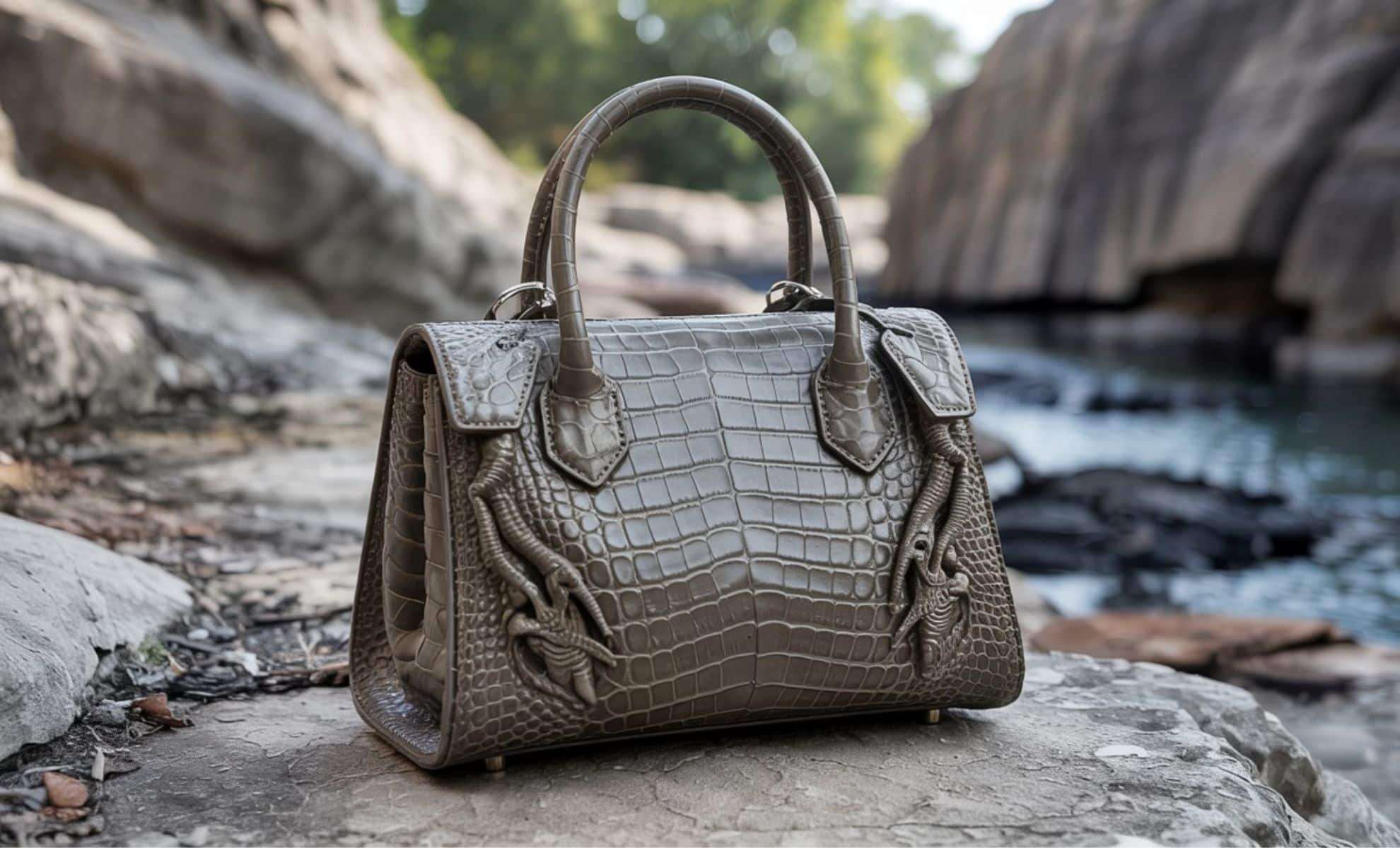
A pioneering partnership is about to transform the landscape of eco-friendly fashion. VML, Lab-Grown Leather Ltd., and The Organoid Company have joined forces to create the world’s inaugural T-Rex leather, marrying creativity, genomic science, and advanced tissue development technologies.
The initiative focuses on producing a cruelty-free, sustainable material synthesized from reconstructed Tyrannosaurus Rex DNA, marking a significant breakthrough for the luxury goods sector.
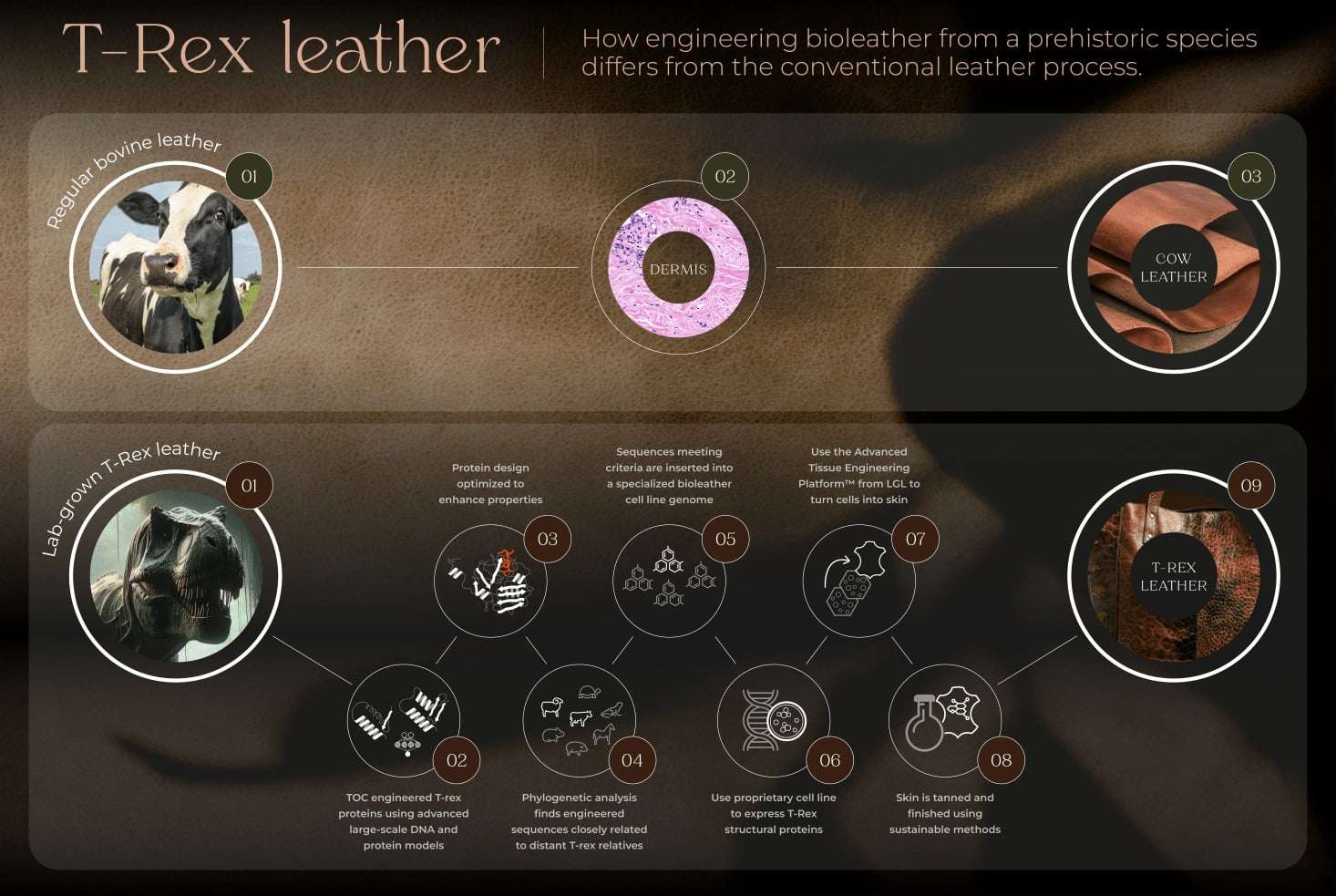
This collaboration integrates VML Netherlands’ design prowess, The Organoid Company’s expertise in genome engineering, and Lab-Grown Leather’s proprietary Advanced Tissue Engineering Platform (ATEP™). Together, they intend to develop an innovative leather that could redefine high-end manufacturing while promoting environmental consciousness.

Moving away from plant-based or artificial alternatives, the approach cultivates authentic biological structures, resulting in a material that aligns genetically and physically with traditional leather.
A Tribute to Ancient Durability
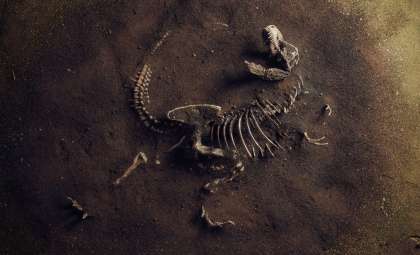
The scientific foundation is as intriguing as the final product. Researchers utilize fossilized collagen extracted from 80-million-year-old T-Rex remains as a template.
By crafting synthetic DNA sequences engineered by The Organoid Company and blending them with Lab-Grown Leather’s Elemental-X™ process, authentic skin-like tissues are produced.
Lab-Grown Leather’s scaffold-free tissue engineering approach encourages cells to autonomously develop networks, generating material that closely replicates the qualities of genuine leather.
The T-Rex's evolutionary adaptations to harsh environments serve as unique inspiration, offering insights as contemporary ecosystems confront climate change.
This endeavor transforms ancient biological resilience into a blueprint for pioneering lab-grown materials that boast both strength and versatility.
Professor Che Connon of Lab-Grown Leather highlighted, “This project illustrates how cell-based technology can create materials that are both groundbreaking and ethically responsible.”
Ethical Progress Meets Environmental Responsibility
This innovative leather substitute seeks to significantly lessen the environmental toll linked to conventional leather production.
Traditional methods often contribute to deforestation and rely on hazardous chemicals like chromium, causing pollution in soil and water systems.
In contrast, the T-Rex leather technology offers a cruelty-free solution to reduce ecological harm. The resulting Elemental Leather™ is compostable while preserving the durability, reparability, and tactile qualities that luxury consumers expect.
The project reflects a growing industry shift toward environmentally responsible innovation that resonates with today's consumers.
Unlike plant-derived or synthetic alternatives, Elemental Leather™ is made solely from animal cells and proteins, forming a natural matrix without external scaffolding.
The companies emphasize that this approach produces “authentic leather,” free from additives and without compromising on quality.
From Ancient Origins to Future Markets
Initial applications for T-Rex leather will focus on high-end accessories, with a premiere fashion product anticipated by late 2025. Afterward, production will scale to serve sectors like automotive and smart textile industries.
With the global leather market expected to hit $780 billion by 2035 and bio-based materials growing by 10–15% annually, the opportunity for expansion is substantial.
Thomas Mitchell, CEO of The Organoid Company, explained, “By reimagining and refining ancient protein codes, we can engineer T-Rex leather, a biomaterial drawn from prehistoric biology and cloned in customized cell lines.”
This breakthrough not only advances synthetic biology but also leverages ancient resilience to inspire sustainable innovation in our modern world.
Bas Korsten, Global Chief Creative Officer at VML, summarized the effort: “With T-Rex leather, we blend the legacy of ancient biology with the future of luxury materials. This collaboration exemplifies the frontier between inventive design and advanced biotechnology.”
- Categories:
- News









0 comments
Sign in to Comment