
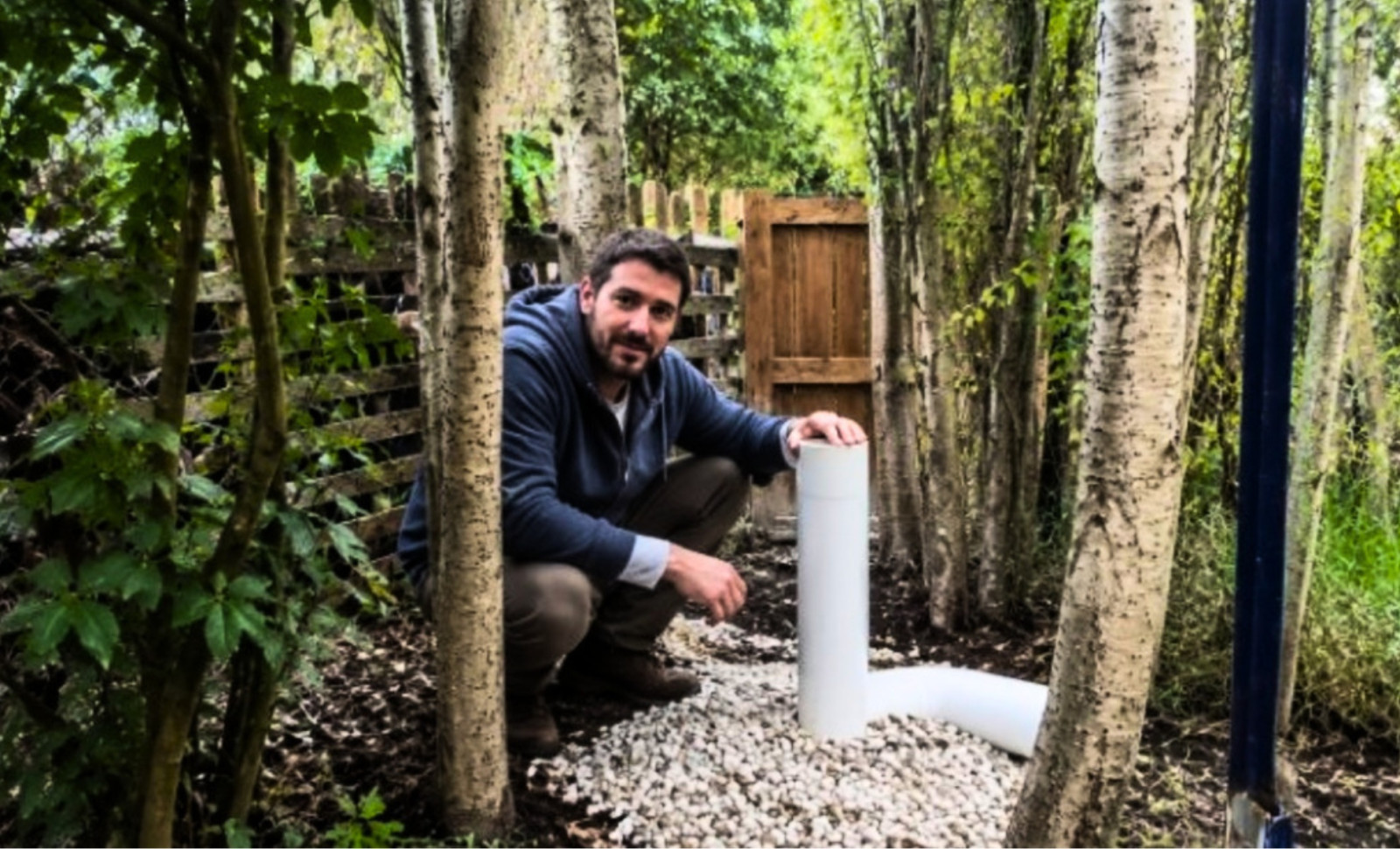
A South American content creator dedicated four years to excavating trenches and installing pipes underground within a home courtyard. Instead of conventional infrastructure, he constructed a cooling system that works without compressors, refrigerants, or outdoor condenser units.
The concept relies on a straightforward physical principle. At a certain depth, the earth's temperature remains much steadier than the fluctuating outdoor air temperature. On hot days, the soil below the surface is cooler. By channeling outside air through buried pipes before it enters the building, the ground effectively removes excess heat.
By 2026, this system was successfully cooling designated rooms, utilizing a design inspired by the Canadian well, also known as the Provençal well. This traditional technique leverages stable underground temperatures to moderate ventilation air. The project gained viral attention on social media for showcasing a low-energy, compressor-free method of cooling a typical residential home.

Understanding Heat Transfer in a Canadian Well
A Canadian well is a form of passive geothermal ventilation using one key fact: deep soil temperature changes much slower than air temperature above ground. During summer, the soil several meters below is cooler than the outside air, while in winter, it tends to be warmer. Pipes buried underground serve as heat exchangers that either absorb heat from the incoming air or warm it before entering the interior.
Research on Canadian wells indicates that soil at around 15 meters depth maintains a temperature between 10°C and 16°C throughout the year. Shallower depths experience more variation but still stay cooler than peak summer air temperatures. This temperature difference between surface air and the ground is the key driver of the system's effectiveness in regions with marked seasonal temperature changes.
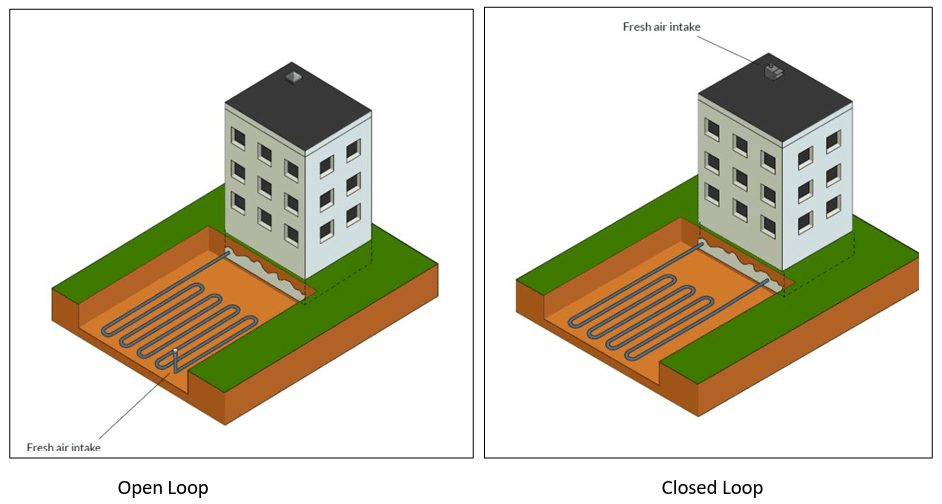
A Canadian government publication on earth-air thermal exchangers explains how soil temperatures deeper than two meters are relatively steady and approximate the average annual air temperature. It also discusses how factors like soil composition, moisture, and compaction influence thermal conductivity and the system's heat transfer capabilities.
Building the Courtyard Cooling System over Four Years
The project began in 2022, with the entire piping network completed by 2026. Some rooms, such as the children’s bedrooms, were already benefiting from the cooled air before the project concluded, eliminating the need for standard air conditioning in these areas.
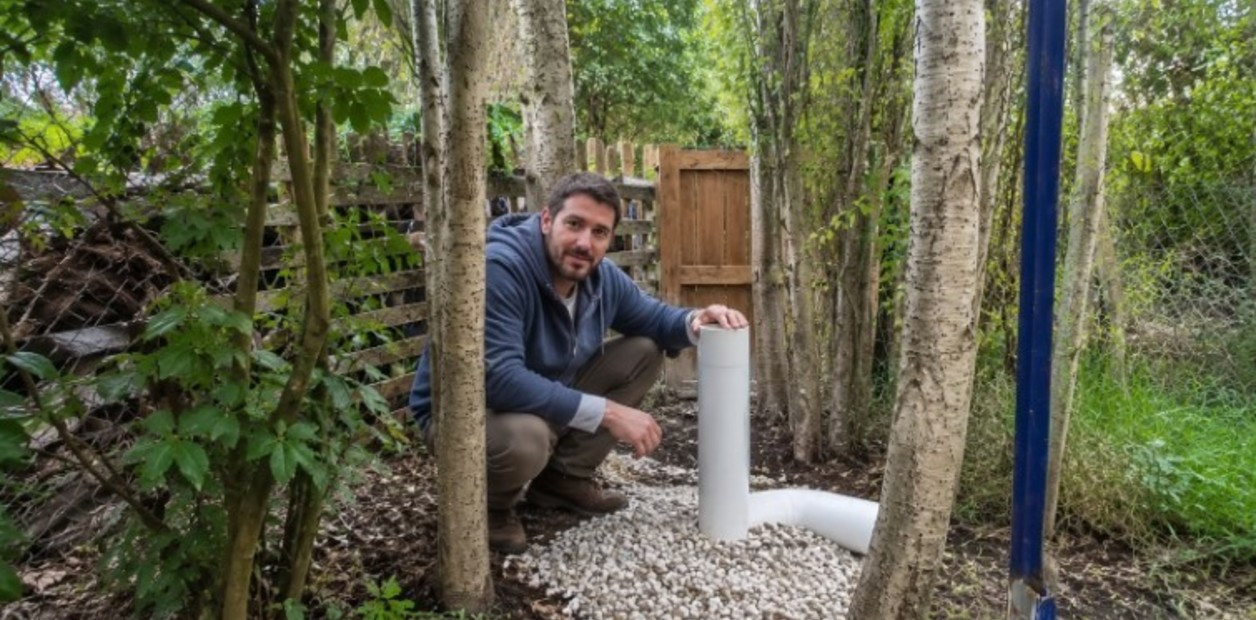
The system routes outdoor air through a buried pipe network dug across the courtyard and into the home’s interior. As air travels underground, it cools before entering living spaces. During extreme heat, the subsoil temperature remains several degrees lower than the air, allowing the buried pipes to exploit this thermal contrast.
The Climate Action Accelerator outlines the typical elements of earth tubes: a filtered intake, a buried duct 1.5 to 3 meters deep and 30 to 50 meters long, a bypass damper, access manhole, and ventilation distribution. Proper pipe slope (1-3%) is critical to draining condensation and preventing mold growth.
Eliminating Compressors and Refrigerants
The notable difference between a Canadian well and traditional mechanical air conditioning lies in what it omits. Conventional AC units rely on electric compressors, refrigerants, and heat-dumping condensers. The underground pipe method excludes all these.
Most setups require only a low-power fan to push air through the system, while some even rely on natural convection. This drastically reduces electricity consumption compared to compressor-driven units because heat exchange is accomplished naturally by the earth.
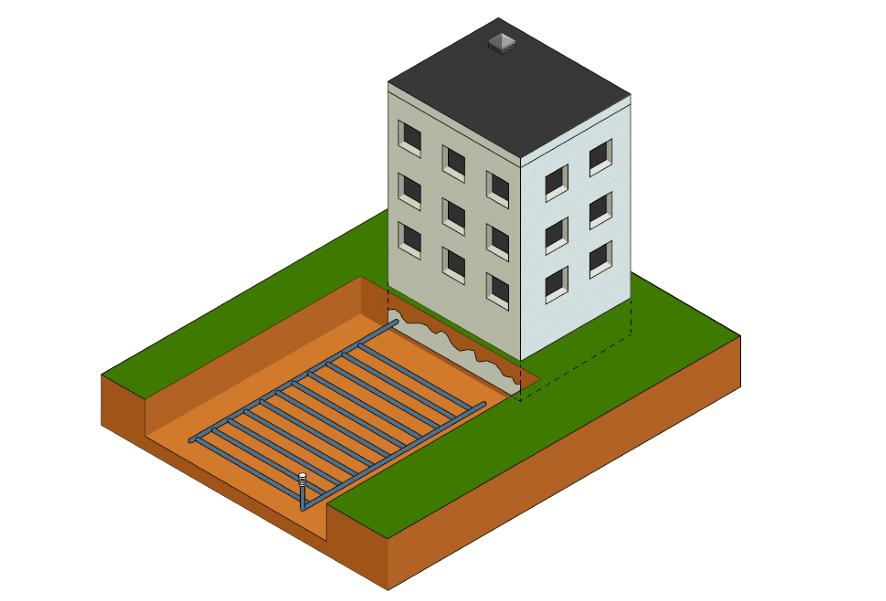
According to source materials, soil acts as a natural thermal reservoir, absorbing heat from air passing underground and delivering cooler air indoors. The Canadian guide states that such exchangers efficiently preheat or precool ventilation air, reducing dependence on electricity and fossil fuels.
Despite its benefits, widespread adoption in conventional construction remains slow due to unfamiliarity and concerns about system performance, even though it offers a path toward net-zero energy buildings.
Effectiveness Limits and Ideal Conditions
The performance of a Canadian well varies significantly based on factors like soil type, moisture, pipe depth, length, diameter, and the temperature differential between ground and surface air. Detailed specifics from the courtyard installation were not disclosed.
This approach works best in climates where hot air temperatures notably exceed cooler subsoil levels. In areas where underground temperatures are already warm, the cooling effects reduce. No exact data on temperature reductions or airflow rates inside the rooms was provided.
Excavation represents the largest challenge; the extended four-year timeframe for the retrofit underscores the effort required. Pipes must be installed with a steady slope to manage condensation and sealed against groundwater infiltration. Once embedded, however, the system runs with minimal energy consumption and no chemical refrigerants.
- Categories:
- News










0 comments
Sign in to Comment