
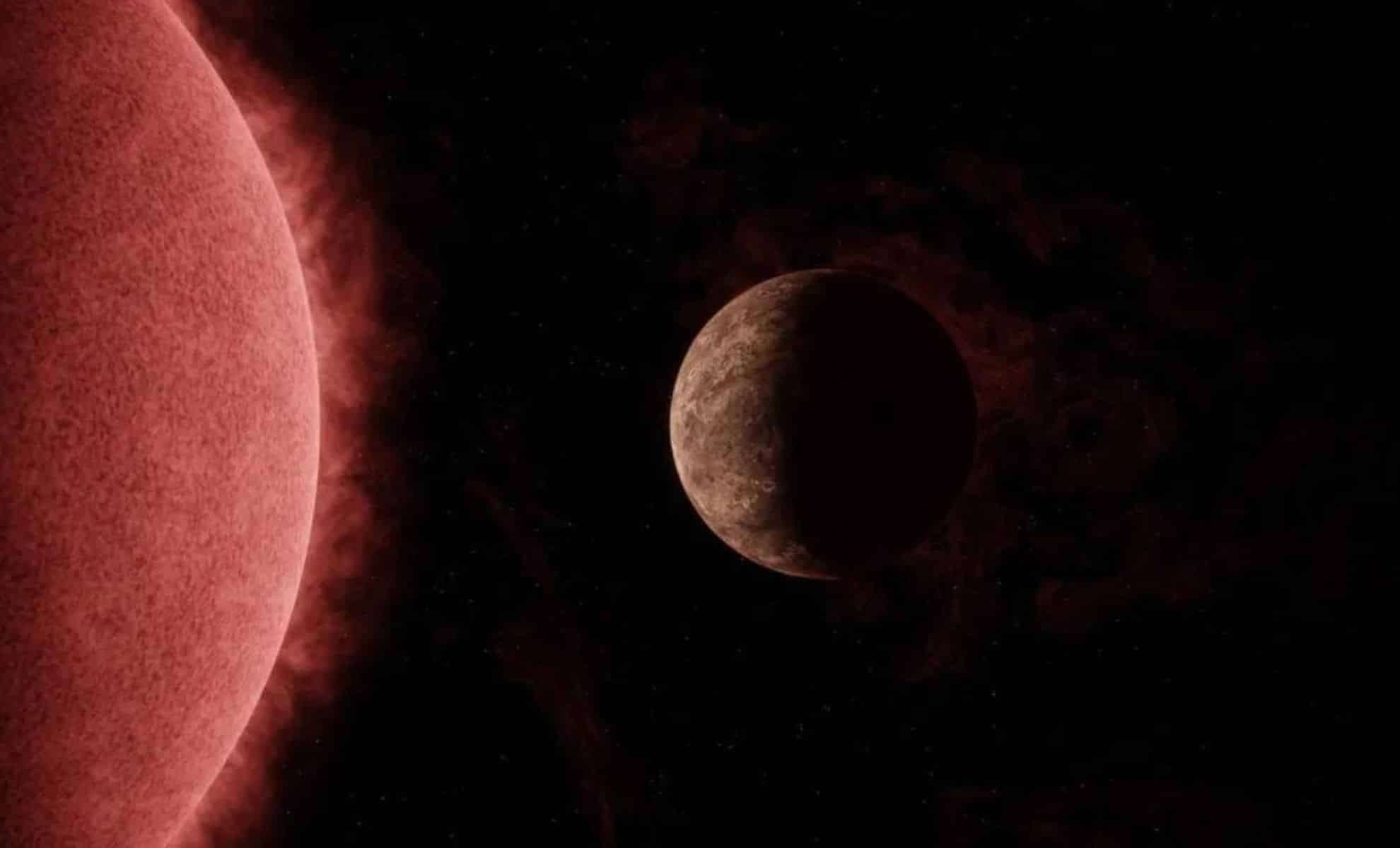
A global team of astronomers has announced an exciting detection: a planet roughly the size of Earth revolving around an ultra-cool red dwarf star just 55 light years from Earth.
Named SPECULOOS-3b, this newly identified exoplanet stands out as a key target in the quest to explore worlds that might support life or shed light on planetary development around different types of stars.
“SPECULOOS-3b closely matches Earth in size,” explained Michaël Gillon from the University of Liège, Belgium.

This breakthrough was made possible thanks to the SPECULOOS initiative (Search for Planets EClipsing ULtra-cOOl Stars), a collaborative network comprising institutions such as the University of Liège, University of Birmingham, University of Cambridge, University of Bern, and MIT.
Important Features of Planet SPECULOOS-3b
Marking the second such discovery around an ultra-cool dwarf star, SPECULOOS-3b orbits its star in roughly 17 hours—making its year far shorter than that on Earth. The host star is intriguing itself: it is cooler by more than a factor of two compared to the Sun, has only a tenth of the Sun’s mass, and shines with about one-hundredth the Sun’s brightness.

Because of its close orbit, SPECULOOS-3b likely experiences tidal locking—one side permanently facing the star bathed in light while the other side remains in endless darkness.
This unique setup prompts further questions about the planet’s climate system and surface conditions, which might impact its geological and atmospheric traits.
Studying the Challenges of Ultra-Cool Dwarf Stars
Ultra-cool dwarfs, the focus of the SPECULOOS project, make up around 70 percent of the stars within our galaxy. Despite their abundance, their faintness and widespread distribution complicate observational efforts.
Monitoring these stars demands extended observation periods and cutting-edge technology, along with international cooperation to detect the subtle dimming caused when planets like SPECULOOS-3b transit their stars. Yet, the scientific potential of such studies is enormous.
These stars boast lifetimes estimated at over 100 billion years, providing a stable setting for assessing planetary evolution and the prospects for life over cosmic timescales.
Next Steps in Exploring SPECULOOS-3b
The research team aims to deepen understanding of SPECULOOS-3b with upcoming observations using the James Webb Space Telescope, focusing on surface features and atmospheric composition.
Identifying the planet’s mineralogy and investigating the presence of an atmosphere—though challenged by the strong stellar radiation and close orbit—will be essential for evaluating its habitability potential. These harsh conditions also offer a rare chance to study how planets withstand intense stellar activity.
The detection of SPECULOOS-3b exemplifies the dedication and cooperation of scientists worldwide. It expands our knowledge of planetary systems across the Milky Way and stimulates further exploration into the diversity of worlds beyond our own.
With continued advancements in technology and research techniques, discovering exoplanets like SPECULOOS-3b fuels curiosity and scientific discovery, bringing us ever closer to understanding our place in the universe.
- Categories:
- Astronomy ,
- News ,
- Science ,
- Space














0 comments
Sign in to Comment