
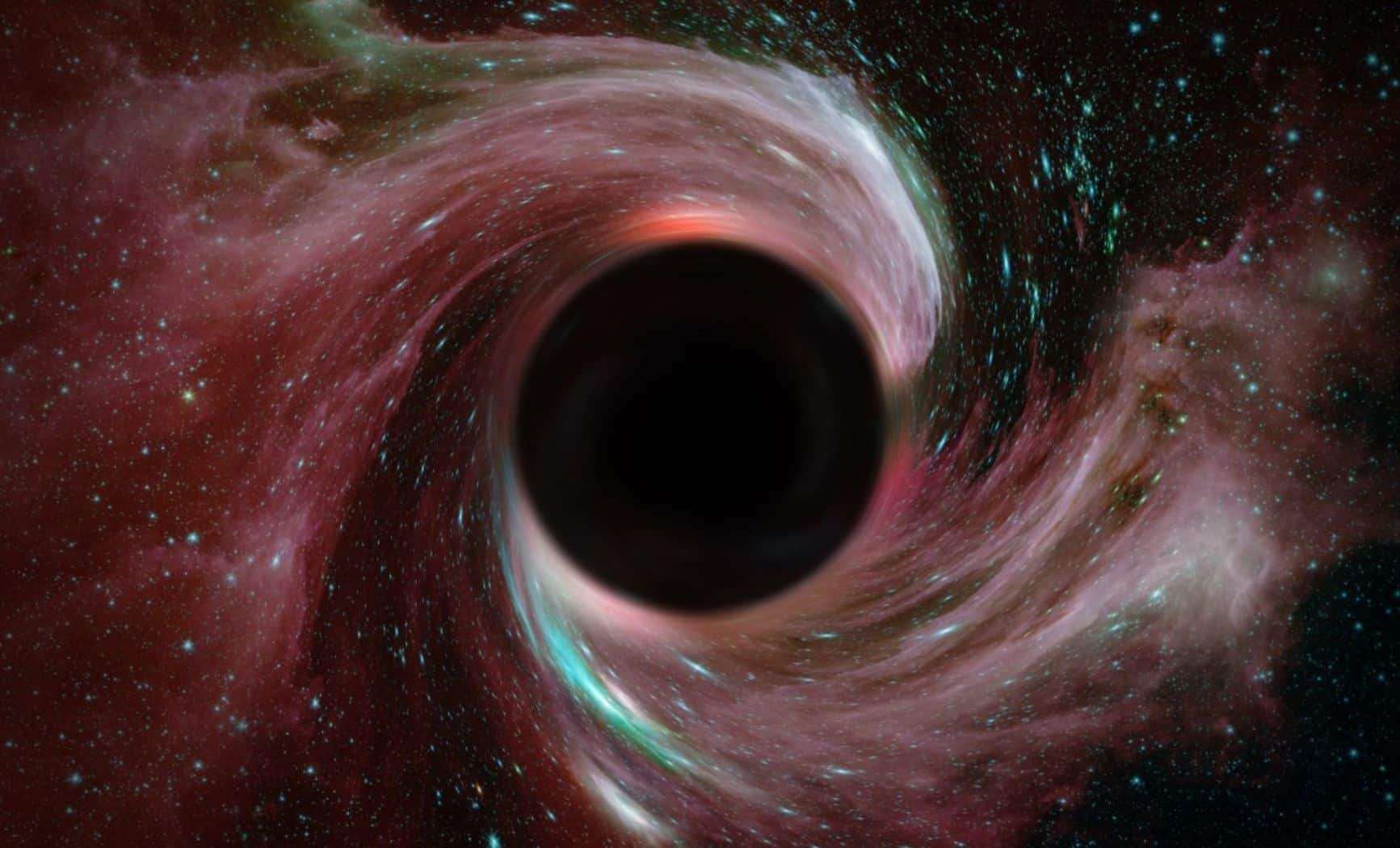
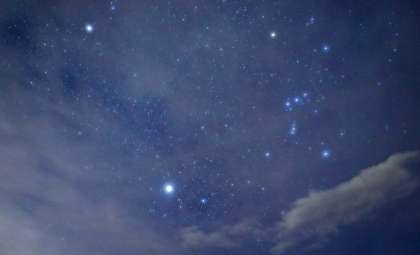
Astronomers have recently identified a puzzling cosmic event where stars vanish without the expected supernova explosion. Over seven decades, roughly 800 stars have seemingly disappeared from the night sky, challenging our traditional views on stellar death.
This phenomenon prompts new interpretations about the end stages of massive stars. Emerging studies propose that these stars might be collapsing straight into black holes, avoiding the typical supernova explosion altogether.
The Mystery of Disappearing Stars
Researchers have recorded multiple instances where stars abruptly fade away. This contradicts the standard model where stars conclude their lives either by dimming gradually or detonating as supernovae if sufficiently massive. Instead, the evidence points to some stars collapsing immediately into black holes, skipping the luminous supernova phase.

Groundbreaking Findings
Scientists at the University of Copenhagen recently proposed this direct collapse hypothesis, attributing it to stars of exceptionally high mass. Known as "failed supernovae," this process causes stars to vanish swiftly without any noticeable explosive display. Their work, published in Physical Review Letters, presents strong support for this idea.
Case Study: Binary System VFTS 243
Supporting this model is the binary system VFTS 243, where a star with about ten solar masses orbits a black hole. Interestingly, the system shows virtually no signs of a prior supernova event.

Typically, a supernova explosion imparts a "kick" to remnants due to mass ejection. However, in VFTS 243, the orbital configuration remains stable, implying the bulk of energy escaped via neutrinos—tiny particles with weak gravitational interactions.
Reexamining Stellar Evolution
This direct collapse mechanism challenges prevailing thinking that massive stars must undergo supernova explosions before becoming black holes or neutron stars. The VFTS 243 observations suggest some stars might circumvent this explosive stage entirely, reshaping our comprehension of stellar life cycles and black hole genesis.
Verifying Evidence
Both observational data and theoretical work back the direct collapse theory. Long-term monitoring of thousands of stars seeking irregular activity has revealed no supernova traces where stars have disappeared. This supports the conclusion that these stars succumb to direct black hole formation. More detailed studies will help determine the precise conditions enabling this collapse pathway.
Broader Astronomical Impact
If stars can vanish via direct black hole formation, black holes could be far more abundant than established estimates suggest. This insight might also help explain some gamma-ray bursts and other intense cosmic phenomena.
Looking Ahead
Future efforts include prolonged observation of systems like VFTS 243 using next-generation telescopes to detect subtle signatures of direct collapse. Meanwhile, computational models will evolve to better incorporate this process, advancing our knowledge of stellar deaths and black hole creation.
The enigma of stars disappearing without remnants adds depth to our cosmic understanding. The direct collapse hypothesis offers a compelling resolution, indicating certain stars transition straight to black holes, bypassing classical supernova explosions.
Ongoing investigations promise to illuminate this fascinating process further, deepening our grasp of the life and death of stars as well as the origins of black holes.
- Categories:
- Astronomy ,
- News ,
- Space






0 comments
Sign in to Comment