
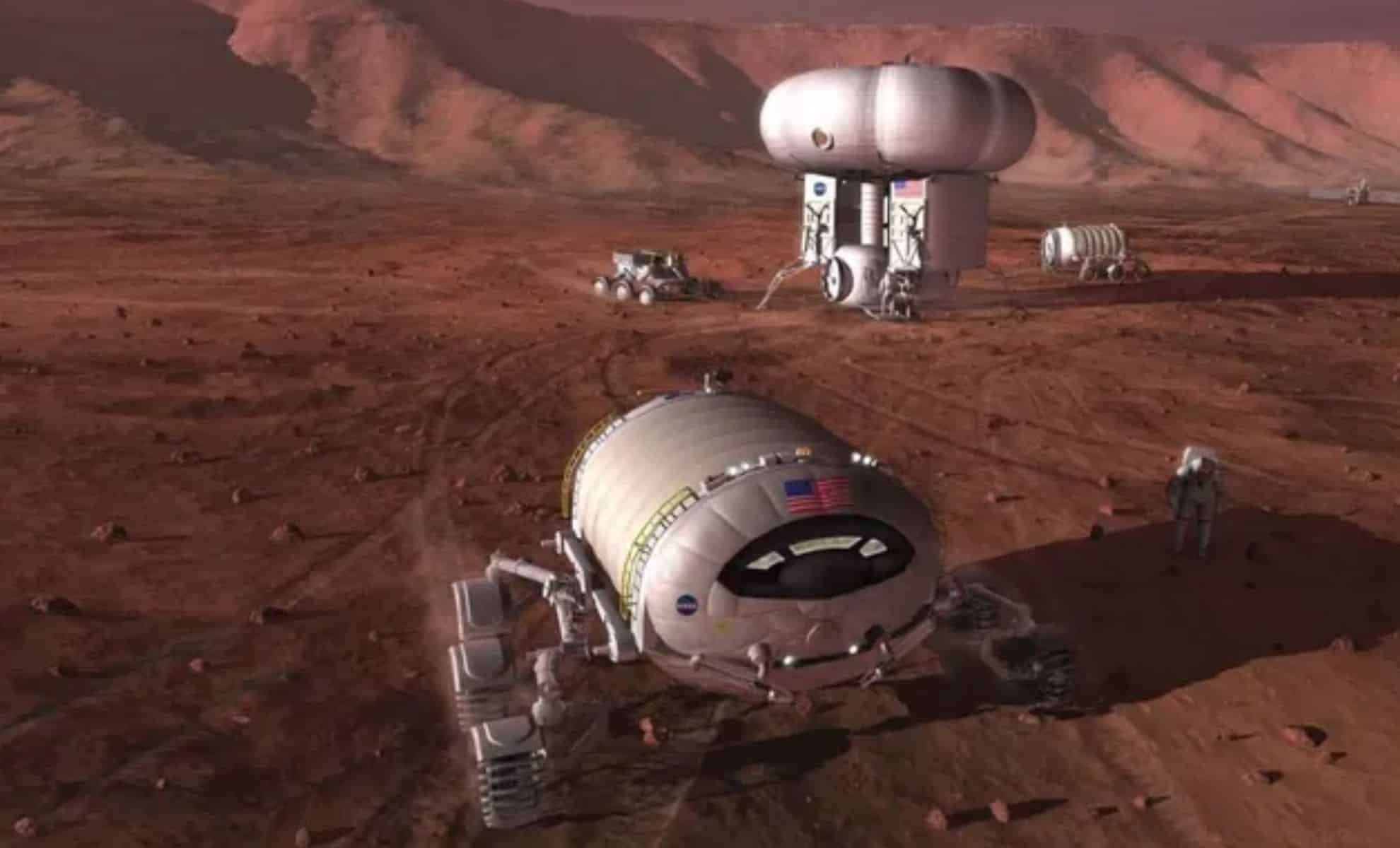
A groundbreaking advancement in oxygen generation leveraging magnetic forces could revolutionize astronaut life support systems for upcoming lunar and Martian expeditions. Published in the peer-reviewed journal Nature Chemistry, this novel approach offers a magnetic alternative to traditional centrifuge-based oxygen separation methods in microgravity. Spearheaded by Alvaro Romero-Calvo of the Georgia Institute of Technology, the technique promises a scalable, efficient solution that could greatly benefit long-term space travel where mass and energy efficiency are paramount.
Challenges with Existing Space Oxygen Systems
Oxygen production is critical for human deep space exploration, with current systems on the International Space Station (ISS) primarily relying on electrolysis to split water molecules. However, while gravity on Earth facilitates the natural separation of gas bubbles from electrodes, microgravity conditions cause these bubbles to adhere, complicating oxygen liberation.
To address this, engineers have utilized centrifuge setups to mimic gravity by spinning fluids, which effectively separate gas bubbles but come with drawbacks. These systems are bulky, heavy, and consume a lot of power, limiting their feasibility for sustained surface missions on the Moon or Mars or for lightweight crewed flights.

With ambitious goals from agencies such as NASA and the European Space Agency (ESA), there is an urgent need for compact, energy-conscious, and mechanically simpler oxygen production technologies. Romero-Calvo’s team has delivered a promising answer to this need.
Magnetism Unlocks New Potential in Oxygen Extraction
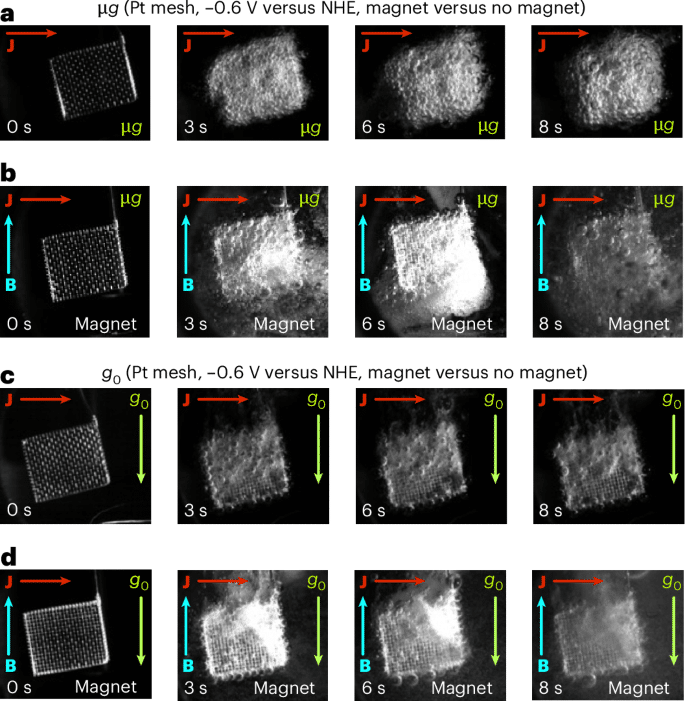
The study, backed by the NASA Innovative Advanced Concepts (NIAC) program, replaces mechanical spinning with magnetically driven control. Drawing on the principles of diamagnetism and magnetohydrodynamics, researchers demonstrated that magnetic fields can guide gas bubbles away from electrodes efficiently without requiring moving components.
Romero-Calvo stated, “In this paper, we demonstrate that two largely unexplored magnetic interactions — diamagnetism and magnetohydrodynamics — provide an exciting pathway to solve this problem and develop alternative oxygen production architectures.”
This magnetic control allows precise bubble detachment during electrolysis operations. Employing permanent magnets or moderate electromagnets can significantly simplify the oxygen generation system, curtailing both mass and energy consumption.
Experiments conducted at the 479-foot-tall Bremen Drop Tower in Germany revealed that this method boosts bubble detachment efficiency by up to 240%, marking a significant performance enhancement.
From Academic Research to Space Application
Romero-Calvo's initial doctoral research explored magnetic influences on electrochemical systems, and this concept has matured into a fully supported engineering endeavor with funding from NIAC and the German Aerospace Center (DLR).
Collaborations with the University of Bremen and the University of Warwick merge foundational physics insights with engineering demands critical to mission success. This work transcends theoretical study, presenting practical solutions for future lunar and Martian life support design.
“After four years of work, confirming that magnetic forces can effectively manage electrochemical bubbles in microgravity is a crucial step toward dependable and efficient spacecraft environmental systems,” Romero-Calvo noted.
Next phases will involve scaling the technology and testing its durability during extended missions, including suborbital rocket flights and potential demonstrations aboard orbiting platforms. Such developments could make magnetic oxygen generation a cornerstone of In-Situ Resource Utilization (ISRU) strategies for extraterrestrial habitats.
Impact on Moon and Mars Colonies
Introducing magnetic oxygen production could fundamentally alter extraterrestrial habitat engineering. Mass constraints in space missions could be alleviated by removing the need for cumbersome centrifuges, freeing space for scientific equipment, provisions, and medical supplies.
On lunar or Martian installations, where oxygen is extracted from native water sources such as ice deposits or hydrated minerals, magnetic systems offer a compact and reliable solution that minimizes crew involvement.
Furthermore, the technology's adaptability could extend its use beyond bases to support larger outposts, manufacturing facilities, and even cislunar space tourism habitats, contributing to sustainable, autonomous extraterrestrial living.
A Breakthrough in Space Life Support
This innovation represents a transformative shift in closed-loop space life support systems. While propulsion often dominates space mission discussion, supporting essentials like air and water is equally crucial for ensuring long-term success.
As preparations continue for Artemis missions and prospective human journeys to Mars, dependable oxygen generation systems like this magnetic approach will be central to sustaining human life without constant resupply from Earth.
What began as a niche physical phenomenon is now evolving into a vital technology that will help humans thrive off-world—enhancing sustainability one oxygen bubble at a time.
- Categories:
- News








0 comments
Sign in to Comment