
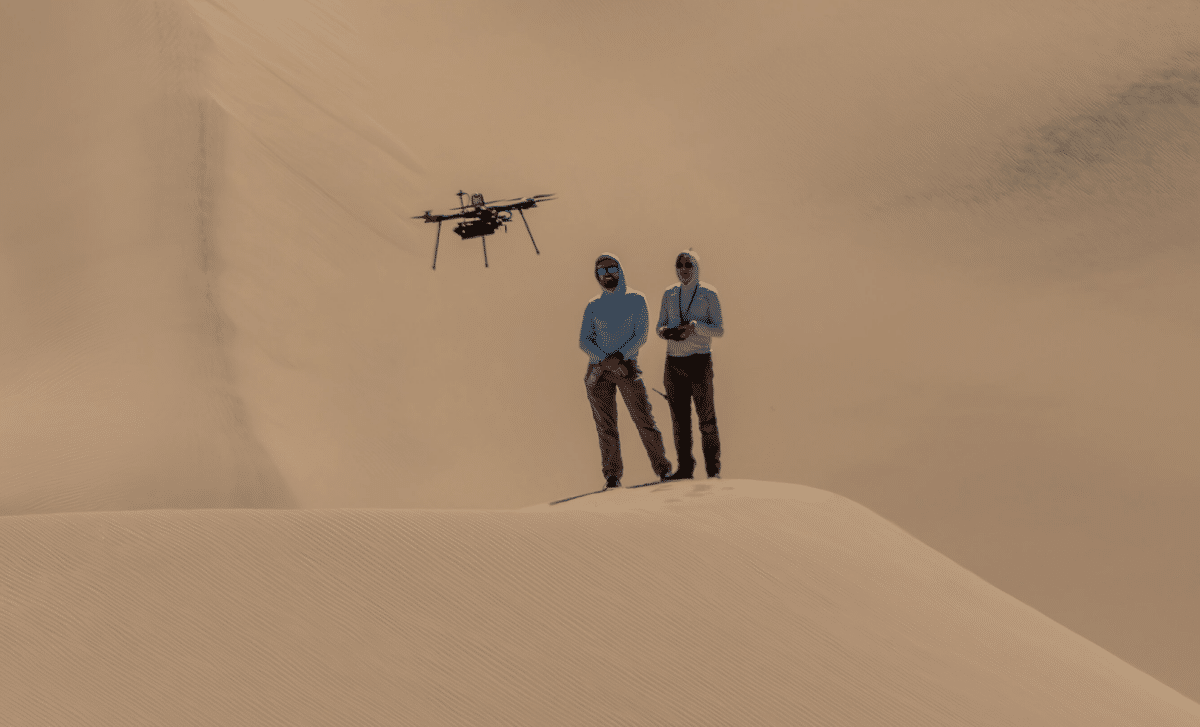
NASA is advancing its technology for Martian exploration by conducting vital tests in Earth’s deserts. A group from NASA’s Jet Propulsion Laboratory (JPL) recently deployed drones in California’s arid landscapes to enhance autonomous navigation systems intended for use on Mars. These experimental runs deliver key data that will ensure robotic explorers can endure the Red Planet’s tough conditions.
Drone Evaluation in Extreme Earth Terrains
In an effort to simulate Mars-like environments, engineers at NASA’s Jet Propulsion Laboratory carried out field tests earlier this year across Death Valley and the Mojave Desert. These locations, known for their severe and desolate terrain, act as surrogates for the Red Planet’s sand-covered expanses. Utilizing such harsh environments, NASA can mimic the hurdles autonomous machines may encounter while operating on Mars.
The test drones—three in total—were outfitted with cutting-edge flight algorithms aimed at enabling independent operations without direct human guidance. This technology is part of NASA’s Mars Exploration Program focusing on developing aerial systems that can navigate Mars’ rugged landscape unaided. A key feature under evaluation was the Extended Robust Aerial Autonomy, addressing challenges encountered by previous missions such as the iconic Ingenuity helicopter.

Insights from the Ingenuity mission underscored the need to advance autonomous flight abilities to tackle Mars’ difficult ground.
“Ingenuity was designed to fly over well-textured terrain, estimating its motion by looking at visual features on the ground. But eventually, it had to cross over blander areas where this became hard,” said Roland Brockers, a JPL researcher and drone pilot.
Death Valley: An Ideal Analog for Martian Conditions
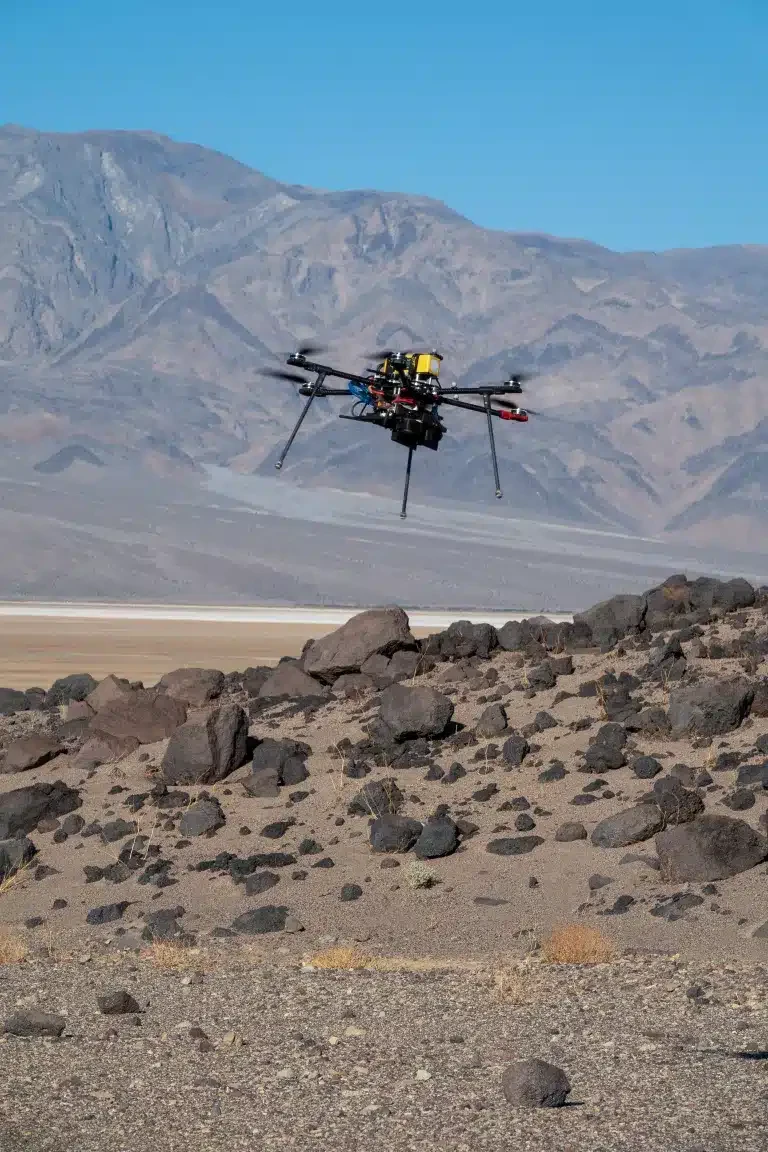
NASA’s tradition of utilizing Earth’s most extreme settings as testing sites continues with Death Valley, chosen for its suitability in simulating Martian surface features. Called a “living laboratory,” the park enables scientists to replicate many environmental aspects of Mars with remarkable fidelity. “It’s incredibly exciting to see scientists using Death Valley as a proving ground for space exploration,” stated Mike Reynolds, Superintendent of Death Valley National Park. “This highlights the park’s role beyond scenic value and recreation, as a crucial site for understanding desolate ecosystems and extraterrestrial worlds.”
Testing in such a demanding environment is indispensable for crafting technology able to operate autonomously on Mars, where communication latency and severe weather hinder direct control. Temperatures soaring to 113°F (45°C) mirror Martian heat and dryness, while featureless dunes simulate the planet’s sparse visual landscape. These conditions allowed engineers to rigorously assess drone cameras and navigation technologies in terrains lacking distinctive ground cues.
Advancing Autonomous Exploration Across Unfamiliar Martian Landscape
Field experiments like those in Death Valley are paramount for refining the robustness and capabilities of upcoming Martian robotic missions. The trials offered vital insights into the effectiveness of various camera filters in ground tracking, as well as sophisticated algorithms for obstacle detection and safe landing in uneven environments. These breakthroughs support NASA’s ambition to push the envelope of autonomous robotics on Mars.
JPL geologist Nathan Williams, central to the project, highlighted the value of hands-on trials: “Field tests provide a comprehensive understanding that surpasses computer simulations and limited orbital data. Scientific points of interest often lie in rugged, challenging areas, so we need to be prepared to explore beyond the scope of Ingenuity’s reach.” This reflects NASA’s commitment to overcoming the Red Planet’s challenging geography.
As the testing progresses, the drones will be honed to navigate difficult features such as towering sand dunes and rocky outcrops, enhancing NASA’s exploratory toolkit. The knowledge gained will contribute to the evolution of autonomous systems designed for Martian discovery missions.
Expanding NASA’s Vision for Mars Exploration Technology
Beyond drone development, NASA’s Mars Exploration Program is advancing a range of technologies intended for future planetary missions. The initiative aims to deploy robotic explorers equipped with state-of-the-art mobility and sensing solutions to traverse terrains humans cannot. Innovations include robots capable of climbing rugged slopes and autonomous gliders engineered for extended flight over Mars’ surface. One groundbreaking invention, the Mars Electric Reusable Flyer (MERF), is designed to leverage lightweight wings for long-distance aerial mapping in Mars’ thin atmosphere.
Current research and testing efforts are foundational for addressing the challenges of future Mars exploration. Whether through trailblazing drones or remote-controlled robotic systems, NASA is crafting instruments to unlock the secrets of the Red Planet, with the California desert playing a key role in readying these technologies.
- Categories:
- News




0 comments
Sign in to Comment