

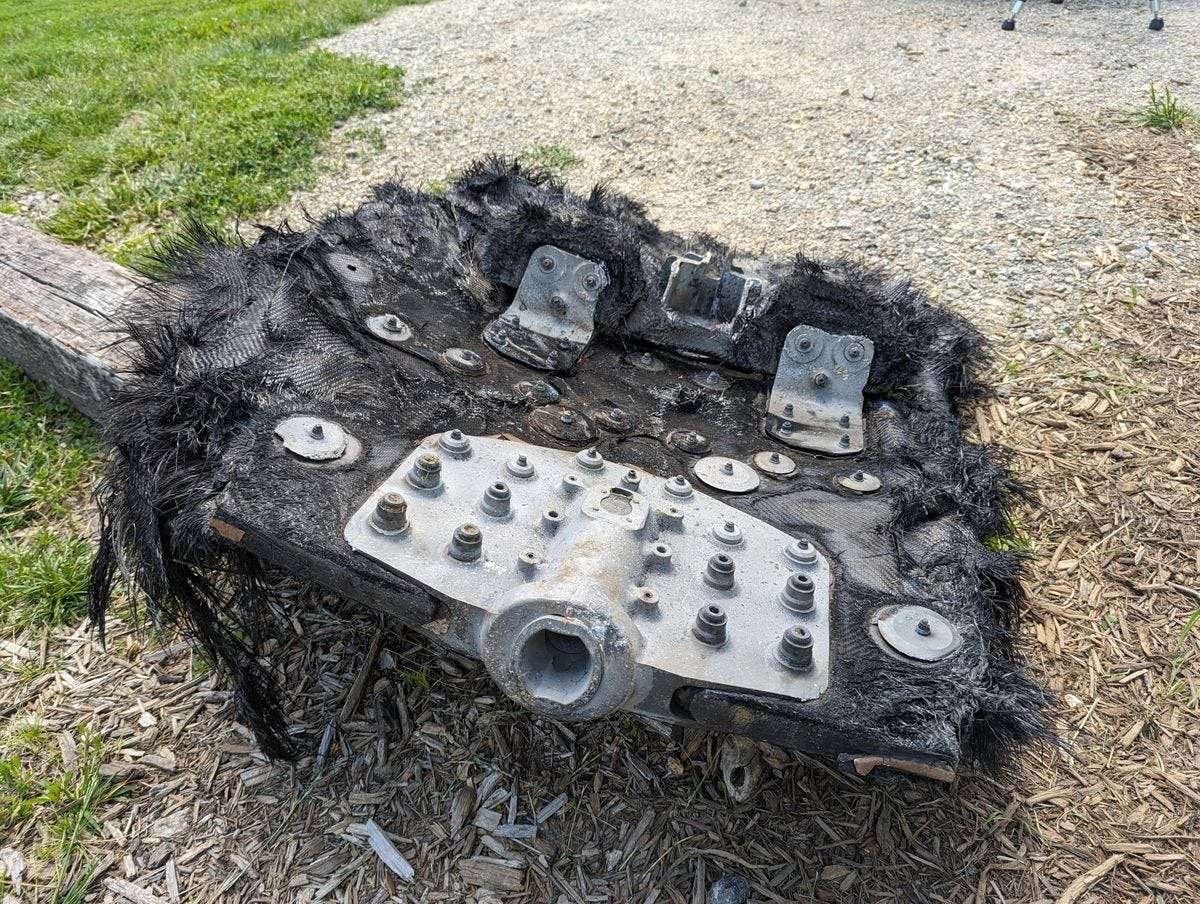
This Wednesday, the residents of Mukuku Village in Kenya witnessed an extraordinary event when a gigantic metallic ring weighing roughly 1,100 pounds (around 499 kg) and measuring 8 feet (2.44 meters) in diameter fell from orbit. This incident draws attention to the escalating hazards linked to space debris, intensified by the surge of rocket launches around the globe.
Unexpected Arrival: Orbital Junk Touches Down in Mukuku Village
Around 3 p.m. local time, Mukuku Village inhabitants were alarmed by the crash of a heavy metallic object in their vicinity. Confirmation from the Kenya Space Agency classified the item as space debris, likely a discarded part from a rocket’s separation stage. Thankfully, there were no injuries and no immediate threat to the community.
Major Alois Were from the Kenya Space Agency explained in an interview with Citizen TV that the ring-shaped debris is “probably from a rocket separation stage,” though its precise origin is yet to be confirmed. Officials retrieved debris fragments for thorough examination to identify where it came from. The agency intends to pursue accountability through existing international law frameworks once this is established.

This event is far from unique. Ordinarily, space debris is engineered to either disintegrate in Earth’s atmosphere or land harmlessly in vast oceanic zones. However, these precautions sometimes fail.
Escalating Danger from Reentering Space Debris
The Mukuku event fits into a broader pattern of similar incidents. In May 2024, a car-sized fragment from SpaceX fell onto a hiking trail at a mountain resort near Asheville, North Carolina. Jonathan McDowell, an astrophysicist at the Harvard and Smithsonian Center for Astrophysics, cautioned that the debris could have caused fatal injury had it struck someone.
While no fatalities have resulted from debris strikes so far, near misses are increasing. For example, in March 2024, a two-pound shard from the International Space Station pierced the roof of a house in Florida, prompting the affected family to file a lawsuit against NASA.
The volume of satellites and rockets placed into orbit is rising sharply, amplifying the risk of hazardous debris returning to Earth. From 2008 to 2017, global entities launched around 82 orbital rockets yearly on average. This grew to approximately 130 launches annually between 2018 and 2022, per the US International Trade Commission. In 2024 alone, launches reached a record 250.
Cluttering Near-Earth Space: An Orbital Debris Crisis
The issue extends beyond earthbound debris. Space around Earth is increasingly congested with millions of junk pieces—from defunct satellites and lost astronaut gloves to minuscule fragments no bigger than a grape. Traveling at velocities exceeding bullets, these items threaten operational satellites and vehicles.
- More than 36,500 debris pieces over 10 cm are currently monitored.
- Satellite controllers receive roughly 1,000 alerts daily about potential collisions.
- A significant smashup could spark a cascading effect—known as the Kessler Syndrome—potentially making space unusable.
Physicist Thomas Berger underscored the urgency of the problem during the American Geophysical Union’s annual meeting last December. He warned that if no measures are taken, space could become so crowded that satellite operations might become unmanageable.
This feared outcome, termed the Kessler Syndrome, threatens vital functions like global communications, weather monitoring, and scientific studies. The rise in space junk highlights the critical need for worldwide cooperation and novel technologies to clear Earth’s orbit.
Urgent Need for Worldwide Coordination
The landing of debris in Mukuku Village serves as a tangible example of the dangers posed by space debris. With the pace of rocket launches climbing, the chances of harmful debris either falling onto inhabited areas or crashing into active satellites increase. Moving forward demands strong international regulations and investment in debris cleanup technologies to preserve the orbital environment. Time is running out to protect space for future generations.
- Categories:
- News










0 comments
Sign in to Comment