
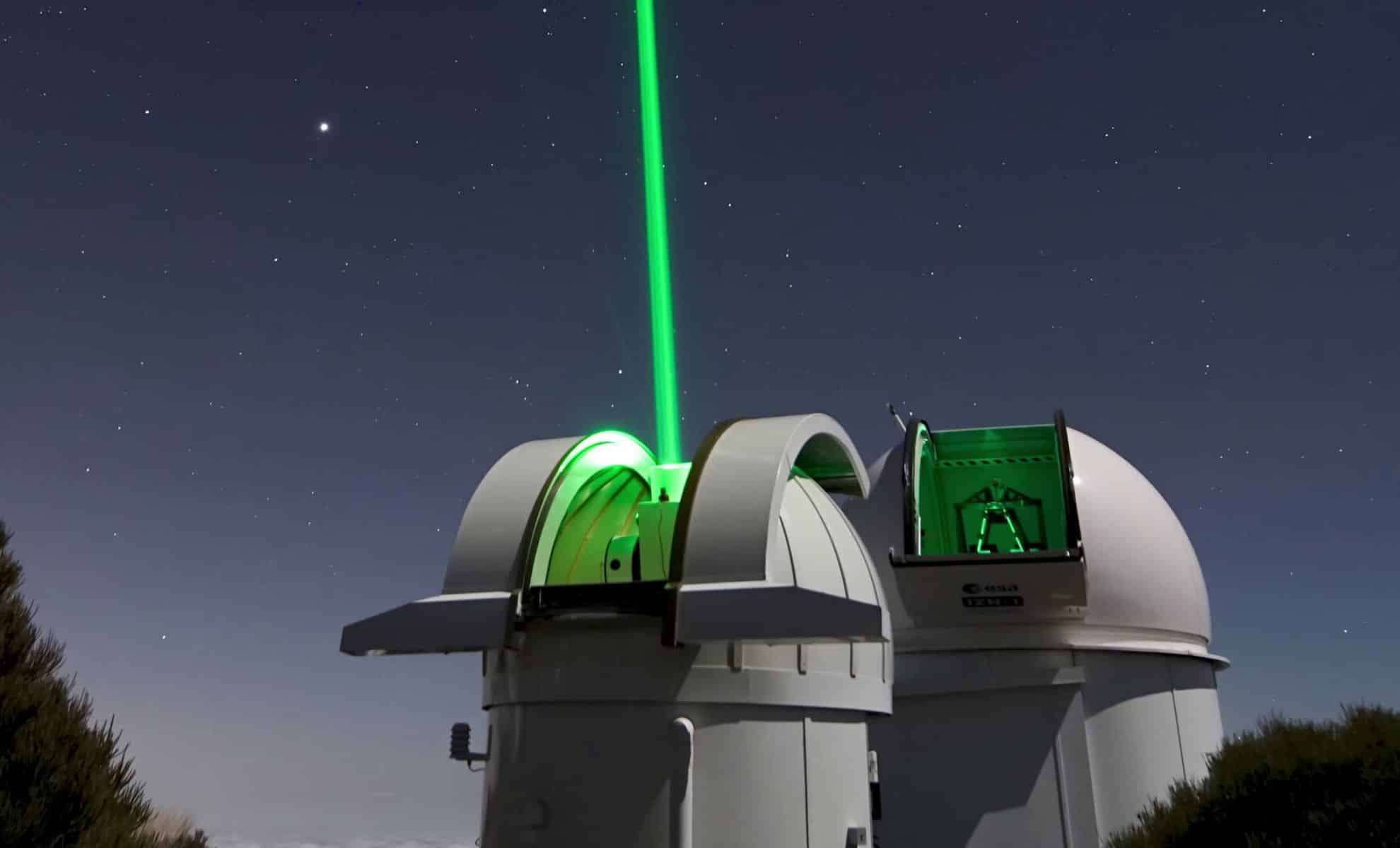
High above Tenerife, Spain, a significant advancement in space situational awareness is taking shape. The European Space Agency (ESA) has equipped the Izaña-2 laser-ranging facility to complement its counterpart, Izaña-1. This pair of synchronized optical stations is enhancing space debris detection capabilities and serving as a platform to test cutting-edge laser technologies aimed at improving collision avoidance mechanisms and ensuring long-term orbital safety.
The Escalating Challenge of Orbital Debris
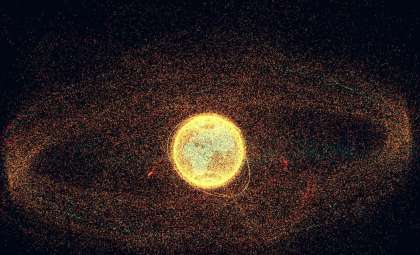
Space debris has become an urgent concern for spacecraft safety. Thousands of defunct satellites, spent rocket components, and fragments from previous collisions orbit Earth at speeds over 28,000 kilometers per hour. Even tiny fragments, comparable to a nut or bolt, pose severe threats to active satellites. This hazard translates into enormous potential financial losses and interruptions to critical services such as navigation, communication, and Earth observation for government agencies, commercial operators, and scientific organizations.
The sheer quantity of orbital debris complicates mitigation efforts. Present tracking focuses on over 36,000 objects larger than 10 centimeters, while vast numbers of smaller but still hazardous pieces remain mostly untraceable. ESA’s Space Safety Programme, coordinated from the European Space Operations Centre (ESOC) in Germany, aims to tackle this challenge with innovative technologies.

Collaborative Operation of Izaña-1 and Izaña-2
The recently completed Izaña-2 station, crafted by German firm DiGOS, functions primarily as a laser emitter. It sends focused laser pulses towards selected space objects, be they working satellites or uncontrolled debris. Some photons bounce back subtly, which are then collected and analyzed by the Izaña-1 station.
This tandem arrangement forms a bi-station laser-ranging system providing exceptionally precise measurements. The enhanced accuracy aids scientists in determining the precise orbits of objects, which is essential for collision avoidance technologies. This system enables operators to receive early warnings and execute maneuvers to sidestep potential incidents. Beyond that, this dual-station technology marks a new benchmark in optical tracking techniques that blend scientific research with practical industry applications.
Envisioning Laser-Driven Collision Prevention
ESA is also exploring how laser momentum transfer might be employed to actively adjust debris trajectories in orbit. By applying a gentle, sustained push via laser beams, instead of relocating satellites, the debris itself can be steered into safer paths.
This innovative vision is central to the OMLET (Orbital Maintenance via Laser Momentum Transfer) project, which integrates various ESA initiatives into a unified framework. The initiative aims to provide real-time ephemeris data on demand and develop laser-enabled collision avoidance services that could revolutionize space traffic control. This approach would allow proactive management of non-cooperative debris without costly and hazardous retrieval missions.
Promoting European Tech and Sustainable Space Use
ESA pursues a dual objective: protect operational spacecraft and empower European industries to pioneer commercially viable solutions. The agency envisions expanding beyond government programs to support private-sector offerings for satellite operators worldwide. These developments could underpin a commercial space traffic management market, where collision avoidance becomes a service akin to insurance coverage.
This proactive strategy is crucial for maintaining long-term space sustainability. With satellite numbers expected to soar due to mega-constellations from companies like SpaceX, OneWeb, and Amazon, protecting the orbital environment is not only a scientific priority but also vital for economic stability and global security.
- Categories:
- News

0 comments
Sign in to Comment