

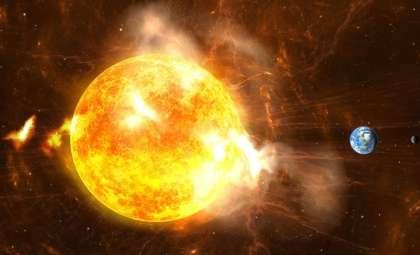
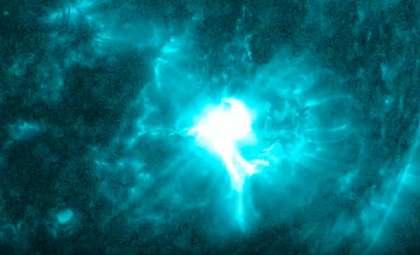
On August 12, 2024, a potent G4-level geomagnetic storm struck Earth, stemming from intense solar eruptions.
Designated by NOAA as a “severe” geomagnetic event, this disturbance ignited vivid auroras stretching over parts of the northern United States, potentially visible in over a dozen states along the U.S.-Canada boundary.
Although the storm’s peak has passed, its atmospheric effects linger, allowing for continued chances to witness glowing auroral skies for several nights ahead.

Understanding the G4 Geomagnetic Storm
Geomagnetic storms arise when charged particles emitted by the sun, specifically from coronal mass ejections (CMEs), interact forcefully with Earth’s magnetic field. These energized solar plasma bursts disrupt the magnetosphere, causing significant space weather phenomena. The event on August 12 was remarkably strong, classified as a G4-level storm by NOAA’s scale, which spans from G1 (mild) to G5 (extreme). Such a designation signals major geomagnetic fluctuations capable of interfering with various technological systems and communications.
NOAA explains that storms of this strength can lead to diminished high-frequency radio communications at polar latitudes and increased atmospheric drag impacting satellites in low Earth orbit. This can disrupt GPS navigation, radio transmissions, and satellite functions. Beyond technology, these storms pose risks to power infrastructure, including potential voltage instability and power outages if not properly managed.
The storm onset was recorded at approximately 11 a.m. EDT, when NOAA registered G4-level geomagnetic activity. While the intensity steadily dropped afterward, NOAA forecasts moderate geomagnetic disturbances through August 14, with a G2-class storm anticipated to follow.

Auroral Shows: Nature’s Nighttime Spectacle
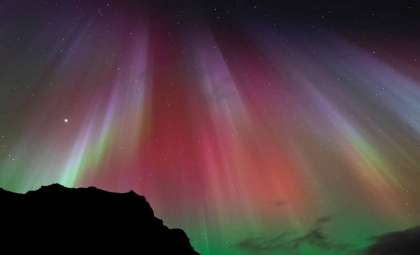
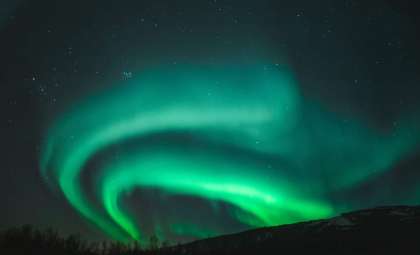
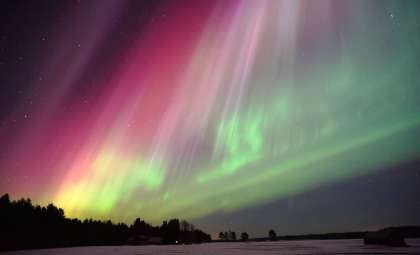
Auroras, visible manifestations of geomagnetic storms, occur when solar energetic particles collide with Earth's atmosphere, exciting molecules like oxygen and nitrogen. Guided by the planet’s magnetic field toward polar regions, these collisions cause atmospheric gases to glow in brilliant shades of green, yellow, red, and purple.
The G4 storm on August 12 produced perfect conditions for broad auroral displays. NOAA stated these lights might be visible as far south as Washington, Idaho, Montana, the Dakotas, and sections of the Great Lakes area. “While tonight's auroras may not reach the extreme southern latitudes seen in prior events, they could still be visible across parts of northern U.S.,” NOAA noted. These vibrant displays are expected to be observable over the next few evenings, especially in locations away from city light pollution.
Those eager to observe the auroras are advised by NOAA to seek dark, remote areas and consult dark sky maps to optimize viewing opportunities. While auroras can often be seen with the naked eye, smartphone cameras might better capture their intricate details and faint colors.
Solar Activity’s Wider Impact
The August 12 storm belongs to an escalating phase of solar disturbances that have unleashed at least five CMEs aimed at Earth since August 10, per NOAA. This spike in events aligns with the sun’s 11-year solar cycle, which is nearing its peak or solar maximum. Though initially predicted for 2025, recent data suggests the solar maximum may have commenced earlier, revealing increased frequency and intensity of solar storms.
Such solar phenomena carry real-world consequences. In May 2024, a severe G5 geomagnetic storm—the strongest in over two decades—impacted Earth, triggering temporary satellite malfunctions and localized power grid disruptions globally. During that incident, auroras were visible unusually far south to as low as Florida.
While this latest G4 storm posed no major damage, it underscores the sun’s capacity to affect Earth’s environment and technology profoundly. With NOAA continuously monitoring solar activity, more storms of this magnitude or stronger are expected as the solar maximum draws closer. Increasing our understanding and readiness for such events is critical amid growing dependence on satellite and communication technologies.
Advancing Solar Storm Preparedness
NOAA’s Space Weather Prediction Center is pivotal in forecasting geomagnetic storms, issuing timely alerts that enable governments, industries, and individuals to mitigate potential adverse effects. Given that solar activity is projected to rise in coming years, ongoing scrutiny and preparedness are essential to reduce risks linked to space weather.
The August 12 disturbance represents just one episode in an evolving series of solar storms as the cycle advances. As the solar maximum approaches, such events will become more frequent, necessitating heightened awareness of their impact on Earth’s technological infrastructure.
Meanwhile, sky enthusiasts can anticipate amazing auroral displays, as scientists and engineers strive to safeguard critical systems from the sun’s potent influence.
- Categories:
- Astronomy ,
- News






0 comments
Sign in to Comment