
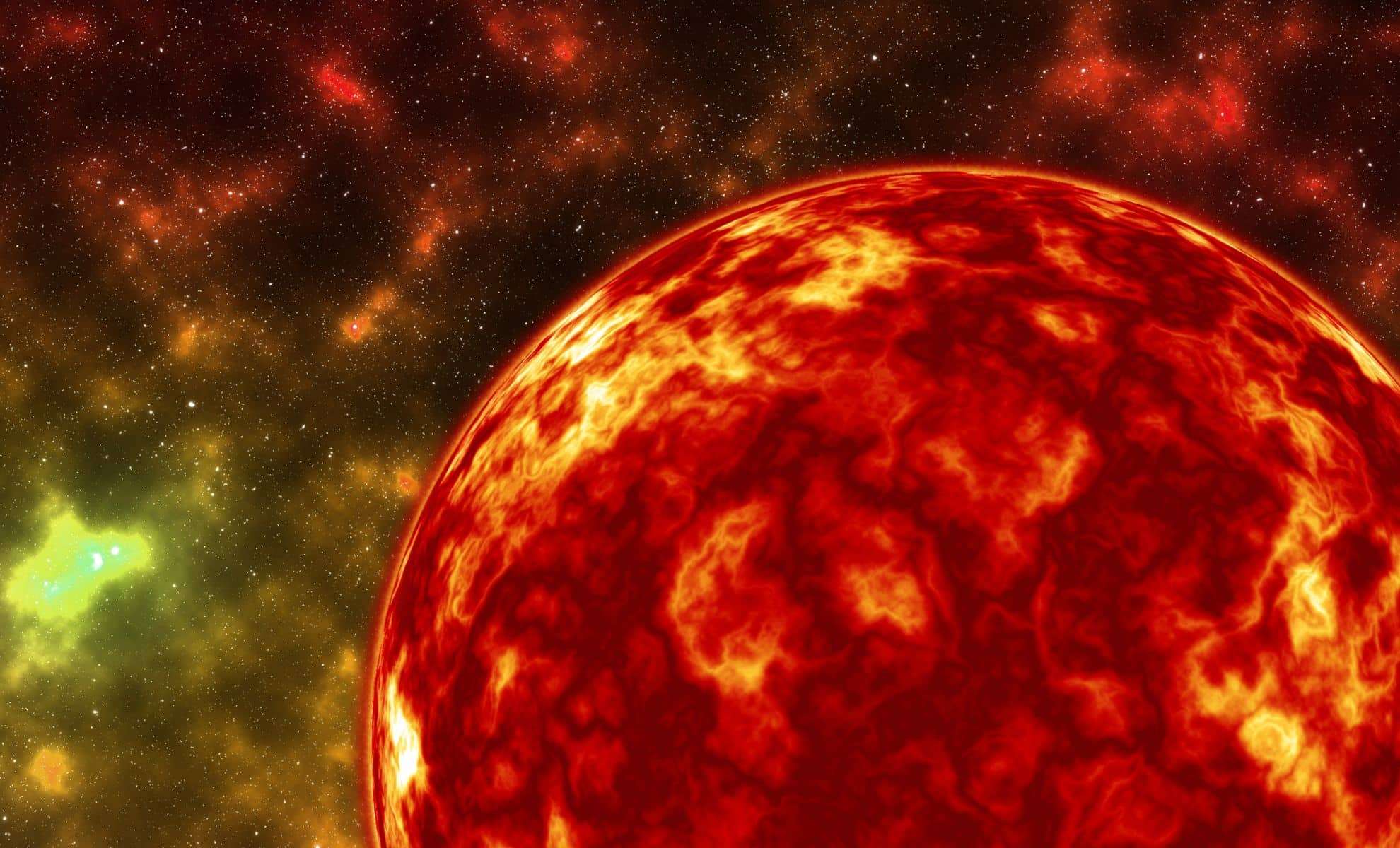
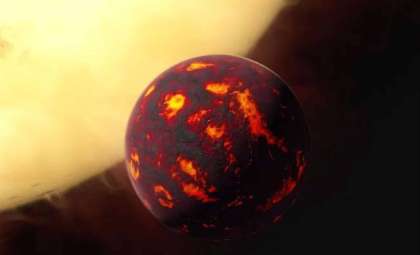
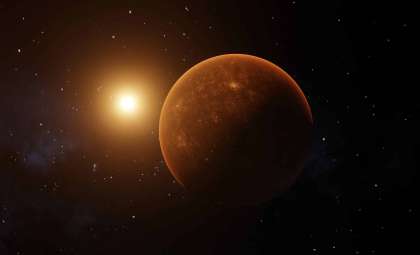
Molten lava worlds, some approximately Earth-sized, defy conventional planetary science. These extreme planets orbit so close to their stars that their years last less than a full Earth day. Their surfaces blaze with temperatures high enough to melt or vaporize rock, creating environments vastly different from those on Earth, Mars, or Venus. Despite their hostility, these conditions offer a unique window into the evolutionary history of rocky planets over billions of years.
Innovative Methods to Decode Fiery Exoplanets
A recent study published in Nature Astronomy, led by York University physicist Charles-Édouard Boukaré, introduces a novel approach to studying these worlds. By integrating geophysics, atmospheric science, and mineral chemistry, Boukaré’s research team examined the interactions between molten rock, vapor, and solid crust over extensive geological periods.
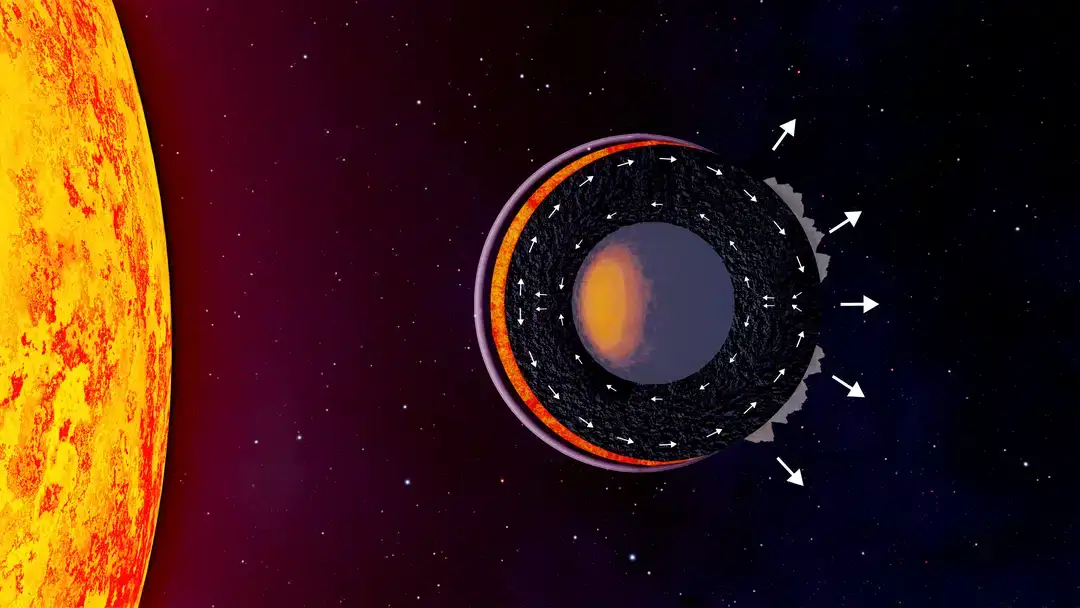
“Lava worlds exist in such extreme orbits that traditional knowledge of rocky planets in our solar system cannot be directly applied,” Boukaré states. Utilizing sophisticated computer simulations, the team identified two fundamental planet interior states. Newly formed lava planets remain entirely molten, with heat circulating seamlessly and their atmospheric composition mirroring that of the planet itself.

The Role of Chemical Distillation in Planetary Transformation
A key aspect of this research is the process of chemical distillation. As rocks melt or vaporize, their elements separate based on physical properties—heavier constituents like magnesium and silicon stay in liquid or solid phases, while lighter elements such as sodium and potassium move into the vapor phase. Over time, this continuous melting and solidifying cycle significantly transforms a planet’s outer layers.
“Although amplified on lava worlds, these dynamics are essentially the same as those shaping rocky planets within our own solar system,” Boukaré notes. Earth’s ancient lava flows and crust carry chemical signatures from similar processes, but in molten lava planets, these effects are ongoing and accelerated by intense heat and atmospheric loss.
The findings also suggest that magma oceans on lava planets remain liquid for billions of years, unlike those on young planets within our solar system, promoting persistent chemical separation between vapor, liquid, and solid states.
James Webb Telescope to Test These Ambitious Theories
The team has acquired 100 hours of observing time on the James Webb Space Telescope (JWST) to verify their models. JWST’s cutting-edge infrared instruments will allow detailed analysis of lava planet atmospheres, enabling detection of elements like sodium and potassium. Confirming their presence or absence will help identify if these planets remain molten or have solidified.
“Distinguishing between young and mature lava planets through observation,” Boukaré explains, “would be a critical advancement beyond the traditional snapshot perspective of exoplanets.” Lead observations will be carried out by Prof. Lisa Dang from the University of Waterloo, with her team focusing on linking atmospheric chemistry to planetary interior processes.
These observations promise to deepen our comprehension of lava planets and overall rocky planet evolution, shedding light on early Earth and other worlds that might support life.
Planetary Winds, Magma Oceans, and Unique Chemical Signatures
Tidal locking of lava planets results in stark temperature contrasts between their blistering day sides and frigid night sides. Strong winds generated by this disparity transport vapor and heat across the planet, redistributing material between hemispheres.
Previous models considered these planetary winds but overlooked interactions between molten rock and the underlying solid mantle. This new research fills that void by employing three-dimensional simulations, tracking how key rock-forming elements like magnesium, silicon, and iron behave in various physical phases.
- Categories:
- News



0 comments
Sign in to Comment