
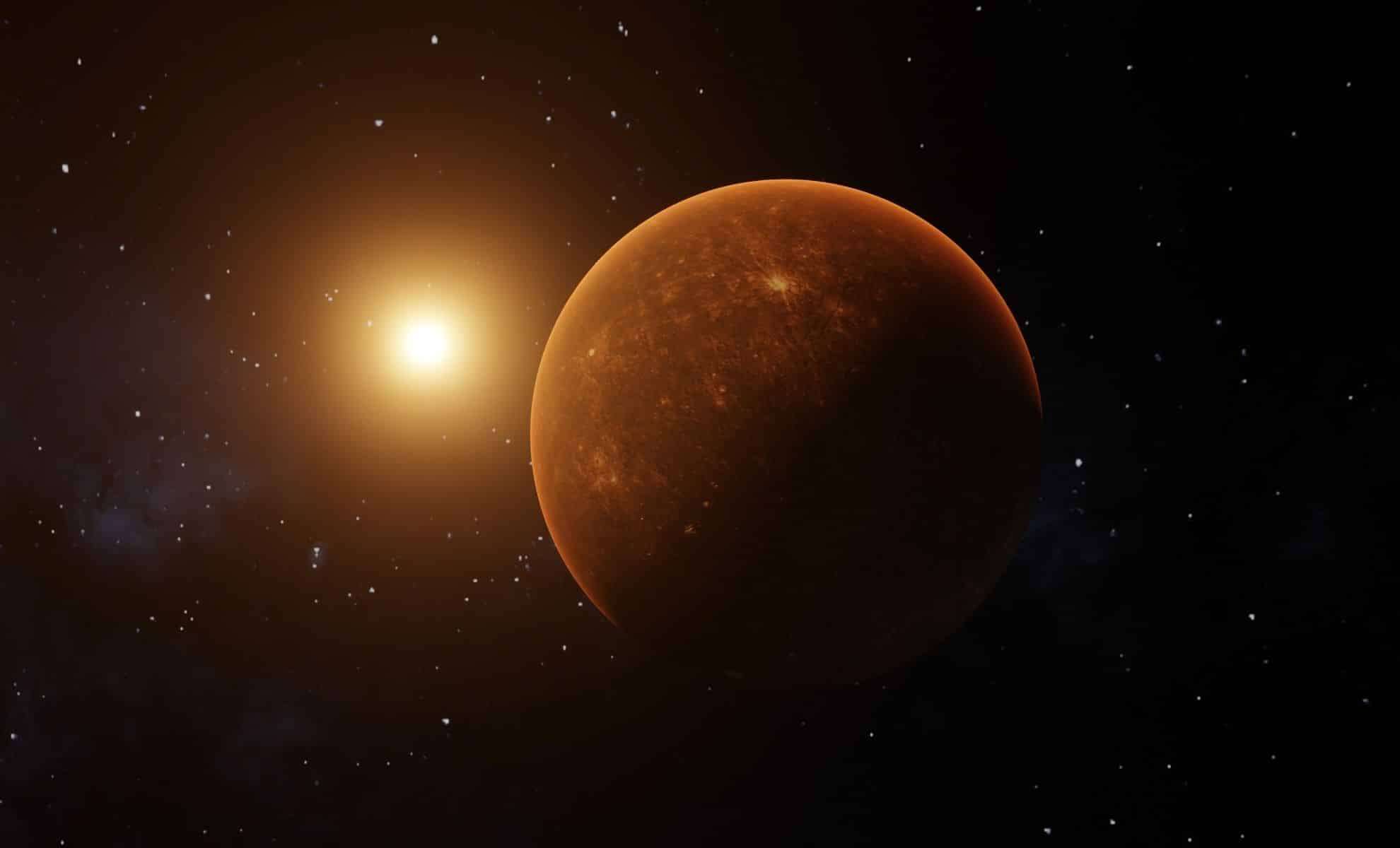
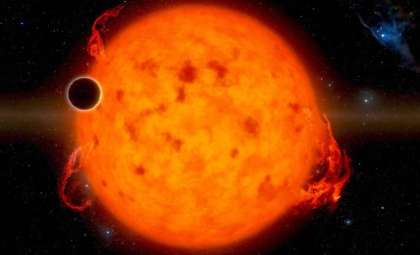
Astronomers have recently identified an extraordinary planetary system orbiting the dim orange star WASP-132, distinguished by two vastly different exoplanets. One is a rocky super-Earth with a swift orbital period just over a day, while the other is an immense icy gas giant that revolves around its star every five years.
A Fast-Spinning Rocky Planet
The inner planet, called WASP-132 c, is an exceptionally close super-Earth, located only about 1.7 million miles from its host star. This close proximity causes it to orbit the star once every 24 hours and 17 minutes, faster than most comparable exoplanets. Despite its proximity—closer than many Earth satellites orbit our planet—its density of 5.5 g/cm³ suggests a predominantly rocky composition. This density marginally exceeds Earth’s, indicating a mostly solid planetary structure.
Observations by the TESS space telescope confirmed the planet via photometric monitoring, noting transit durations exceeding one hour. Additional spectroscopic measurements using the HARPS instrument helped determine the planet’s mass, about six times that of Earth. Dr. David Armstrong from the University of Warwick noted, “This configuration, featuring a super-Earth inside a hot-Jupiter system, is unprecedented in our observations.”

The Remote Frozen Giant
Farther out, WASP-132 d is a colossal icy planet orbiting at approximately 252 million miles from its star, akin to the Sun-to-asteroid belt distance in our solar system. This giant possesses a mass roughly 5.2 times greater than that of Jupiter. Given its vast distance, it captures less than one percent of the stellar radiation Earth receives, leading to frigid temperatures plunging hundreds of degrees below freezing.
Despite its cold environment, this outer world presents a valuable subject to study a youthful ice giant still cooling after formation. Researchers analyzed over nine years of data from the CORALIE spectrograph, tracking the slow orbital motion and detecting velocity changes hinting at another possible, yet undetected, distant companion. Extended observations like these are crucial for understanding distant frozen planet dynamics.
A Unique Laboratory for Planet Formation
The coexistence of a dense rocky super-Earth and a distant ice giant around the same star challenges prevailing theories of planetary formation and migration, which often suggest that hot Jupiters disrupt the orbits of smaller planets or eject them entirely from the system.
The discovery team proposes that WASP-132 c may have migrated gently within the protoplanetary disk, avoiding disruption of the inner super-Earth’s orbit. This scenario could account for the stable, coexisting orbits of these diverse planets. François Bouchy of the University of Geneva (UNIGE) described this as “an exceptional opportunity to investigate the formation and evolutionary processes in multi-planetary systems.”
Insights into Astrochemical Processes
This finding also impacts the field of astrochemistry, which examines the synthesis of complex organic molecules in space. These molecules, similar to those found in comets and asteroids, are essential for delivering water and organics to planets. For a cold, methane-rich atmosphere like that of WASP-132 d, such compounds could remain stable, potentially unveiling information about life's chemical precursors.
Upcoming observations with advanced instruments like the James Webb Space Telescope aim to probe the atmospheres of these exoplanets. By studying their transits, astronomers hope to detect signatures of methane, ethane, or even more complex organics, bridging planetary science with the origins of prebiotic chemistry.
- Categories:
- News









0 comments
Sign in to Comment