

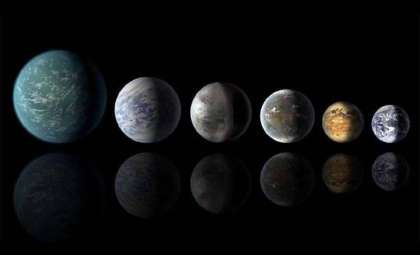
Astronomers are pushing for an updated planet definition that would officially include the myriad worlds orbiting stars beyond our solar system.
This effort aims to overcome the shortcomings of the existing criteria and establish a more universal and precise way to categorize planetary bodies throughout the cosmos.
Limitations of the Existing Planet Definition
The current planet classification, set by the International Astronomical Union (IAU) in 2006, demands three conditions: the object must circle the Sun, be massive enough for gravity to shape it into a near-sphere, and have cleared its orbital path of other debris.

However, this definition excludes exoplanets, celestial objects orbiting stars other than the Sun, and relies on ambiguous standards like “clearing the neighborhood,” which are difficult to apply broadly given the diversity of planetary systems.
A New Mass-Based Planet Definition
Leading the charge is Jean-Luc Margot from the University of California, Los Angeles, who, along with colleagues, has introduced a planet definition focused on mass. Their proposal classifies planets as bodies having a mass between 1023 kilograms and less than 13 times that of Jupiter.
Focusing on mass sidesteps the problematic orbital clearing and shape criteria, offering a measurable and universally applicable standard, regardless of a planet's location or formation environment.
Co-author Brett Gladman of the University of British Columbia highlighted the impracticality of current shape requirements, stating, “The Earth isn’t a perfect sphere, so how round does a planet need to be? We can’t accurately determine the shape of distant worlds with present technology.” Margot emphasized, “Thousands of planets orbit stars beyond our Sun, but the IAU definition excludes them, which is a significant flaw. Our definition includes objects orbiting any star, stellar remnant, or brown dwarf.”
Impact on Classification of Exoplanets
Should this definition be accepted, it would formally recognize thousands of exoplanets as planets. This reflects growing awareness of the wide variety of planetary environments around stars and stellar remnants beyond the solar system.
By basing classification on straightforward, quantifiable attributes like mass, the revised criteria aim to ensure consistency in naming planets across the universe, thereby deepening our insight into the diversity of planetary systems.
Gladman noted, “Using mass as the primary criterion eliminates disputes over whether specific objects meet uncertain standards,” making the definition both practical and inclusive.
Advancing Planetary Science
The team plans to present their mass-centered definition at the IAU General Assembly in August 2024 for discussion and possible approval. Although official adoption may take time, this marks a pivotal move toward modernizing our understanding of what defines a planet.
By anchoring the planet definition to its most measurable attribute—mass—the scientific community can foster clearer communication and broaden recognition of the immense variety of celestial bodies discovered across the cosmos.
In closing, this proposed mass-based update addresses the flaws of the current IAU definition, potentially adding thousands of exoplanets to the official roster of planets.
As astronomy continues revealing new worlds, redefining a planet based on mass ensures our classification system evolves alongside our expanding cosmic knowledge.
- Categories:
- Astronomy ,
- News ,
- Space








0 comments
Sign in to Comment