

Recent investigations have uncovered that many rocky exoplanets, including the larger “super-Earths,” might contain substantial amounts of water locked within their molten iron cores.
This insight is transforming the scientific perspective on where water exists in these planets and challenges earlier ideas regarding the accessibility of surface water and planetary habitability.
Findings indicate that up to 95% of a planet’s water might be trapped deep inside its interior, sequestered in the iron-rich core and unavailable to sustain surface life.

Subsurface Water Reserves Locked Deep Beneath
The study, spearheaded by Caroline Dorn, an exoplanet expert at ETH Zurich, explains that in a planet’s formative stages, it is enveloped by a molten magma ocean. As this molten layer cools, it solidifies into a crust while heavier elements like iron descend to form the core.
Dorn clarifies that water present during formation dissolves into the magma ocean. “Planets contain much more water internally than previously believed,” Dorn stated, pointing out that early planetary environments channel significant water quantities into the interior during their development.
As the magma cools and solidifies, water molecules adhere to iron droplets within the molten material. These droplets, moving like rafts, ferry the entrapped water downward into the planet’s core. Dorn elaborates, “The iron droplets behave like a raft that is conveyed downwards by the water.” This process effectively secludes the water within the planet’s core, preventing it from surfacing where it could support life. The water doesn't form surface oceans but remains bound to the planet’s core, influencing the planet’s habitability in a fundamental way.
Understanding Water Storage in Super-Earths
While Earth experienced a similar mechanism, this research primarily addresses larger rocky exoplanets called super-Earths. These can possess up to 10 times Earth's mass, resulting in more intense internal pressure and heat. Prior theories questioned if such planets could retain substantial water internally like Earth does, but this new work indicates they can.
“As planetary mass increases, more water becomes entrapped with iron droplets deep in the core,” Dorn explained. The study suggests that iron in cores can store up to 70 times more water compared to common silicate minerals found in planetary crusts.
However, under the immense core pressure, water doesn’t remain as H2O but disassociates into its components: hydrogen and oxygen. These elements are stored within the interior, effectively preventing water from surfacing.
This implies that although these planets may harbor abundant water, it is locked away inside and not accessible where life could potentially develop. This overturns previous views that so-called “water worlds” are ocean-dominated. Instead, they may have most of their water concealed deep in their cores.
Reevaluating Habitability: The Role of Water and Land
The revelation that most water on rocky exoplanets could be trapped internally holds broad consequences for assessing planetary habitability. Traditionally, planets abundant in surface water—often termed “ocean worlds”—were considered promising for life. This study highlights that such extensive surface waters might actually be rare, with the majority of planetary water tucked away below.
For life resembling Earth's, a combination of water and land appears essential. Water alone may not be sufficient, as land provides essential nutrients that flow into oceans, sustaining marine ecosystems. Moreover, landmasses help regulate climate through processes like the carbon cycle. Planets covered entirely by water may lack these stabilizing factors, making it difficult to maintain conditions favorable for life.
“While water is critical for life, a planet covered solely in water may not support habitability,” Dorn emphasized. Without land, vital nutrient cycling and long-term climate regulation might be absent, potentially hampering the development and persistence of life.
Insights into Hycean Worlds and Their Water Content
The research also poses new questions about Hycean worlds—planets thought to have extensive hydrogen atmospheres and liquid surface oceans. These worlds, named by combining hydrogen and ocean, were believed to be strong candidates for hosting life due to their warm, ocean-rich surfaces.
Dorn’s findings indicate that many Hycean planets may similarly sequester large volumes of water deep inside, altering our expectations about their habitability.
Dorn remarked, “Discovering water in a planet’s atmosphere likely means there’s even more water locked away inside.” Hence, despite atmospheric water detection on these planets, the bulk may be inaccessible to surface life.
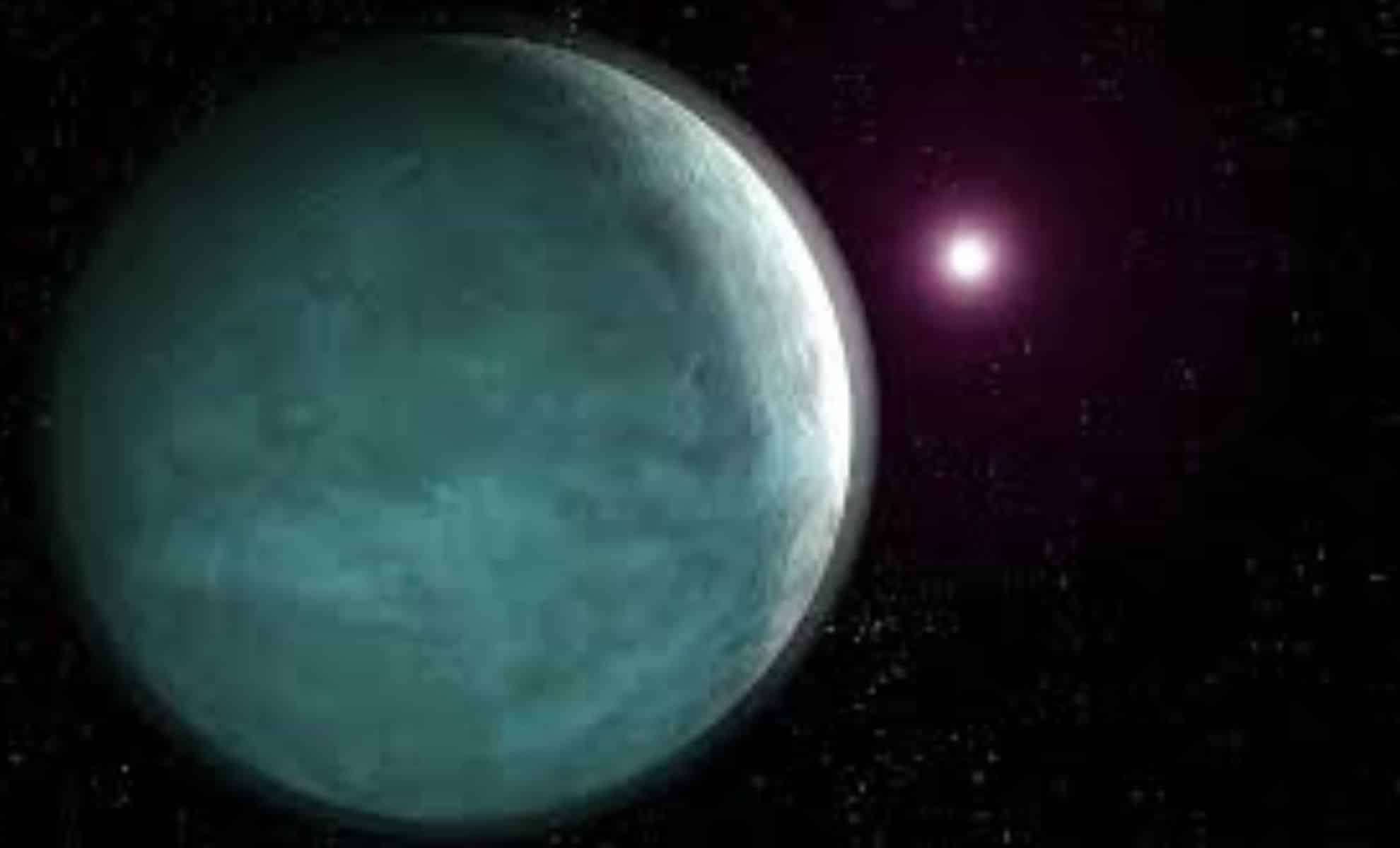
A notable example is TOI-270d, a super-Earth located approximately 73 light-years away orbiting a red dwarf star. Observations from the James Webb Space Telescope (JWST) have identified traces of methane, carbon dioxide, and water vapor in its atmosphere. Dorn, involved in the planet’s study, noted, “Data indicate an exchange between the planet’s interior magma ocean and atmosphere,” supporting the idea of water being drawn inward towards its core.
Exploring New Avenues in Exoplanet Science
Uncovering the possibility that water is sequestered in the cores of rocky exoplanets profoundly shifts how astronomers assess life-supporting environments beyond our solar system. Rather than planets dominated by surface oceans, many exoplanets might be drier at the surface with reservoirs hidden deep within.
This insight will influence upcoming exoplanet investigations and atmospheric analyses. A deeper understanding of how water exists in planetary interiors will refine the search for worlds capable of harboring life and inform future space missions.
Published in Nature Astronomy on August 20, 2024, this study represents a pivotal advance in exoplanet research. As observational methods improve and scientists continue probing distant planets, clearer insights on the essential conditions for habitability are expected to emerge.
- Categories:
- Astronomy ,
- News ,
- Space




0 comments
Sign in to Comment