
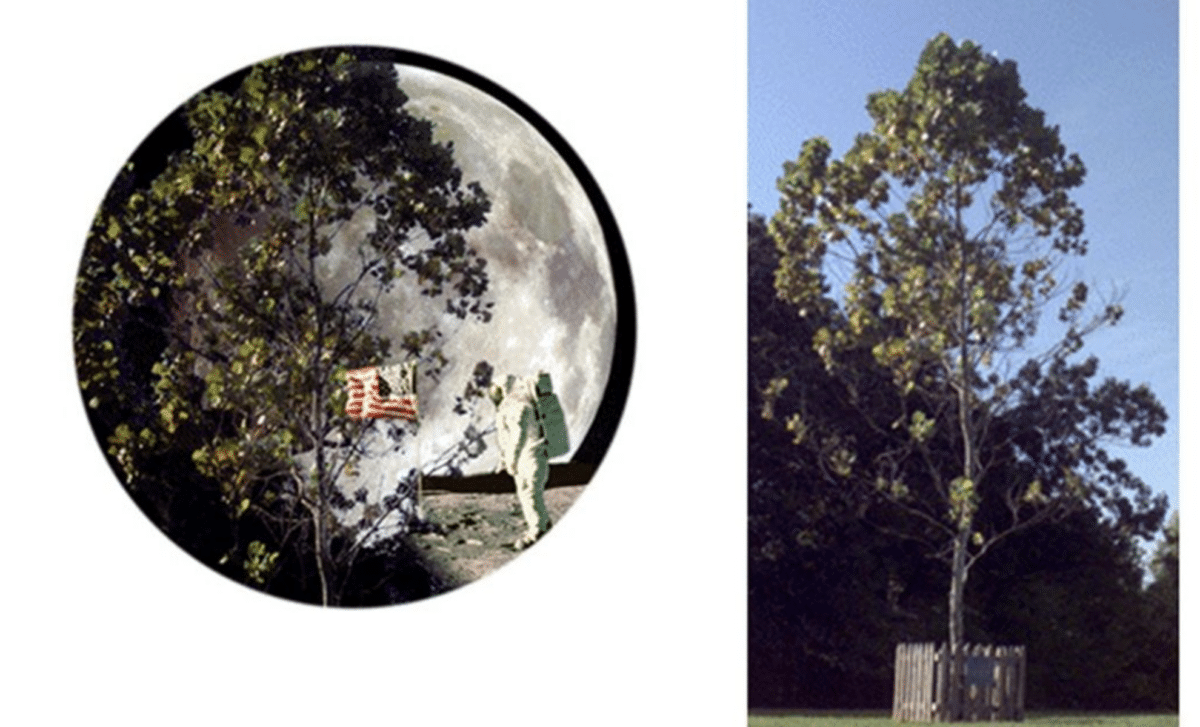
In 1971, the Apollo 14 mission returned with a unique cargo: hundreds of tree seeds that had orbited around the Moon. Known as “Moon Trees,” these seeds were part of an intriguing experiment led by astronaut Stuart Roosa, a former smokejumper for the U.S. Forest Service. Today, their descendants serve as living reminders of scientific inquiry and humanity’s adventurous spirit.
Seeds That Went Beyond Earth
During the Apollo 14 voyage, astronaut Stuart Roosa carried an assortment of seeds from species such as loblolly pine, sycamore, sweetgum, redwood, and Douglas fir in his personal kit. The goal was to observe how the harsh conditions of space would influence their development. What was originally a modest side study eventually captured global attention.
According to NASA,

“Unfortunately, the seed bags burst open during the decontamination procedures after their return to Earth, and the seeds were scattered about the chamber and exposed to vacuum, and it was thought they might not be viable.”
Despite these challenges, NASA scientists planted the seeds to gauge their viability. The outcome was remarkable: a large number of seeds germinated and grew normally, showing no visible effects from their voyage through space.
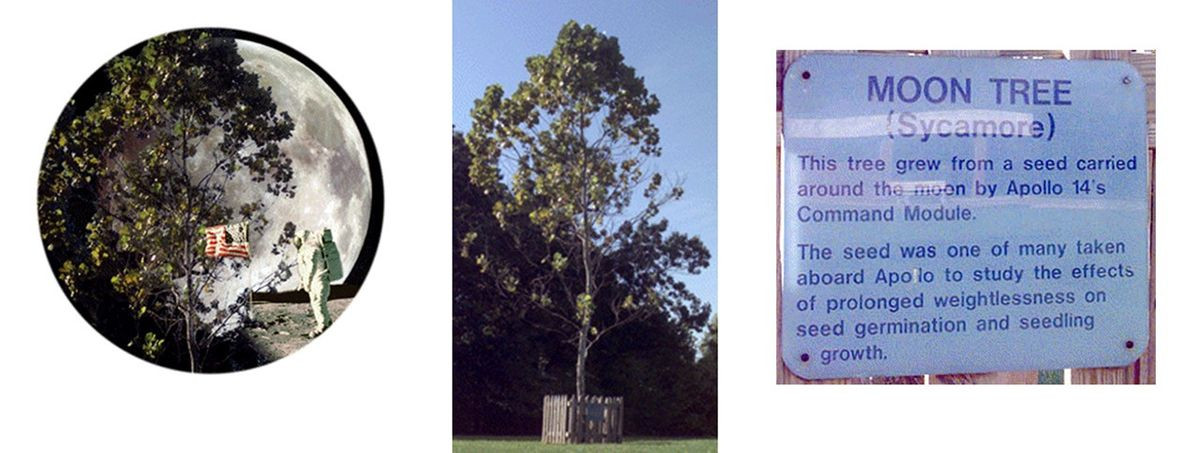
More than 400 seedlings matured into full-grown trees. Some were planted alongside Earth-grown control trees to compare their growth over time. Interestingly, no significant differences were observed between the Moon Trees and their Earth-bound counterparts.
Earthly Plantings Marking a Nation’s Bicentennial
The planting of Moon Trees was closely linked to the U.S. Bicentennial celebrations during 1975 and 1976. NASA elaborates,
“Some of these were planted with their Earth-bound counterparts as controls, (as might be expected, after over forty years there is no discernable difference) but most were given away in 1975 and 1976 to many state forestry organizations to be planted as part of the nation’s bicentennial celebration,” NASA explains, adding that “the trees were only sent to countries and states where they could be grown.”
These space-grown saplings were not exclusive to the U.S. “A loblolly pine was planted at the White House, with others growing in Brazil, Switzerland, and even gifted to the Emperor of Japan.” Each tree symbolized a unique bond linking Earth’s natural world to humanity’s ventures beyond it.
Numerous Moon Trees remain alive today, their markers worn but their significance enduring. Their global distribution reflects a historic era when space exploration fostered a collective sense of hope and accomplishment.
The Deeper Meaning Behind Moon Trees
NASA dispatched telegrams along with many of these trees, emphasizing their deeper symbolic value. The message conveyed:
“This tree which was carried by Astronauts Stuart Roosa, Alan Shepard and Edgar Mitchell on their mission to the moon, is a living symbol of our spectacular human and scientific achievements,” the telegrams read. “It is a fitting tribute to our national space program which has brought out the best of American patriotism, dedication and determination to succeed.”
This message embodied the Apollo era’s mix of patriotism and scientific wonder. The Moon Trees continue to stand as natural monuments to exploration, demonstrating that the quest for knowledge is grounded in the life around us.
NASA still monitors the locations of surviving Moon Trees and oversees the “Moon Tree 2.0” initiative, which involves seeds flown aboard the Orion spacecraft during the Artemis I mission. This effort connects the historic Apollo legacy to the future of lunar exploration.
A Growing Heritage
Moon Trees symbolize both scientific exploration and humanity’s enduring connection to nature. Their story is a reminder that discovery continues beyond space missions, thriving through time and inspiring generations. From American forests to royal gardens abroad, these trees serve as living archives of one of humanity’s most remarkable ventures.
Their history, filled with resilience and fascination, stands as proof of what unfolds when human curiosity extends beyond Earth’s atmosphere.
- Categories:
- Space



0 comments
Sign in to Comment