
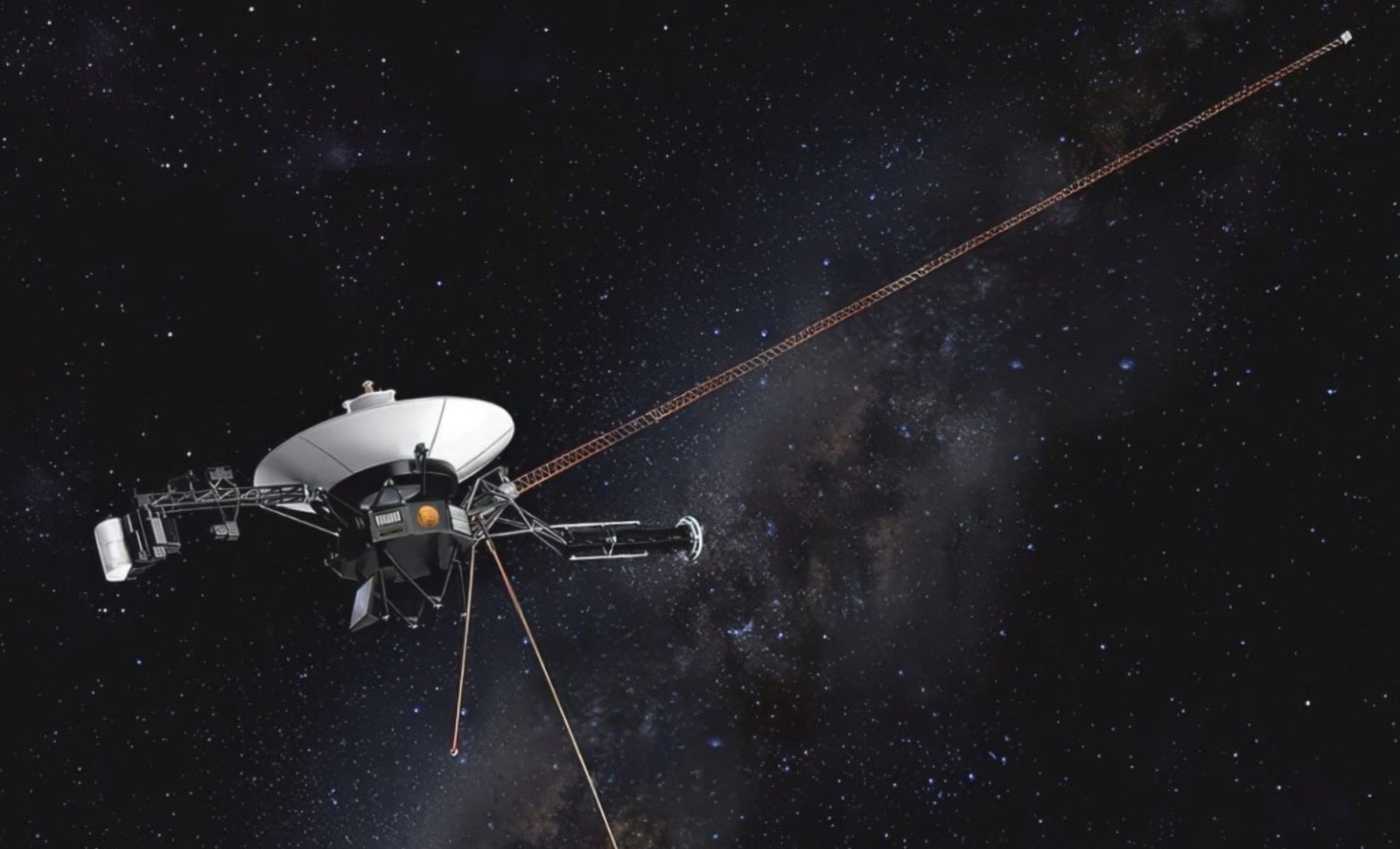
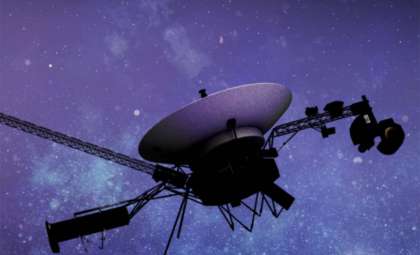
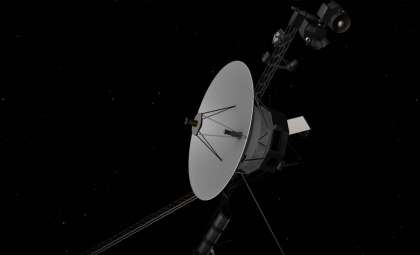
More than 45 years after its launch, Voyager 1 continues its remarkable trek, journeying farther into space than any other human-made object. It now travels in complete solitude, well beyond Pluto’s orbit and the Sun’s protective bubble, venturing into a region where space becomes eerily quiet and largely unexplored.
What sets this spacecraft apart is not just how far it has gone but the historic milestone it’s poised to achieve. Soon, it will cross a boundary no previous mission—be it crewed or robotic—has ever reached. This moment carries profound symbolic significance, offering a new perspective on the meaning of exploration.
Interestingly, this story isn’t about cutting-edge technology. Voyager 1 was constructed in the 1970s with hardware that would now be considered vintage, equipped with limited memory and programmed in coding languages seldom used today. Despite having exceeded all expectations for its lifespan, its voyage endures.

This journey will soon draw a new frontier line between human-made creations and the vastness of the cosmos.
Setting a New Distance Record for Signal Travel Time
In November 2026, Voyager 1 will be located at one light-day away from Earth—approximately 25.9 billion kilometers. At this range, any radio signal sent from Earth will need exactly 24 hours to reach the spacecraft, with an additional 24 hours required for its response to return. Although this is a purely physical measurement, it marks an extraordinary achievement. No object built by humans has ever communicated across such an immense distance.
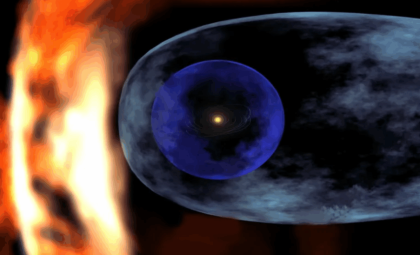
Currently, Voyager 1 speeds through space at around 56,000 kilometers per hour. Launched in 1977, it passed beyond the heliosphere—the boundary where the Sun’s influence wanes—in 2012. Since then, the probe has been navigating the interstellar medium, sending back data on cosmic rays and magnetic fields from an unexplored sector of space.
Reaching the one light-day distance is more than a statistic; it represents a shift in how we interact with distant spacecraft. Commands sent to Voyager 1 will now involve a waiting period of 48 hours—reflecting the time lag between transmission and reception.
This milestone has drawn significant interest. A graphic shared on X highlights just how vast this gap has become, emphasizing the extended silence during communication in an era dominated by instantaneous messages.
Endurance Beyond Its Original Design, Without Backup
Voyager 1 was designed for a brief mission focusing on the outer planets, expected to last just five years. Through extensions and skillful engineering, it surpassed expectations, traveling beyond Saturn, Neptune, and exiting our solar system.
The probe's onboard computer contains only 69 kilobytes of memory—less than what’s needed for a typical email attachment. Its operations rely on aging electronics, with engineers sending commands in an old assembly language. Each command must be meticulously prepared, as errors could end the mission.
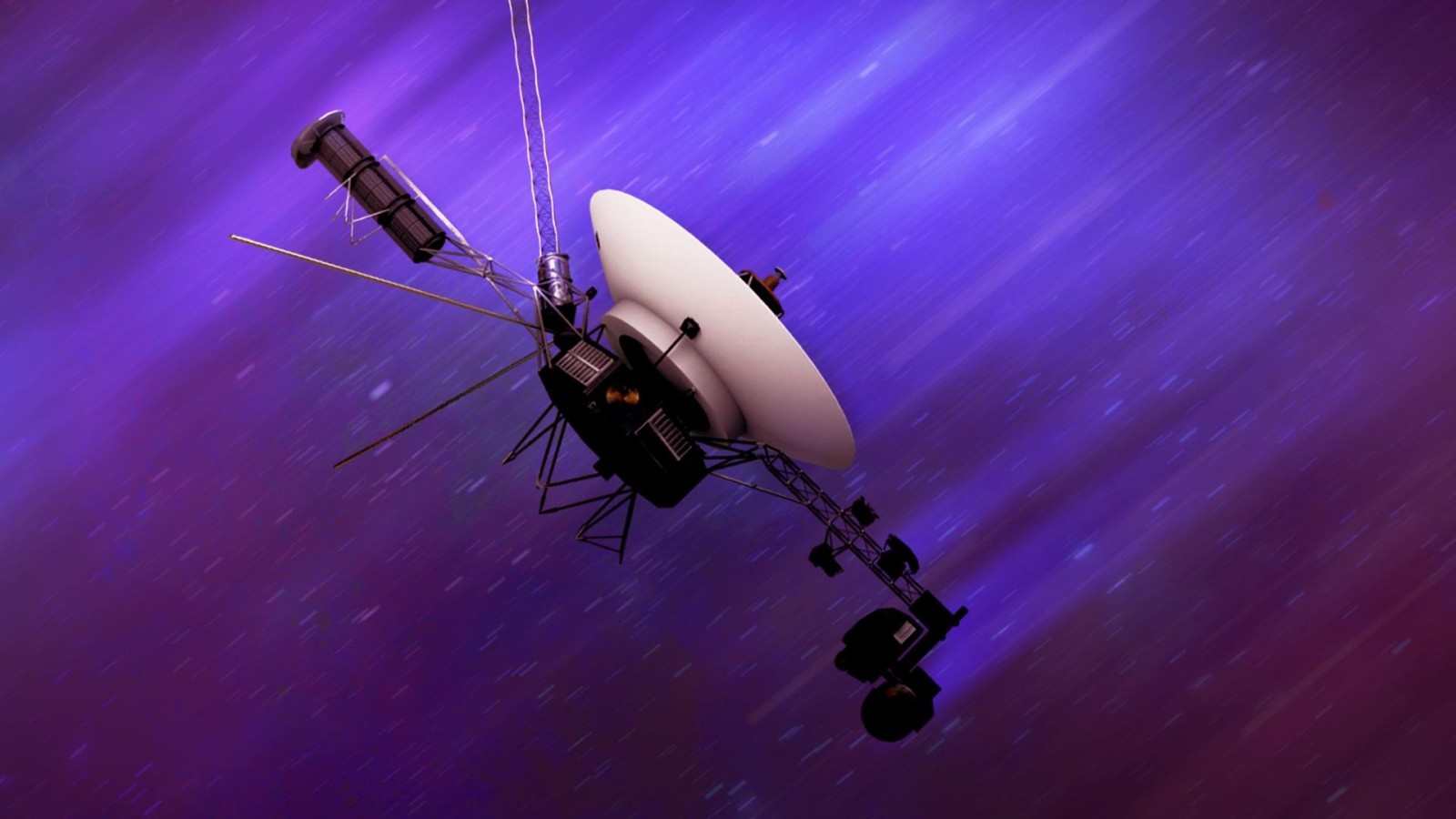
In 2025, the spacecraft faced a critical challenge. For several weeks, it emitted repeated, unusable data. Engineers identified corrupted memory as the cause and rerouted signals through a functioning system segment—an inventive fix that restored its operations. This success required teamwork spanning across billions of kilometers.
A Timeless Traveler into the Cosmic Future
Power sources onboard are waning. By the early 2030s, Voyager 1 will no longer generate enough energy to power its instruments. Once that occurs, it will cease communication, though it will keep moving silently onward.
The probe is predicted to enter the Oort Cloud—a distant collection of icy bodies marking the boundary of the solar system—in about 300 years and could take roughly 30,000 years to traverse it. If it withstands the journey, Voyager 1 will pass approximately 1.6 light-years from a star in Ursa Minor, nearer to that star than to our Sun.
Inside the spacecraft is the Golden Record, a copper disc engraved with Earth's sounds, images, and greetings. Though not expected to be retrieved, it serves as a cosmic message in a bottle—one of humanity’s most ambitious efforts to reach beyond our world.
- Categories:
- Space




0 comments
Sign in to Comment