
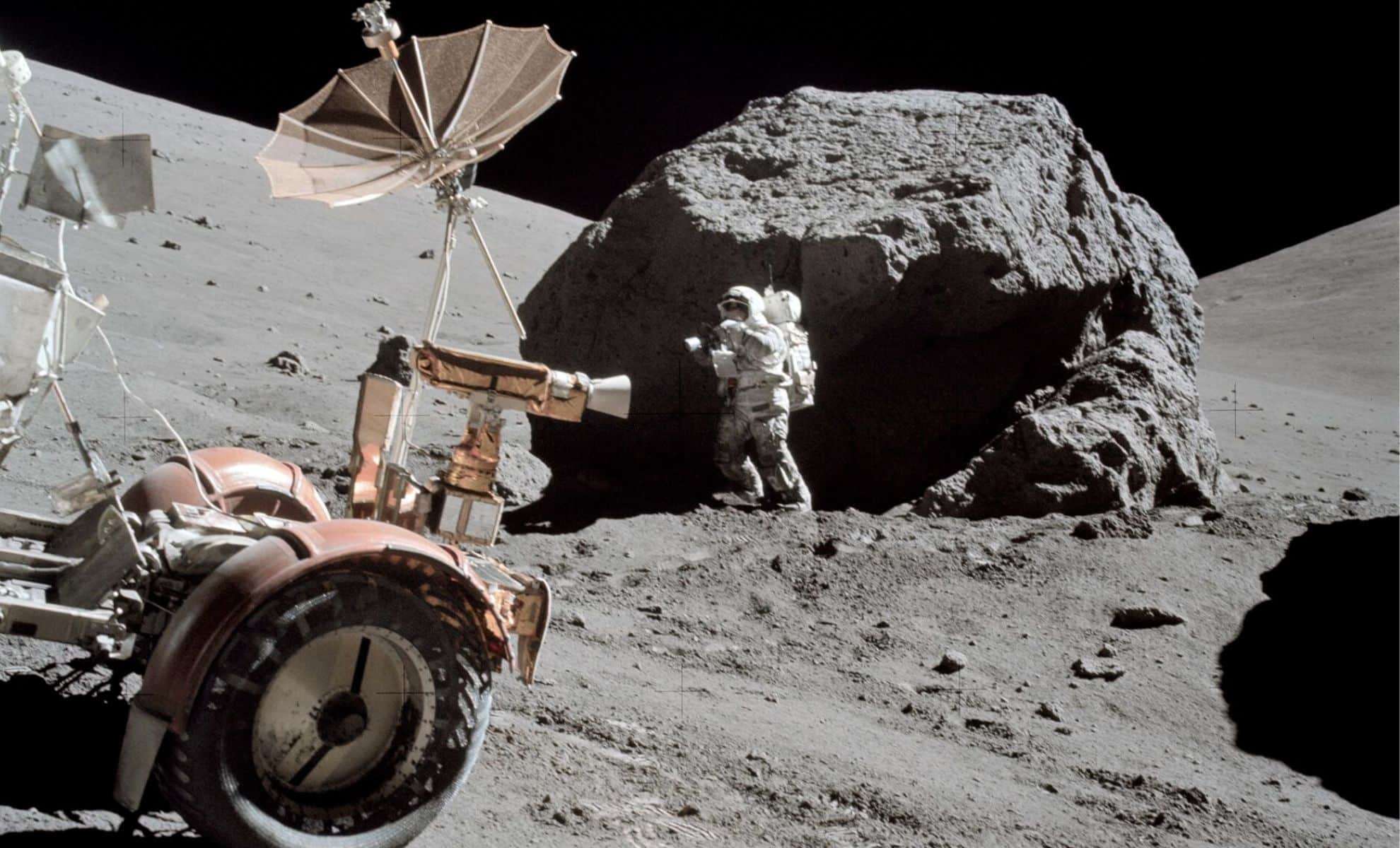
The loss of a lunar specimen gifted to Ireland during the Apollo missions reveals unexpected vulnerabilities surrounding these priceless treasures. Recently unveiled records from Ireland’s National Archives uncover a story marked by oversight, accidental damage, and the uncertain destiny of some of humanity’s rarest space artifacts.
Background: Ireland’s Initial Lunar Token
The historic Apollo 11 expedition in 1969 was humanity’s inaugural visit to the Moon, producing samples that quickly became powerful emblems of scientific and national pride. A small amount of these samples was distributed globally by then US President Richard Nixon as symbols of diplomacy.
In 1970, a delicate piece of Moon rock sealed in acrylic was handed over to Irish President Éamon de Valera from US Ambassador John DJ Moore. Although the gift carried substantial diplomatic significance, the artifact had no designated role within Ireland’s cultural or scientific institutions.

Archival documents indicate Irish authorities were unsure how to properly care for the item, resulting in it being stored away in a neglected government basement for several years. Only in 1973, after receiving a second lunar sample from the Apollo 17 mission, did the initial rock become publicly recognized. Concerned about diplomatic repercussions, officials chose to display the Apollo 11 fragment at Dunsink Observatory, which is part of the Dublin Institute for Advanced Studies and is Ireland's oldest astronomical facility.
Fire at Dunsink: A Historical Loss
Tragedy struck on October 3, 1977, when a fire engulfed portions of Dunsink Observatory, destroying the valuable Moon rock exhibited there. While the exact cause of the fire remains a mystery, the incident abruptly ended the short-lived visibility of this lunar relic in Ireland.
Newly disclosed documents confirm that “The first piece was destroyed during a fire at Dunsink on October 3, 1977.” Fortunately, the Apollo 17 sample survived and is still preserved.
NASA’s Collection: A History of Lost Artifacts
Ireland’s lost lunar artifact is just one example among many. A 2011 NASA audit documented that 517 astromaterials—including lunar rocks, meteorites, and solar wind specimens—were reported missing or stolen between 1970 and 2010. This highlights a widespread problem of inadequate controls over instruments and samples lent to institutions and researchers worldwide.
Many of these missing pieces were part of President Nixon’s global goodwill distribution. Between 1970 and 1973, Nixon gifted 270 lunar samples to 135 nations and all US states. Currently, approximately 160 of these samples are unaccounted for.
The Worldwide Puzzle of Disappearing Moon Rocks
The vanishing of these lunar specimens forms an intriguing chapter in space exploration history. Often entrusted to unstable regimes, authoritarian rulers, or organizations that lacked appreciation for their scientific and diplomatic importance, these pieces were vulnerable to loss.
Notable instances include:
- Romania: The Moon rock given to communist leader Nicolae Ceaușescu disappeared amid the turmoil following his 1989 ousting and execution.
- Libya: A fragment presented to Muammar Gaddafi vanished after his regime toppled in 2011.
- Honduras: Authorities confiscated a lunar sample during a sting after it was put on the black market with a $5 million price tag.
These examples illustrate how Moon rocks became victims of political instability and economic exploitation, with some ending up in private ownership or being discarded without regard.
The Enduring Scientific and Cultural Importance of Lunar Samples
Aside from their diplomatic role, lunar rocks are priceless scientific treasures. They contain vital information about the Moon’s formation, early solar system history, and the forces that shaped Earth’s satellite. Their global dispersal symbolized a shared celebration of human accomplishment, yet their loss underscores the delicate nature of preserving scientific and cultural heritage.
The fate of these samples calls attention to the urgent need for rigorous conservation as humanity embarks on new lunar missions. Efforts by NASA and global partners now emphasize detailed cataloging and protection to safeguard these relics for future study and public engagement.
- Categories:
- Space






0 comments
Sign in to Comment