
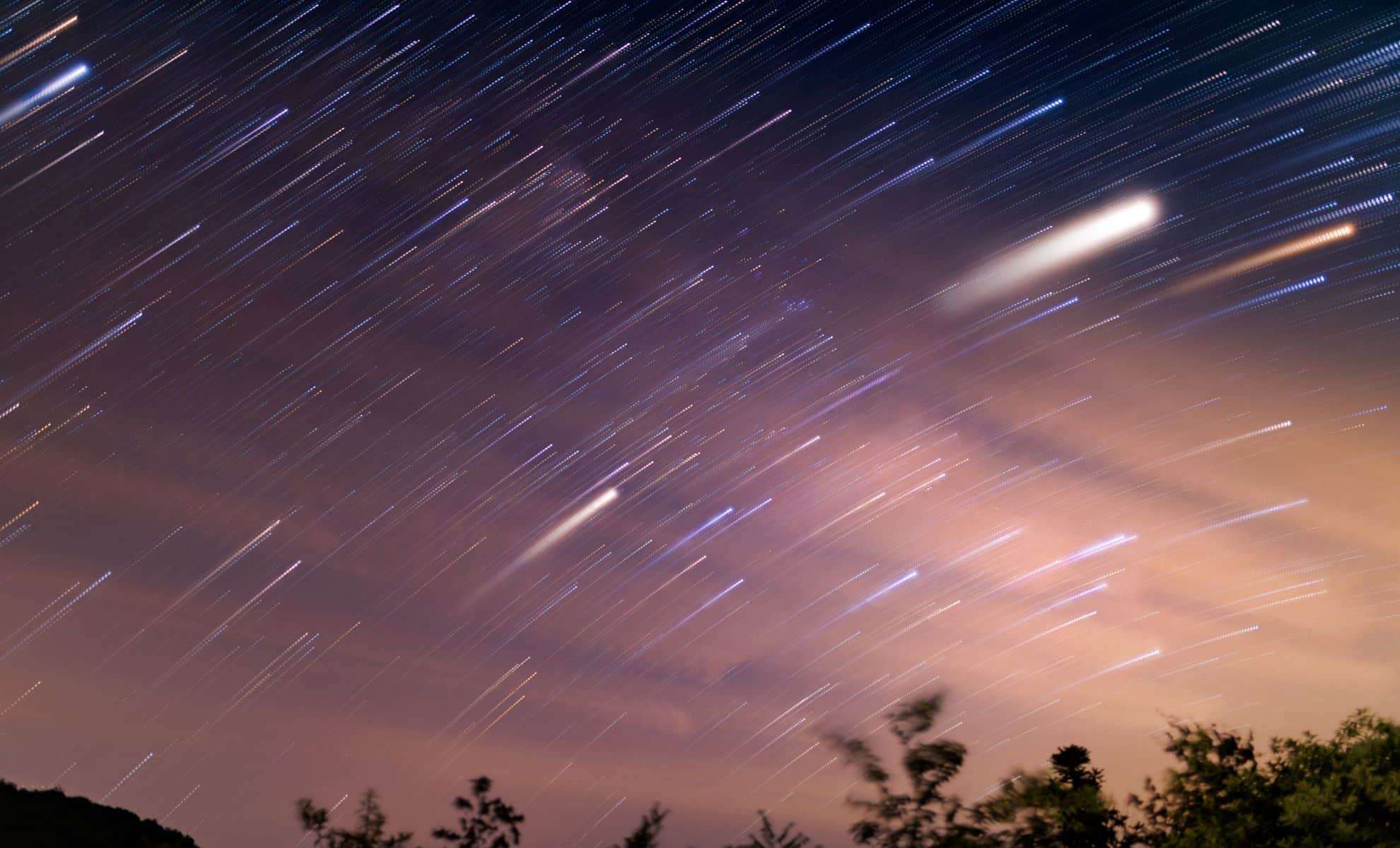
With summer deepening, the latter half of July offers an excellent chance to gaze upward and marvel at three of the year's standout meteor showers. Regardless of your hemisphere, there’s plenty to enjoy as each meteor shower presents a distinct celestial show.
Alpha Capricornids: Bright Flares from a Quiet Shower
Starting July 12, the Alpha Capricornids begin making appearances. Although this shower is modest in the number of meteors, it peaks between July 29 and 30, offering some of the brightest meteoric flashes in the sky. Originating from the short-period comet 169/NEAT, the Alpha Capricornids typically produce roughly five meteors hourly, yet their intense brightness allows them to be observed even when city lights compete.
The radiant for these meteors lies within the constellation Capricornus. During the peak, the waxing crescent Moon ensures dark skies optimal for viewing. Begin your observation as early as 10:00 p.m. local time for the best chance to catch these luminous streaks.

Perseids: The Classic Summer Meteor Spectacle
For many astronomy fans, the Perseids are the highlight of the summer’s night wonders. This prolific shower, linked to Comet Swift-Tuttle with its 133-year solar orbit, reaches its crescendo between August 12 and 13. Perseids can dazzle observers with an impressive 50 to 75 meteors visible per hour under crystal-clear, dark skies.
Though visible from mid-July through August, this year’s peak coincides with a waxing gibbous Moon, which might limit visibility in some regions. Still, the shower remains active all month, with the ideal viewing window extending from midnight until dawn when darkness is at its peak.
Southern Delta Aquariids: Delicate Trails and Potential Surprises
The Southern Delta Aquariids are also active in the second half of July. These meteors hail from the short-period comet 96P/Machholz, appearing around July 18 and peaking on July 29 and 30. Their radiant is found in the constellation Aquarius. Though their usual rate is about 20 to 25 meteors per hour, these faint meteors captivate stargazers with their subtlety.
Fortunately, this year’s peak coincides with the waxing crescent Moon, setting early and allowing darker skies for better observation. The Southern Delta Aquariids have a history of occasionally delivering stronger-than-expected displays, like in 1977 and 2003, so astronomers remain hopeful for an exciting surprise.
Tips for Enjoying the Meteor Showers
These celestial events can be enjoyed with the unaided eye, but binoculars might enhance views of dimmer meteors like the Southern Delta Aquariids. Using star-gazing apps such as Star Walk can guide you on optimal times and directions to watch.
When planning your outing, bring along comfortable gear, snacks, and if desired, a camera to capture the spectacle. Whether you’re a seasoned astronomer or a curious newcomer, the upcoming meteor showers promise memorable nights under the stars.
- Categories:
- News









0 comments
Sign in to Comment