
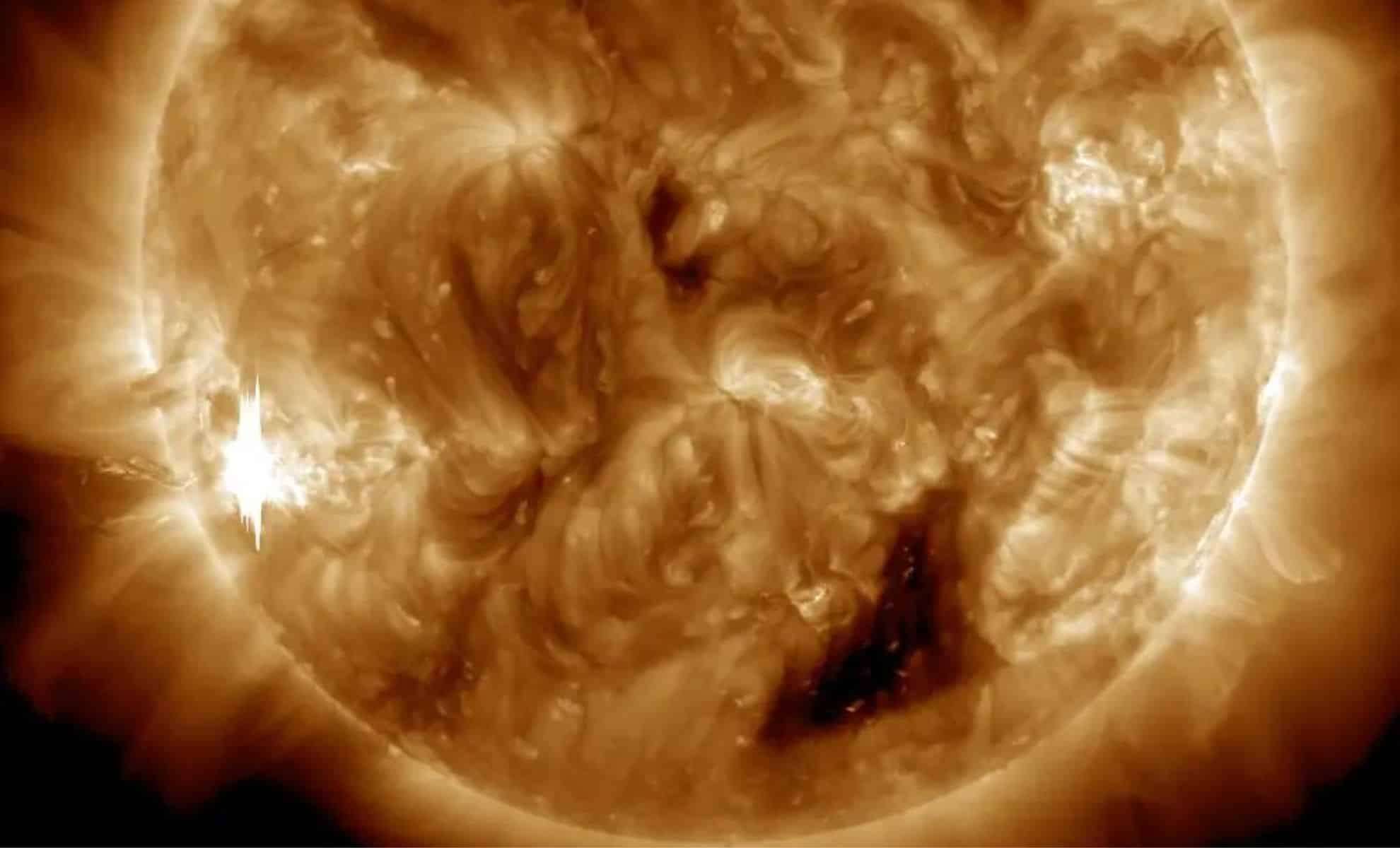
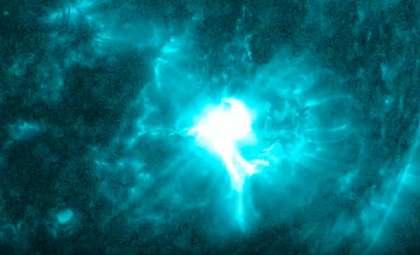
On September 14, 2024, the Sun unleashed a major X4.5 solar flare originating from Active Region 3825 (AR3825) near its southeastern limb.
This intense flare, one of the strongest observed during Solar Cycle 25, was accompanied by a coronal mass ejection (CME) that may interact with Earth’s magnetic field. Agencies such as NOAA are closely analyzing the event’s path and potential effects on our planet.
Insights into the Solar Flare and Coronal Mass Ejection Dynamics
The X4.5 flare occurred over a span from 15:13 UTC to 15:47 UTC, peaking at 15:28 UTC. As an X-class flare, it represents the highest intensity in solar flare classifications. Such powerful flares often cause radio signal blackouts and can disrupt satellite operations and power infrastructure. NOAA’s Space Weather Prediction Center (SWPC) is tracking the CME linked with this event, forecasting a glancing encounter with Earth’s magnetosphere around September 16.

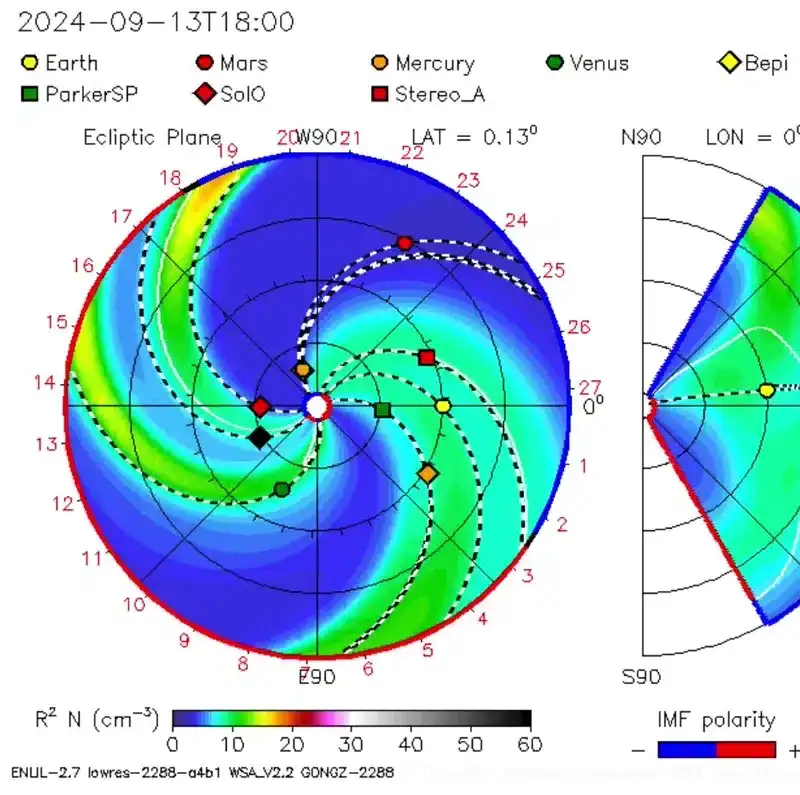
Early NOAA modeling indicates the CME is unlikely to strike Earth directly but could still induce geomagnetic storms. Furthermore, the CME is expected to reach Mercury and Mars, potentially influencing space weather conditions on those planets soon.
X4.5 solar flare produced by AR 3825 at 15:29 UTC. pic.twitter.com/By5fNlf9Et
— SolarHam (@SolarHam) September 14, 2024
Forecasts for Geomagnetic Activity by NOAA
The strong X4.5 flare caused an R3-level (strong) radio blackout, impacting high-frequency communication systems over areas such as the Arabian Sea. NOAA’s SWPC has released warnings for possible G1 to G2 (minor to moderate) geomagnetic storms when the CME reaches Earth. These storms have the potential to interfere with satellite functionality, GPS accuracy, and even power grid stability, especially at higher latitudes.
Using NOAA’s ENLIL model, which simulates CME trajectories, ongoing updates refine the expected path of the CME plasma. Experts suggest that auroral displays could be visible further south than usual, reaching parts of the United States and Canada. This follows a similar G2 geomagnetic event on September 13 that produced auroras as far south as Montana and Washington.
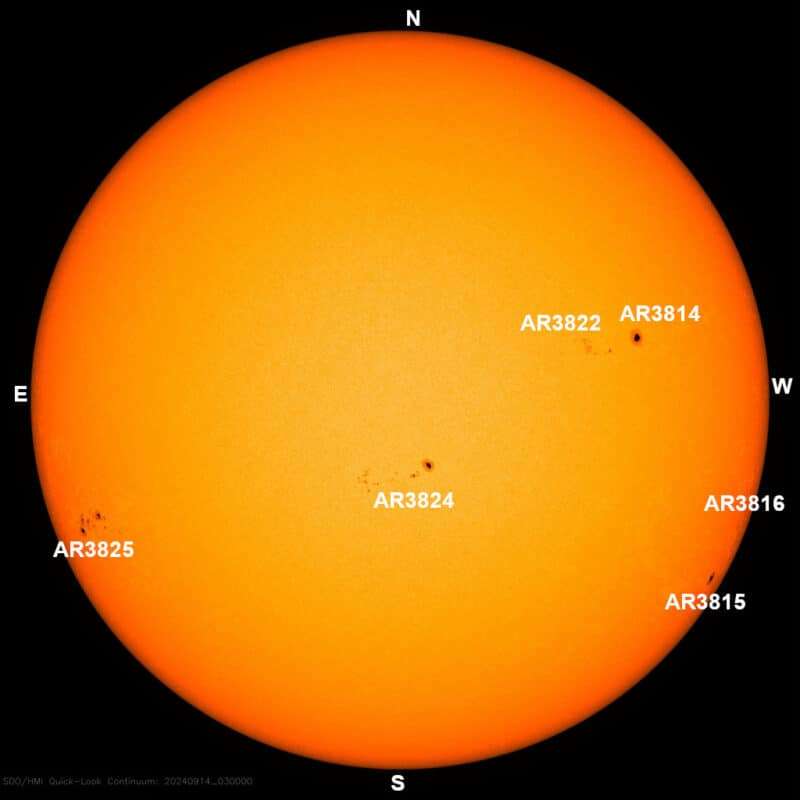
Active Region AR3825: Emerging Solar Activity Center
AR3825 is quickly becoming a hotspot on the Sun, featuring a complex beta-gamma-delta magnetic field structure capable of producing further significant solar flares. Forecasters at NOAA are vigilantly observing this active area as it gradually rotates toward a position more directly facing Earth.
Before this X4.5 flare, AR3825 had already generated several M-class flares. The leap to a major X4.5 event signals an intensification of solar activity, which could lead to eruptions with heightened impacts on Earth in the near future. The SWPC continues to provide real-time monitoring and warnings regarding solar weather threats.
NOAA’s Vital Role in Monitoring Solar Weather
The NOAA Space Weather Prediction Center (SWPC) is essential for tracking the Sun’s activity and forecasting space weather events that might affect Earth. Instruments aboard satellites like SOHO and SDO offer critical data used to anticipate solar flare and CME impacts. The KP Index, which measures geomagnetic activity, currently indicates quiet to unsettled levels, but these are expected to rise when the CME arrives.
NOAA’s alerts are critical for industries dependent on satellite links, navigation, and power infrastructure, helping them prepare for and lessen the potential damage caused by geomagnetic storms.
Solar Cycle 25: Anticipating Increased Solar Activity
As Solar Cycle 25 advances, more frequent and intense flares and CMEs are expected. Experts from NOAA and NASA forecast the cycle’s peak to occur within the next few years, potentially bringing more intense X-class flares and stronger geomagnetic disturbances. Collaborative efforts focus on improving forecasting methods to safeguard critical Earth-based technologies.
The CME linked to this X4.5 flare is predicted to cause minor to moderate geomagnetic storms, affecting satellite communications and possibly generating visible auroras at more southern latitudes. NOAA will continue issuing updates and advisories as the situation evolves.







0 comments
Sign in to Comment