
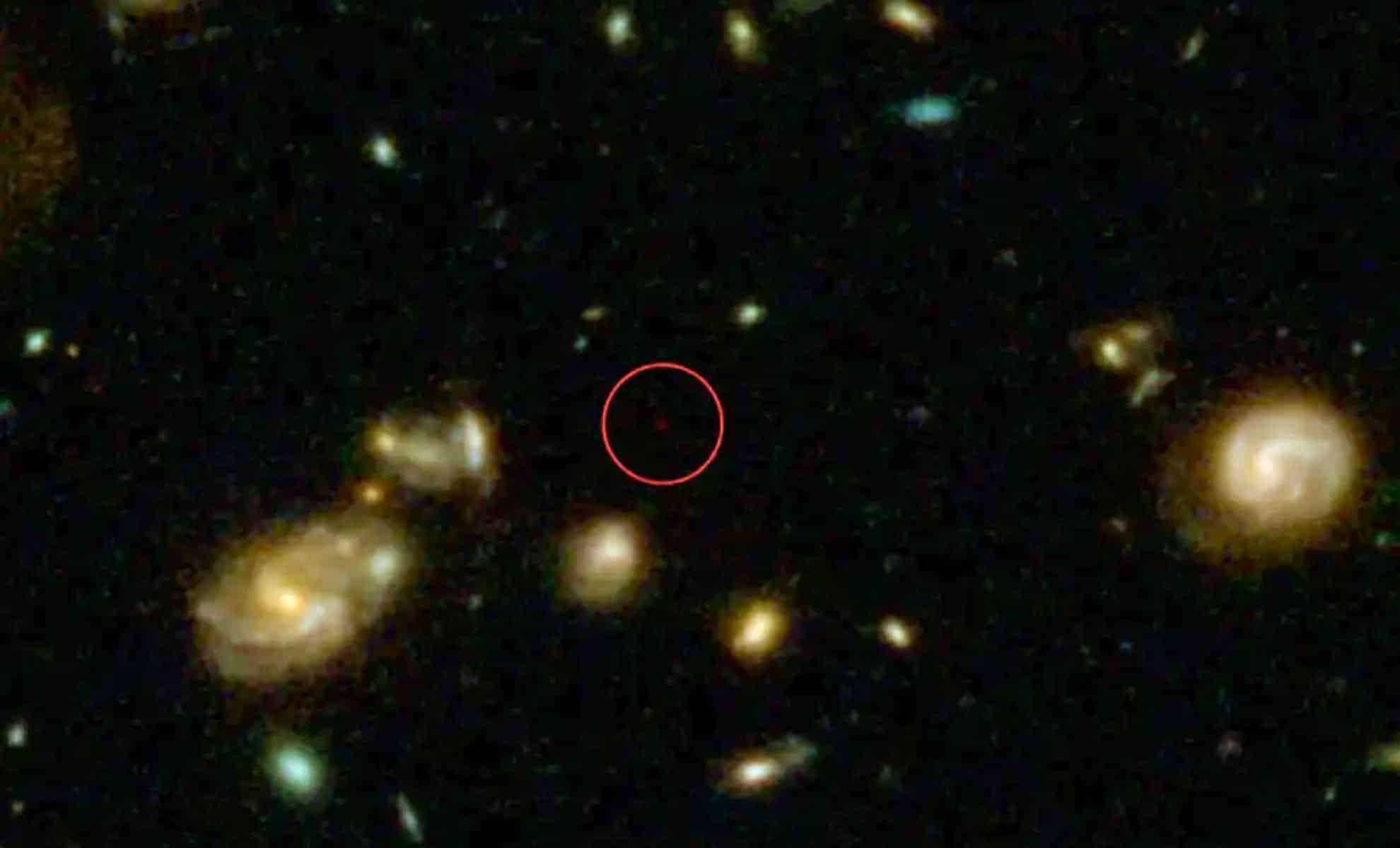
Scientists utilizing the James Webb Space Telescope (JWST) potentially identified what could represent the most ancient galaxy ever detected, challenging existing views on the pace of early cosmic structure formation. This celestial candidate, dubbed Capotauro, was introduced in a recent preprint on arXiv by Giovanni Gandolfi and his team from the University of Padua. The discovery has attracted rapid attention, with coverage in New Scientist highlighting its significant consequences.
If confirmed, Capotauro would have formed a mere 90 million years post-Big Bang—around 200 million years earlier than any other recorded galaxy. This would position it closer to the universe’s inception than any known cosmic structure.
An Ancient Galaxy at the Universe’s Dawn?
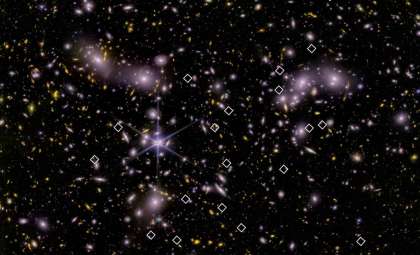
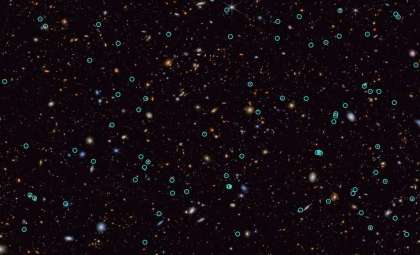
Capotauro emerged from JWST deep-field images, designed to capture the faintest and earliest galaxies. Because light takes time to travel, observing distant objects lets us see them as they were billions of years ago. Here, Capotauro might be seen from over 13.6 billion years in the past, shortly after the Big Bang.

This object’s exceptionally high redshift, exceeding z = 14, signals that its light has been stretched due to the universe’s expansion. Such a redshift would locate Capotauro at a more distant epoch than any confirmed galaxy, suggesting its formation during the universe’s chaotic and gas-dominated infancy.
Should these findings be validated, Capotauro would not only set a new record but fundamentally revise the timeline for galaxy formation by a wide margin, outclassing all previous discoveries.
Could It Be Something Else?
Despite the enthusiasm, experts remain cautious. The current evidence is based on photometric measurements that offer an approximate distance estimate through luminosity and color. Definitive confirmation demands spectroscopic analysis, which splits light into its component wavelengths to unearth precise redshift and composition data.
Alternate interpretations include the possibility that Capotauro might be a cool star, an object obscured by dust, or even an artifact caused by gravitational lensing. As noted by New Scientist, “there could be other explanations too,” underscoring the uncertainty surrounding its classification due to its unusual attributes.
This is a familiar scenario; early JWST observations included several high-redshift galaxy candidates later identified as false positives, often resulting from calibration challenges or observational noise.
Implications for Our Understanding of the Cosmos
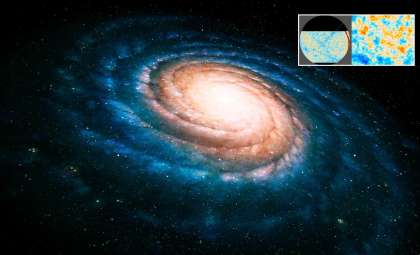
Should follow-up observations confirm Capotauro as a genuine galaxy, it would have profound consequences for cosmological theories. Conventional models predict that galaxy creation needs hundreds of millions of years after the Big Bang to allow matter to cool, clump, and initiate star formation.
A galaxy appearing just 90 million years after the Big Bang would compress these timelines dramatically, hinting at extremely rapid structure formation occurring under more efficient processes than previously believed.
This finding aligns with growing JWST evidence suggesting that early galaxies are both more numerous and more developed than anticipated. Capotauro pushes this trend even further, implying a universe that assembled complexity swiftly and aggressively, potentially beyond the scope of current physics.
Where Do We Go From Here?
Scientists now await enhanced measurements to decisively identify Capotauro’s nature. Tools like JWST’s NIRSpec will provide the crucial spectroscopic data to confirm or refute its status. Verification could compel researchers to reassess prevailing views on the timeline and mechanisms behind galaxy emergence.
For the moment, Capotauro represents one of the most compelling probes into the universe’s earliest epochs—a faint beacon shining from across deep cosmic time.
- Categories:
- News

0 comments
Sign in to Comment