
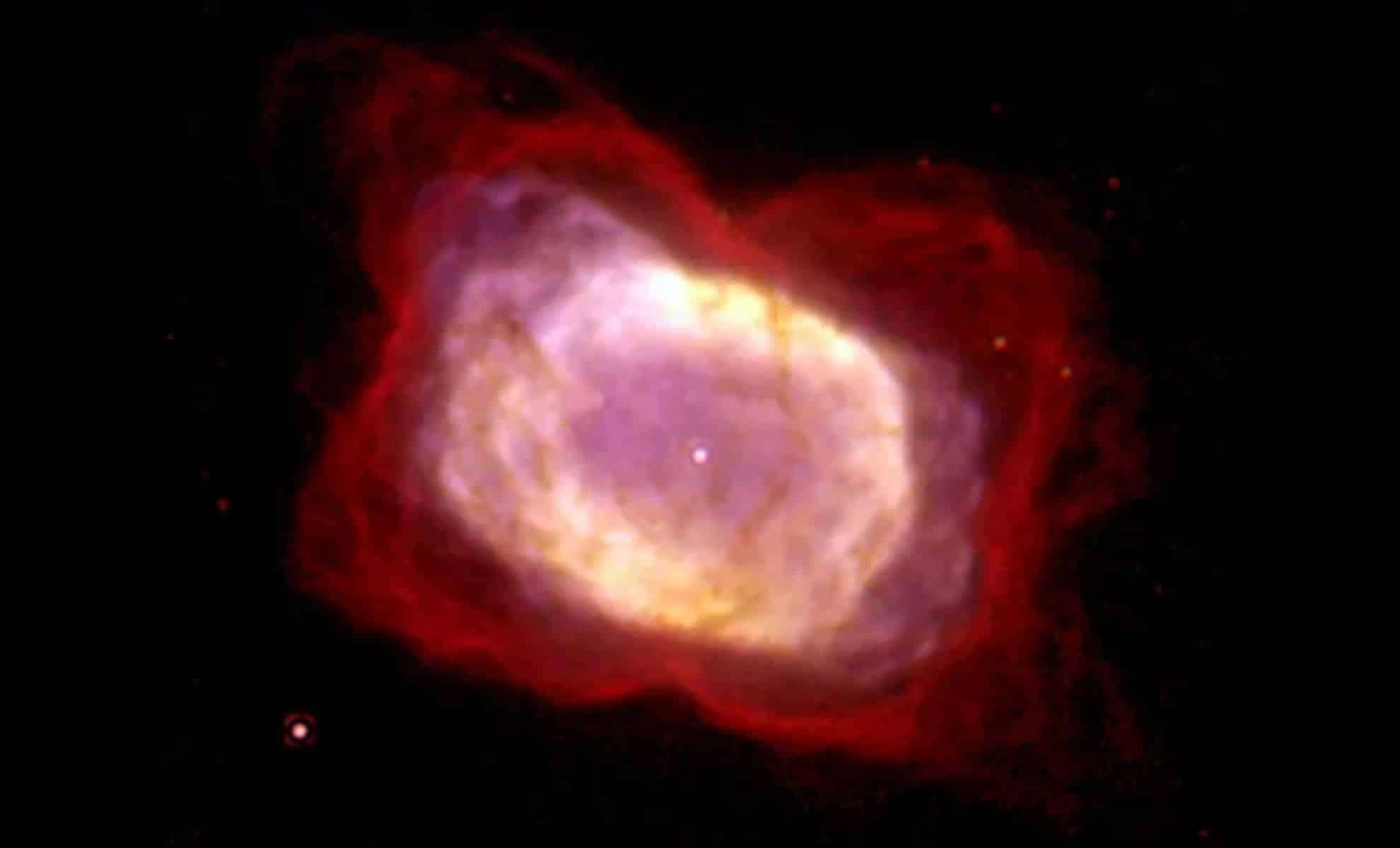
Scientists have achieved a remarkable feat by synthesizing helium hydride (HeH⁺), the universe’s inaugural molecule, addressing a mystery that has intrigued astronomers for over 13 billion years. This finding offers new insights into star formation during the universe’s infancy.
Tracing the Birth of the First Molecules Post-Big Bang
Shortly after the Big Bang, roughly 13.8 billion years ago, the cosmos was an intense, compact plasma. As it cooled rapidly, the initial elements—mainly hydrogen and helium—formed, yet remained ionized, with free electrons and nuclei drifting separately.
It was only after nearly 380,000 years that the universe had cooled enough for atoms to recombine into neutral forms, allowing the first molecules to emerge and chemical reactions to begin.

Helium hydride (HeH⁺) represents the universe’s first molecule, created when a neutral helium atom bonded with a proton from ionized hydrogen. This molecule sparked a chemical sequence culminating in molecular hydrogen (H₂), which continues to be the most common molecule across the cosmos.
Helium Hydride’s Crucial Contribution to Star Genesis
Following recombination, the cosmos entered a phase known as the “cosmic dark ages,” a period devoid of luminous celestial bodies like stars despite becoming transparent.
Several hundred million years passed before stars began to form, a process reliant on molecules such as HeH⁺ and H₂.
During protostar formation, interstellar gas clouds collapse due to gravity, heating up in the process. Efficient heat release is vital for nuclear fusion to ignite. At temperatures exceeding 10,000°C, hydrogen atoms alone cannot shed heat effectively.
Molecules capable of radiating energy via rotational and vibrational modes are necessary here. Helium hydride’s strong dipole moment allows it to radiate energy efficiently even at lower temperatures, making it an essential cooling agent.
Challenging Established Theories with New Laboratory Tests
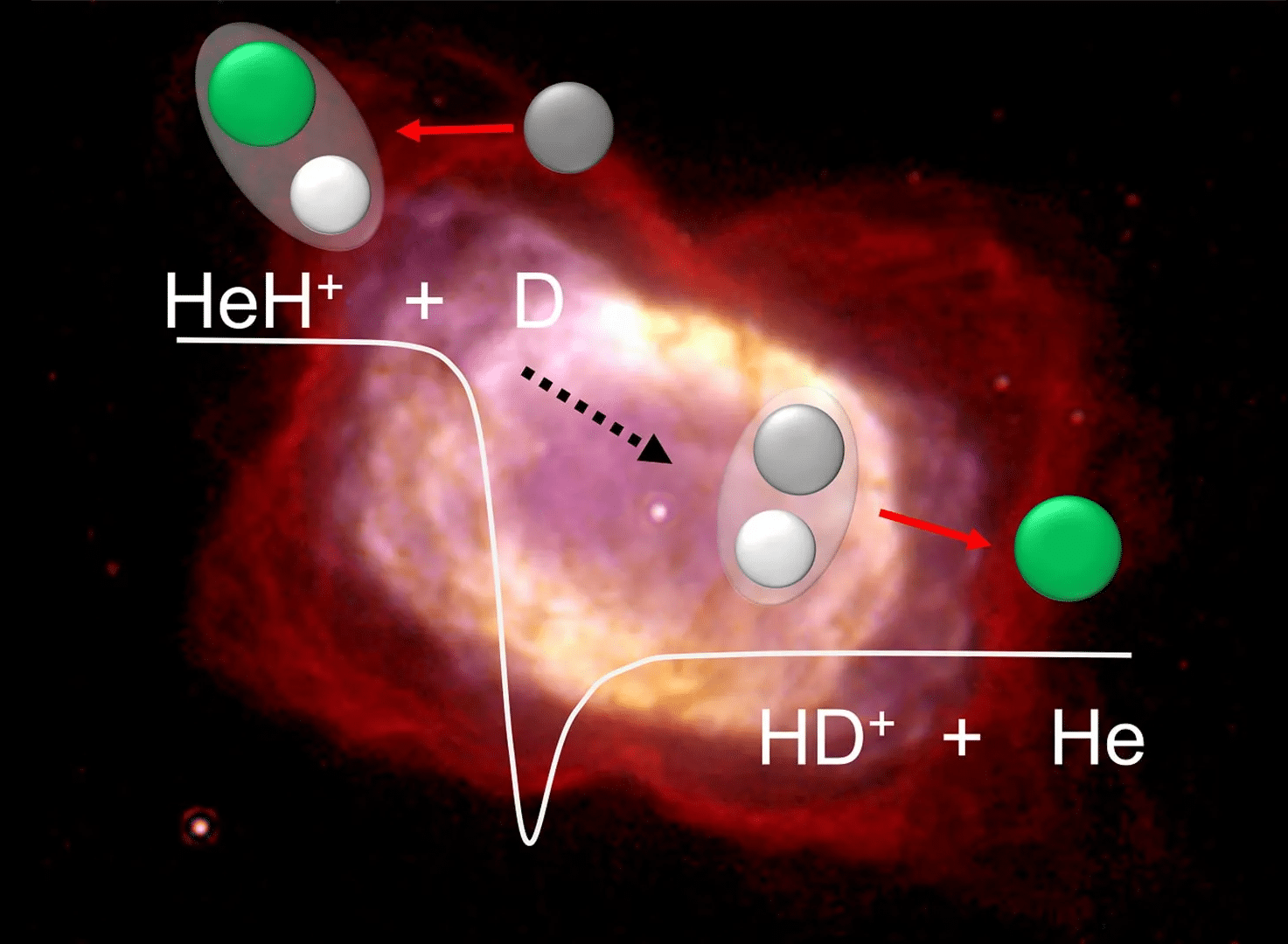
A team at the Max-Planck Institute for Nuclear Physics (MPIK) in Heidelberg recently replicated the formation of HeH⁺ under lab conditions mimicking the primordial universe. Their work at the Cryogenic Storage Ring (CSR) enabled them to study molecular interactions at ultra-low temperatures.
They introduced HeH⁺ ions to deuterium—an isotope of hydrogen—within an environment cooled to just a few kelvins (around -267°C).
Surprisingly, their findings revealed that the reaction rate did not decrease as temperatures dropped, defying prior theoretical expectations which suggested a decline in reaction efficiency at these low temperatures.
“Earlier models predicted that reaction probability would diminish significantly as temperatures lowered, but both our experiments and fresh theoretical insights from our collaborators failed to confirm this,” explained Dr. Holger Kreckel of MPIK.
- Categories:
- News









0 comments
Sign in to Comment