
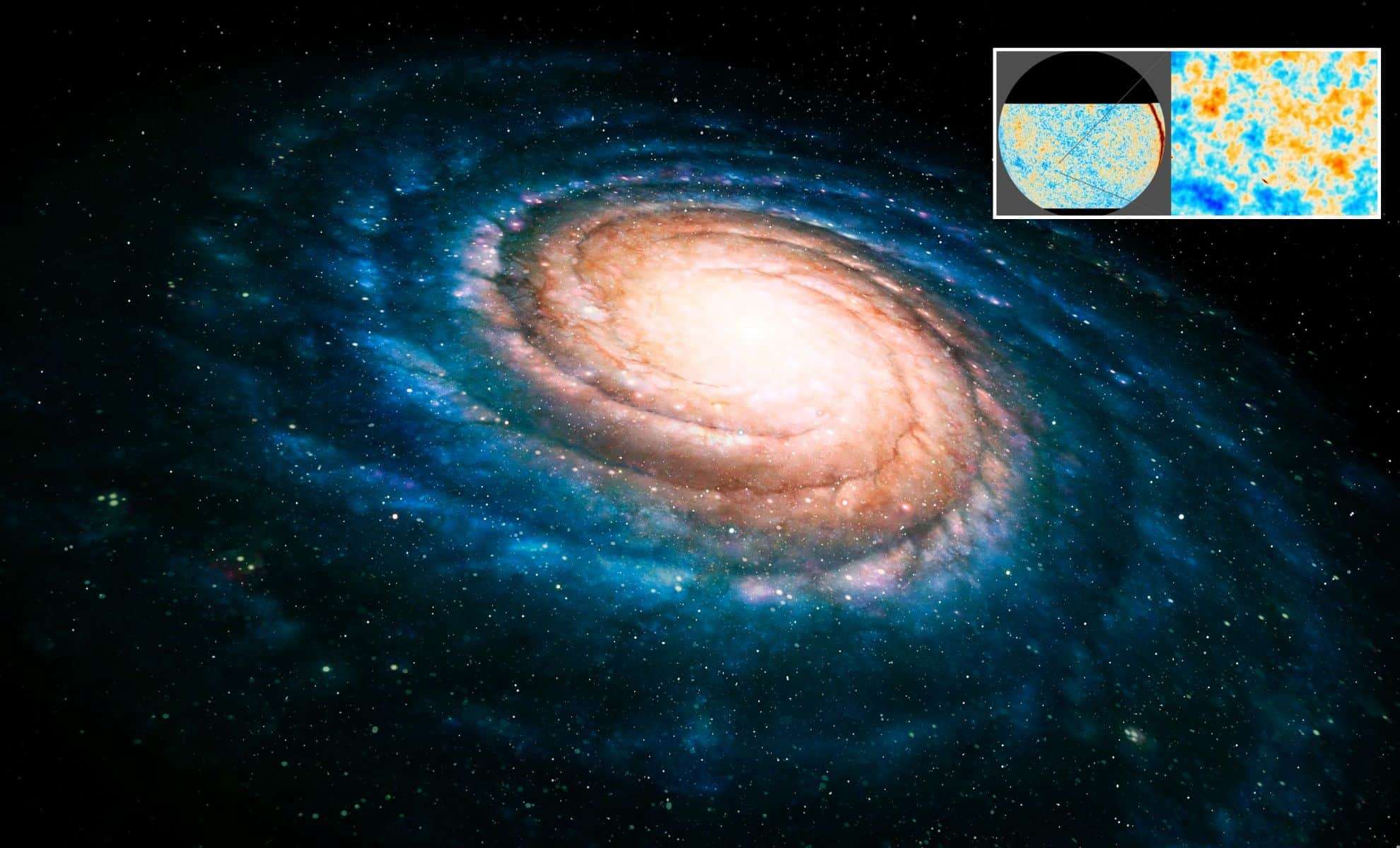
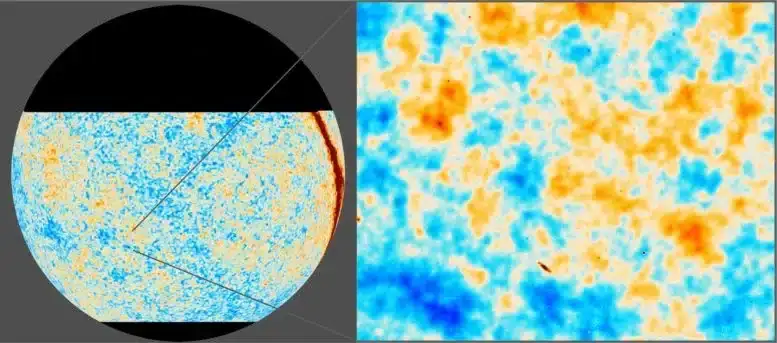
Scientists have captured the most refined and detailed picture of the cosmic microwave background (CMB)—the faint radiation originating 380,000 years after the Big Bang. Leveraging observations from the Atacama Cosmology Telescope (ACT) in Chile, the team uncovered minute irregularities in this primordial radiation that deepen insight into the formation of the universe’s earliest galaxies and stars. These advancements come from the ACT initiative at Princeton University, marking a new milestone for cosmological observation.
The enhanced image improves our comprehension of dark matter, dark energy, and cosmic expansion while addressing unresolved questions about the cosmos’s age and structure. Boasting quintuple the resolution of earlier CMB maps, these findings solidify established cosmological frameworks and shed light on the universe’s transformation from an energetic plasma to the sophisticated cosmic architecture visible today.
Transforming Perspectives on the Universe’s Earliest Moments
The CMB represents the residual light from the Big Bang, capturing the moment the universe shifted from an opaque plasma to a transparent state, permitting photons to travel undisturbed for the first time. Examining this ancient radiation offers a glimpse into the cosmos’s infancy, revealing the origins of initial cosmic formations.

Unlike prior surveys that focused solely on temperature fluctuations, this new image incorporates polarization metrics, unveiling how the primeval gases behaved under gravitational influence.
Suzanne Staggs, head of the ACT project at Princeton, emphasized,
“We are witnessing the earliest phases of star and galaxy formation. Beyond light and dark contrasts, we’re observing polarized light at an incredibly fine scale.”
The superior resolution from ACT enables researchers to track the gravitational shaping of primordial hydrogen and helium clouds, laying the foundation for the universe’s first galaxies.
Advancing Understanding of Early Cosmic Flows and Expansion
By examining how gases shifted in the young universe, scientists have charted gravity’s influence across different early cosmic regions. This direct mapping of matter’s distribution reinforces the standard cosmological model’s accuracy.
A notable discovery is the identification of carbon dioxide signals within the CMB’s polarization patterns. Although subtle, these signals underwent rigorous statistical verification to verify their authenticity.
Kazumasa Ohno, a leading researcher, described the challenge:
“The CO₂ signal we uncovered is extremely faint, necessitating detailed statistical scrutiny to confirm its reality.”
This suggests that particular chemical and energetic processes may have played a more influential role in the universe’s early development than previously understood.
Moreover, the results provide refined estimates for the universe’s age, reaffirming it at 13.8 billion years, with a margin of error under 0.1%.
Clarifying the Debate Over the Hubble Constant
The rate at which the universe expands today, known as the Hubble constant, has sparked controversy for years. While CMB measurements suggest a slower expansion speed (67-68 km/s per Megaparsec), nearby galaxy observations imply a faster rate (73-74 km/s per Megaparsec).
Thanks to its exceptional precision, the latest ACT data supports the slower expansion rate consistent with earlier CMB calculations, challenging theories proposing a more rapid cosmic expansion.
Mark Devlin, ACT’s deputy director, highlighted the importance:
“Our completely new sky measurements offer an independent validation of the cosmological model, and our findings confirm its robustness.”
This evidence reinforces our prevailing grasp of cosmic expansion despite discrepancies arising from other observational methods.
- Categories:
- News





0 comments
Sign in to Comment