
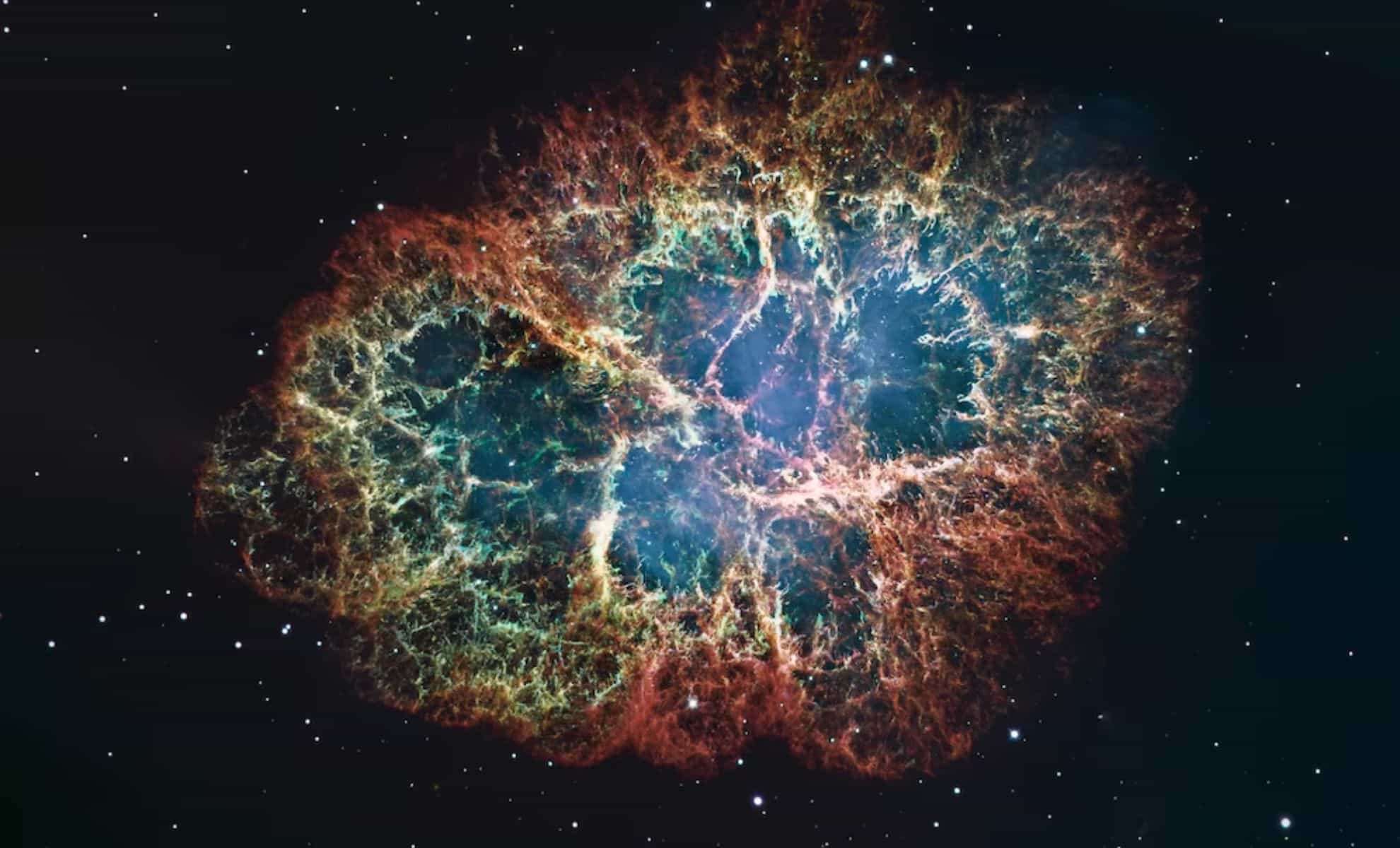
A novel cosmological framework is stirring discussion by proposing that the universe did not emerge from a singular Big Bang. Instead, it may have expanded through multiple rapid energy releases termed temporal singularities.
Unveiling Temporal Singularities: The Universe’s Underlying Mechanism
In a recent article in Classical and Quantum Gravity, Dr. Richard Lieu, a professor at The University of Alabama in Huntsville, offers an innovative perspective on how the cosmos expands.
Contrary to the long-standing view that the universe originated from a singular explosive event, Lieu posits that the cosmos advances through recurrent, rapid energy bursts distributing matter and energy across space.
This perspective diverges from prevailing theories that rely on the mysterious influences of dark matter and dark energy as key drivers of cosmic expansion.
Lieu contends that these temporal singularities, which currently evade direct detection, are the true engines of cosmic development.

Dispensing with Dark Matter and Dark Energy
A striking implication of Lieu’s theory is its capacity to explain the accelerating expansion of the universe without invoking dark matter or dark energy—concepts yet to be empirically confirmed.
The model suggests that temporal singularities induce negative pressure, an energy condition responsible for speeding up cosmic growth.
These bursts inject energy and matter into the cosmos so rapidly that they remain imperceptible to current instruments.
The theory proposes that dark matter and dark energy are phenomena that appear solely during these brief bursts; after the singularities dissipate, their effects vanish, leaving the observable universe intact.
Lieu’s approach also rejects ideas such as "negative mass" or "negative density" found in other theories, emphasizing instead the powerful influence of fast, repeated energy bursts as the foundational process behind the universe's expansion.
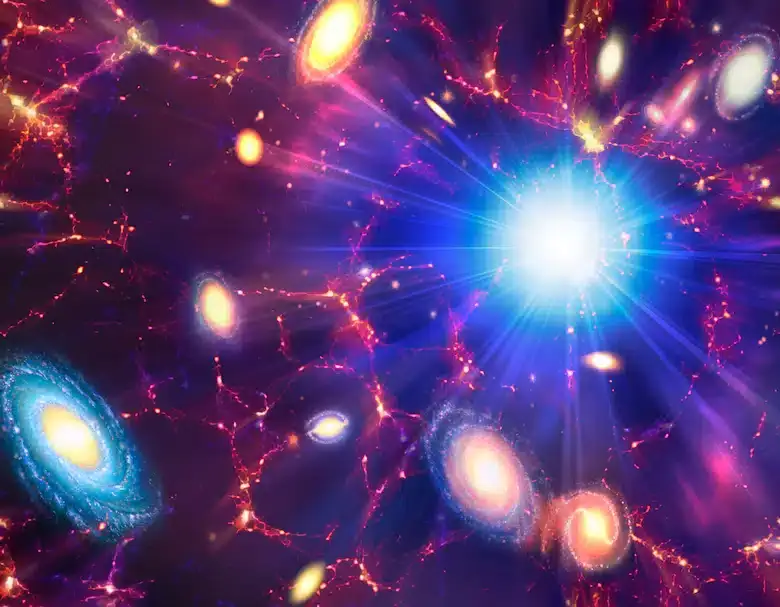
Testing the Hypothesis with Powerful Telescopes
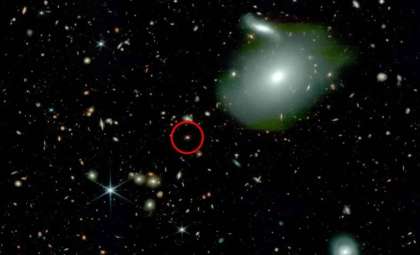
Dr. Lieu proposes that observations made with facilities like the Keck Observatory in Hawaii or the Isaac Newton Group of Telescopes in Spain could provide key evidence to challenge current cosmological paradigms. By conducting detailed surveys of deep space and scrutinizing the redshift-distance relationship, scientists might identify subtle variations indicative of temporal singularities.
Success in these observations could confirm Lieu’s model and potentially transform our understanding of how the universe expands and behaves.
This breakthrough would offer a compelling alternative to the traditional Big Bang model, providing fresh avenues for exploring cosmic evolution.
“The best way to look for the proposed effect is actually to use a large ground-based telescope – like the Keck Observatory in Waimea, Hawaii, or the Isaac Newton Group of Telescopes in La Palma, Spain – to perform deep field observations, the data of which would be ‘sliced’ according to redshift,” explained the researcher.
- Categories:
- Astronomy




0 comments
Sign in to Comment