
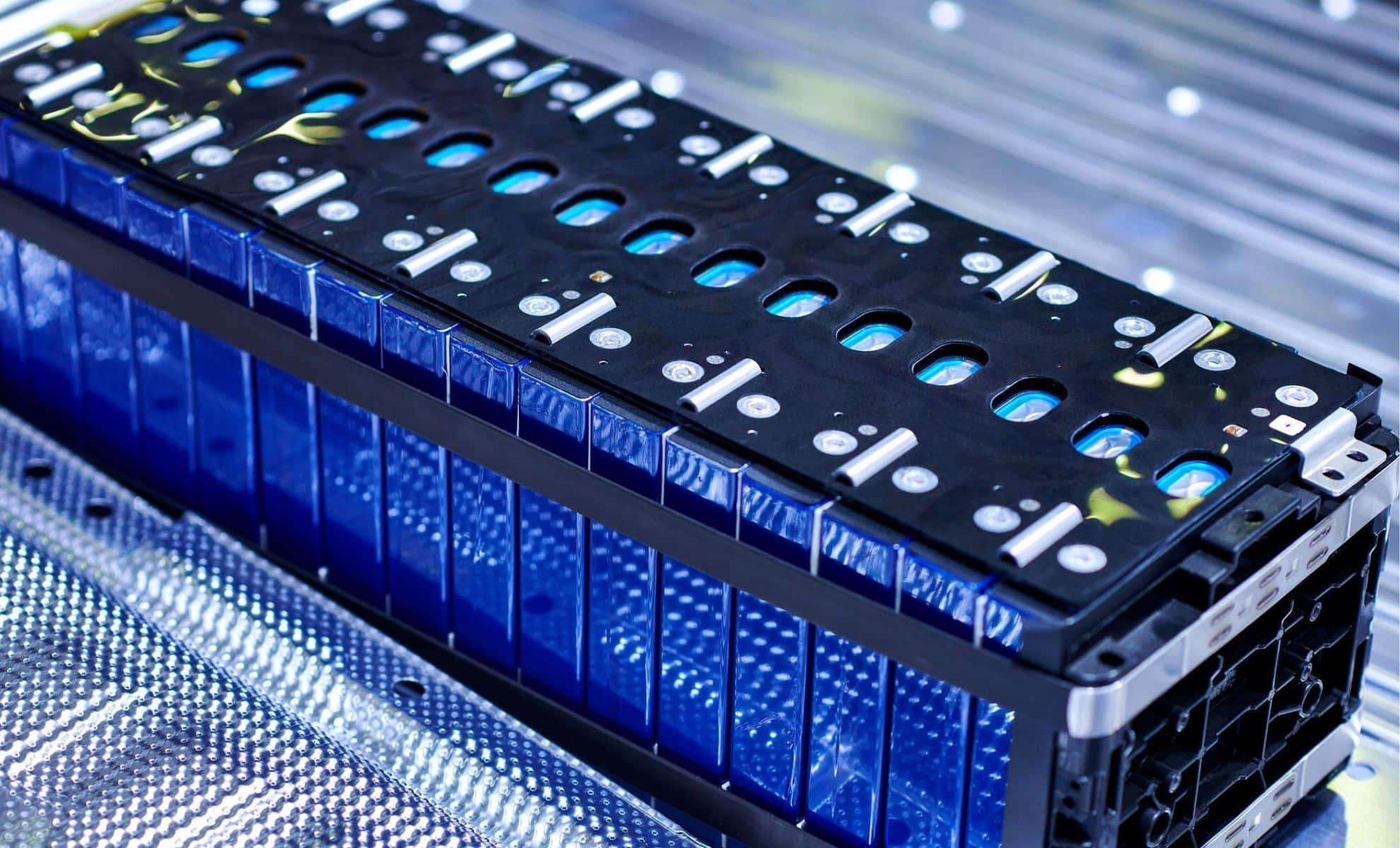
With the rising demand for efficient energy storage in sectors like electric vehicles (EVs) and large-scale energy storage systems (ESS), scientists are pursuing innovative ways to overcome the constraints of existing battery technologies.
A joint effort between POSTECH (Pohang University of Science and Technology) and the Korea Institute of Energy Research (KIER) has led to the creation of a novel anode material designed to significantly boost the capabilities of lithium-ion and sodium-ion batteries.
A Groundbreaking Composite Anode
The researchers targeted a key hurdle in battery design: simultaneously elevating power output and storage capacity while ensuring prolonged battery lifespan. Traditionally, graphite is favored for lithium-ion battery anodes due to its durability and stability.

Nevertheless, graphite’s limited theoretical energy capacity restricts its energy storage density. Furthermore, it experiences sluggish charge and discharge behaviors, reducing efficiency in applications demanding rapid energy flow.
The team’s innovative solution combines hard carbon with tin (Sn) to engineer a composite anode. Hard carbon’s disordered, microporous structure supports quicker diffusion of lithium and sodium ions, enhancing performance for high-rate and durable battery use.
Introducing tin into the composite aimed to further elevate both energy storage potential and structural stability.
Addressing Tin’s Expansion Challenge
While tin provides high storage capacity, it expands significantly during repeated charging cycles, which can compromise the structural integrity of the anode and degrade battery performance over time.
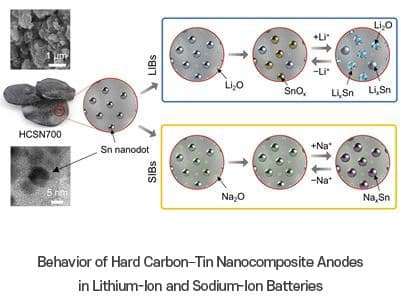
The research team tackled this by employing a sol-gel technique followed by thermal reduction to embed tin nanoparticles, smaller than 10 nanometers, uniformly within the hard carbon matrix.
This strategy curtailed tin’s expansion-related issues and harnessed its properties to enhance battery efficiency. The tin particles acted as catalysts, promoting crystallization of the surrounding hard carbon framework.
This mechanism improved capacity via reversible interactions involving tin-oxygen (Sn-O bonds) during recharge cycles.
Outstanding Battery Performance Demonstrated
Testing showed that lithium-ion batteries with the new anode material maintained consistent functionality across 1,500 cycles even with rapid 20-minute charging intervals, outperforming traditional graphite electrodes.
Moreover, this novel composite proved highly effective in sodium-ion batteries (SIBs), which are gaining traction due to sodium’s abundance and affordability relative to lithium.
Conventional graphite anodes in sodium-ion batteries often fall short because of low reactivity and stability problems, but the hard carbon–tin composite offered excellent durability and fast charge kinetics in these devices.
The material’s robust performance across lithium- and sodium-ion platforms underscores its versatility as a next-generation battery anode.
This advancement marks a significant leap forward by merging high power, increased capacity, and long-lasting cycle life within a single anode material.
- Categories:
- Tech

















0 comments
Sign in to Comment