

Chinese researchers have unveiled an extraordinarily advanced surveillance camera that could transform intelligence gathering from space.
This groundbreaking laser imaging system offers extraordinary detail when observing objects in orbit, enabling unprecedented monitoring capabilities.
Remarkably, the device can capture facial features at distances exceeding 100 kilometers, potentially altering the landscape of space reconnaissance.

Innovations in Laser Imaging Technology
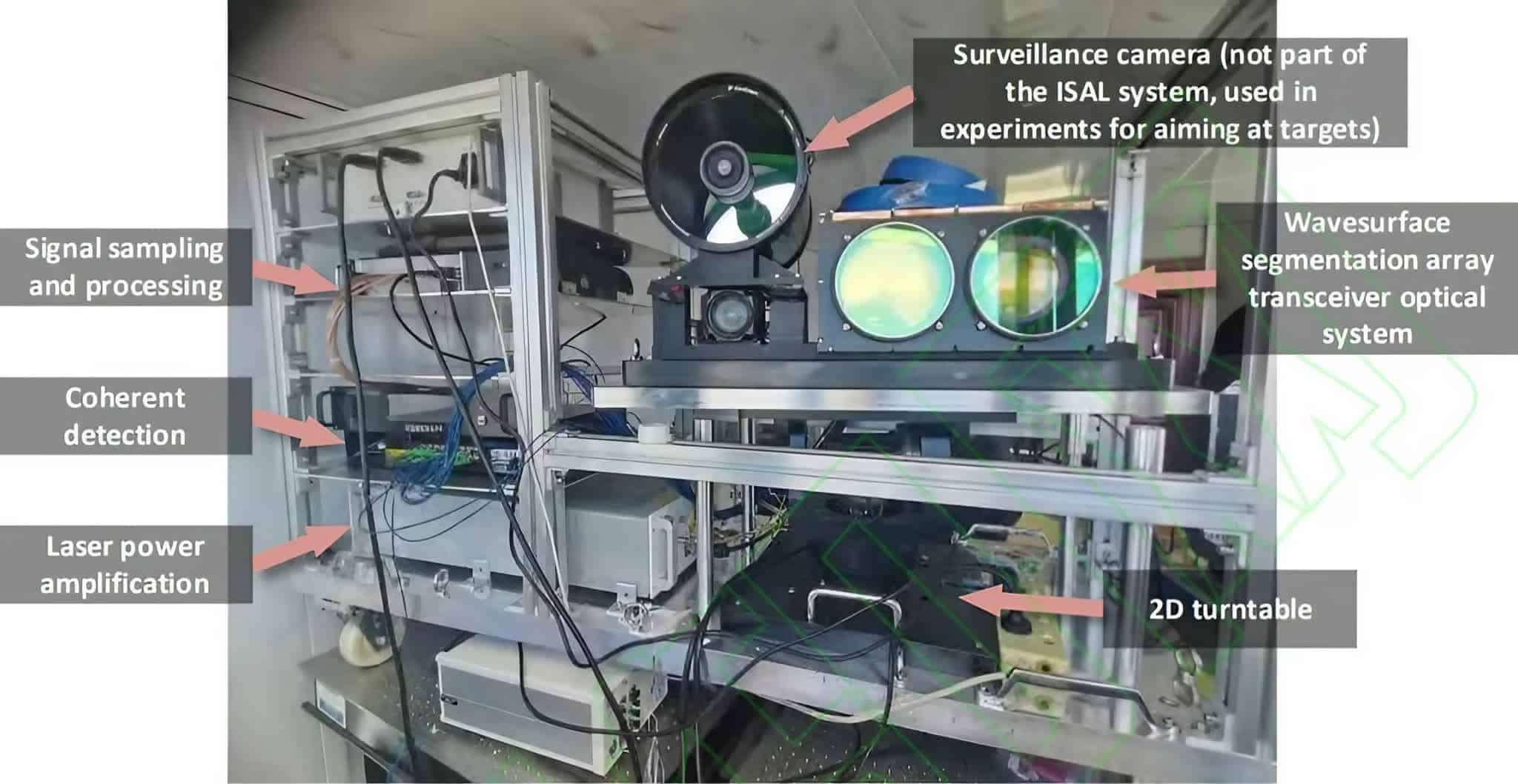
Engineered by the Aerospace Information Research Institute under the Chinese Academy of Sciences, the device employs synthetic aperture lidar (SAL), an advanced laser-based imaging technique.
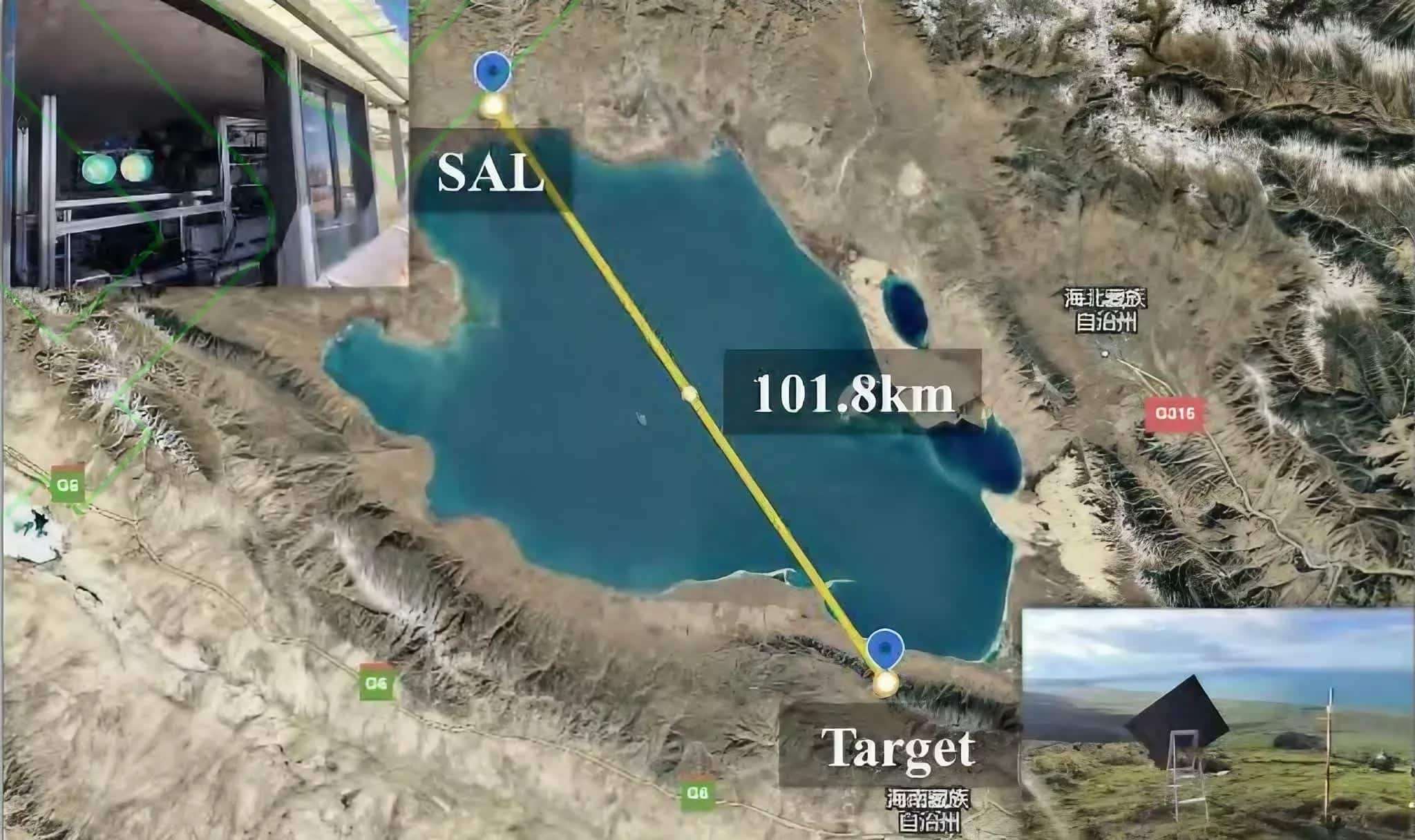
During its initial trial over Qinghai Lake in China’s northwest, the system delivered millimeter-scale resolution from beyond 100 kilometers, according to South China Morning Post.
This represents a significant advancement compared to previous technologies that struggled to maintain high precision across vast distances. In concrete terms, it can discern objects as small as 1.7 millimeters from 100 kilometers away.
To illustrate its capability, the system can identify micrometeoroid strikes on satellites or read serial numbers on foreign space assets, which is vital for safeguarding orbital infrastructure.

Mechanics Behind the Precision Imaging
This powerful system’s strength comes from its synthetic aperture lidar technology, blending laser emissions, wide field optics, and sophisticated computational algorithms. Unlike conventional optical devices, it incorporates a micro-lens array that enlarges the effective aperture without compromising range or image sharpness.
By emitting laser pulses and measuring their time-of-flight when returned, the technology quickly assembles detailed images, capturing minuscule details such as faces or satellite sensors. This degree of accuracy could redefine the remote observation of satellites and other spaceborne equipment.
Strategic Consequences of Superior Surveillance
The ramifications for military intelligence are considerable. Capable of capturing detailed imagery from low Earth orbit, this technology enables China to keep close watch on foreign satellites, uncover classified military information, and detect weaknesses in other countries’ space hardware.
Further, this advanced camera technology could assist in tracking space debris, improving collision avoidance and overall space traffic safety.
Outside defense, it opens the possibility for enhanced global space security, potentially enabling nations to inspect others’ satellites for treaty compliance or spot illicit activities.
Limitations: Weather and Moving Target Tracking
Despite its impressive capabilities, the system’s performance is contingent on suitable weather conditions, requiring clear skies with minimal atmospheric disruption.
Adverse weather conditions, such as heavy cloud cover or storms, can hinder its operation—an issue common to many optical imaging methods. However, ongoing advancements may mitigate these challenges.
Tracking fast-moving objects like satellites or debris remains difficult. While the current system excels at taking static images, continuous monitoring of dynamic targets is more complex. Experts are optimistic that further progress will extend the technology’s functionality.
China’s Edge in the Worldwide Space Technology Arena
This pioneering development places China at the forefront of space-based observation technology. Earlier optical systems were limited to achieving comparable precision only at short distances (~10 km).
Using synthetic aperture lidar, China has pushed beyond those limits, delivering high-resolution imaging over distances exceeding 100 kilometers. This technological milestone signals a significant evolution in space intelligence and surveillance capabilities.









0 comments
Sign in to Comment