
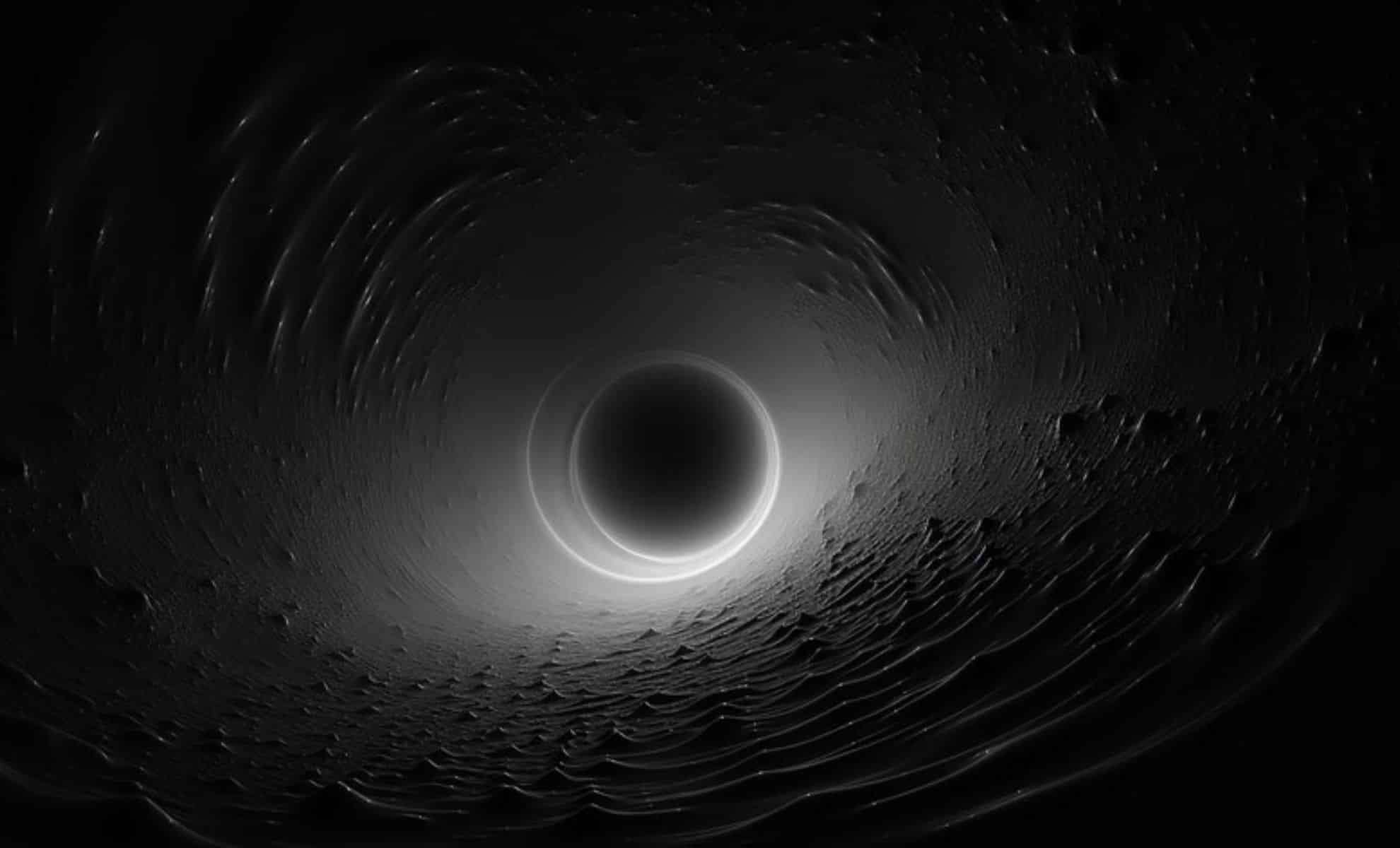
Scientists have pioneered the first laboratory creation of a black hole bomb, a concept originally theorized by physicist Roger Penrose in 1969. Until now, this compelling idea had been purely theoretical.
A Controlled Simulation
Although the experiment doesn’t involve an actual black hole, it employs a setup that replicates the energy behaviors characteristic of black holes.
The team describes their model as a “toy model” that obeys the same physical laws observed in real black hole systems.
The rotating cylinder acts as an analog to a spinning black hole, while magnetic coils imitate reflective boundaries that confine energy within the system.
This approach offers a significant benefit by avoiding the dangers of genuine black holes.
The contained “explosion” observed in the lab is fully controlled and poses no risk, providing a safe method to explore a phenomenon that is otherwise hazardous in cosmic environments.

By examining how energy is captured and eventually released in this simulated black hole context, researchers may develop new perspectives on energy harvesting.
Additionally, the underlying principles of this event horizon bomb could deepen our grasp of quantum mechanics and foster innovative techniques for energy utilization.
Historical Background of the Black Hole Bomb Concept
The black hole bomb notion traces back to Penrose’s late 1960s work, where he proposed that black holes could serve as energy sources.
His theory suggested that injected energy might get trapped within the black hole’s gravitational reach and subsequently amplified by its rotation, producing an intense energy release.
Penrose’s research introduced what is now known as the Penrose process, explaining how black holes might convert mass and energy into usable forms.
The black hole bomb hypothesis builds on this by proposing that confined energy could trigger an explosive effect.
This idea has intrigued physicists for years, and the recent lab experiment helps bring practical insight into the phenomenon under manageable conditions.
Understanding Black Hole Rotation
Researchers are eager to explore black hole bombs because they provide a window into black hole spin dynamics.
Black holes possess angular momentum influencing their interactions with surrounding matter.
The experimental black hole bomb setup may illuminate how spinning black holes transfer energy and engage with their cosmic surroundings.
Despite being much less intense than space conditions, this laboratory system offers a valuable platform to validate long-standing theoretical notions.
Implications for Energy Technologies and Quantum Physics
The simulated black hole bomb could have wide-reaching impacts on energy extraction and quantum mechanics research.
By replicating energy behaviors akin to those near black holes, scientists may identify new methods to capture power from concentrated sources.
While still conceptual, harnessing black hole-like mechanisms might one day lead to groundbreaking energy solutions.
Furthermore, the investigation into black hole bombs could advance knowledge of quantum processes under extreme conditions.
These findings could inform developments in quantum computing and high-energy physics, where understanding matter and energy’s extreme behavior is crucial.
“If new fields exist, we should be seeing, for instance, gravitational waves being emitted from this cloud around black holes, or we should see them spinning down because they’re giving their energy away to these new particles,” said Vitor Cardoso at the University of Lisbon in Portugal.
- Categories:
- Science











0 comments
Sign in to Comment