
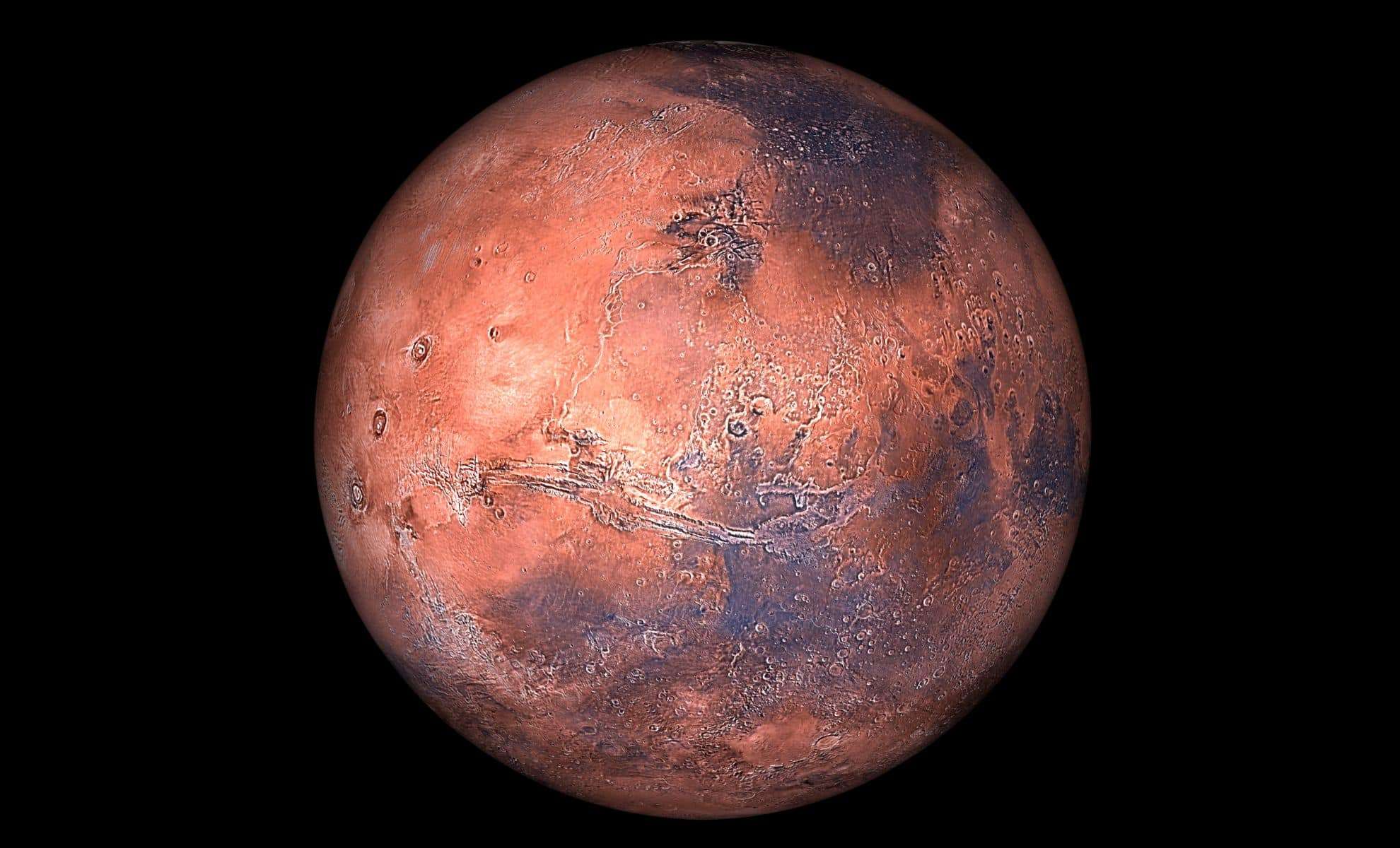
The glaciers on Mars, once thought to be mainly rocky with minimal ice content, are now understood to consist mostly of ice, with new research indicating that many contain more than 80% pure ice.
Radar Data Reveals High Ice Concentration Beneath Martian Surface
Published in the Icarus journal, this breakthrough stems from radar measurements collected by the Mars Reconnaissance Orbiter. The SHARAD instrument employed by the orbiter sends radar waves into the planet’s surface, allowing detailed examination of the glaciers’ subsurface layers. Earlier theories suggested Mars’ glaciers were largely debris with only a minor ice fraction, but this new evidence indicates a substantially higher ice presence.
The research team, led by Yuval Steinberg from Israel’s Weizmann Institute of Science, investigated radar data from five debris-covered glaciers distributed in both the northern and southern hemispheres of Mars.

Unexpectedly, all glaciers exhibited very similar electrical characteristics irrespective of location, signifying they are composed of at least 80% ice by volume. A thin debris layer overlays the ice, serving as an insulating shield that protects it from the planet’s extreme environment.
Insights into Mars’ Glacial History
The discovery of extensive glaciers mainly made up of ice points to Mars having undergone extended periods of glaciation over millions of years, likely experiencing multiple ice ages. Each ice age left behind glaciers formed from accumulations of snow and frost. These findings shed light on the Red Planet’s climate evolution and reveal how such ice masses were maintained through time.
Currently, Mars is a dry, cold world with minimal surface water and a thin atmosphere unable to sustain liquid water. However, past atmospheric conditions probably allowed ample moisture, resulting in snowfall and glacier formation. The substantial ice layers beneath surface debris may have been shielded from harsh conditions by dust storms, enabling their preservation for hundreds of millions of years.
Potential Water Source for Mars Exploration
Besides their scientific significance, these glaciers represent a vital resource for upcoming missions. Water is essential for astronauts’ life support, oxygen generation, and fuel production. Extracting water from Martian ice becomes more feasible if the ice is mostly uncontaminated by rock and sediment. The new study suggests a higher-than-expected purity of ice, which could simplify water extraction efforts.
The glaciers found across different Martian landscapes offer promising locations for establishing future human bases. This research emphasizes their potential not only as water reservoirs but also as windows into Mars’ past climate and habitability, aiding the planning of future exploration endeavors.
- Categories:
- News







0 comments
Sign in to Comment