
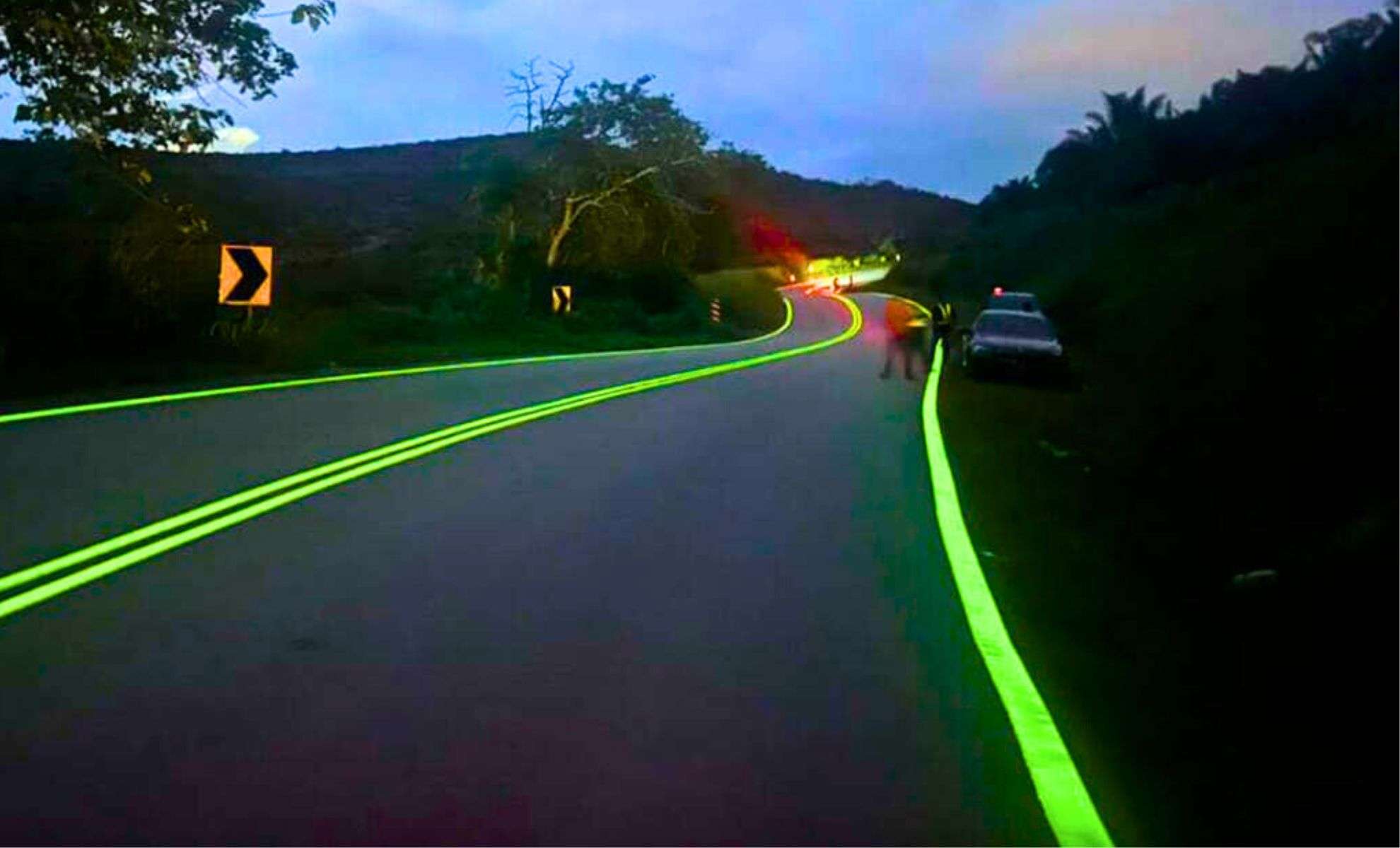
In late 2023, a quiet rural route near Semenyih, Malaysia, was illuminated not by street lamps, but by photoluminescent paint that emits a soft glow for up to ten hours after dusk. This innovative coating was applied along a 245-meter segment, aiming to improve driver safety in an area frequently affected by inadequate lighting and power interruptions.
With over 6,000 annual road fatalities in Malaysia, many occurring on unlit country roads, this initiative, launched by the Public Works Department (JKR), was seen as a timely measure to upgrade road safety, especially in less-developed locations.
According to The Straits Times, early feedback from drivers was very positive, highlighting how the glowing markings improved visibility through heavy rain and fog, conditions that normally render traditional paint ineffective.

However, by November 2024, the initial enthusiasm had waned. Deputy Works Minister Ahmad Maslan addressed Parliament saying the government would not expand the use of this technology due to high costs. As reported by Paul Tan’s Automotive News, the photoluminescent paint costs RM749 per square meter, which is almost 20 times the RM40 price of conventional white road paint.
Innovative Approach to Road Safety in Low-Light Areas
Glow-in-the-dark road markings have been tested in other countries like the Netherlands and Japan since the early 2010s, using strontium aluminate-based paint to absorb daylight and emit light at night without electricity. However, these have mostly been limited to decorative or short-term experimental use on highways or bike paths.
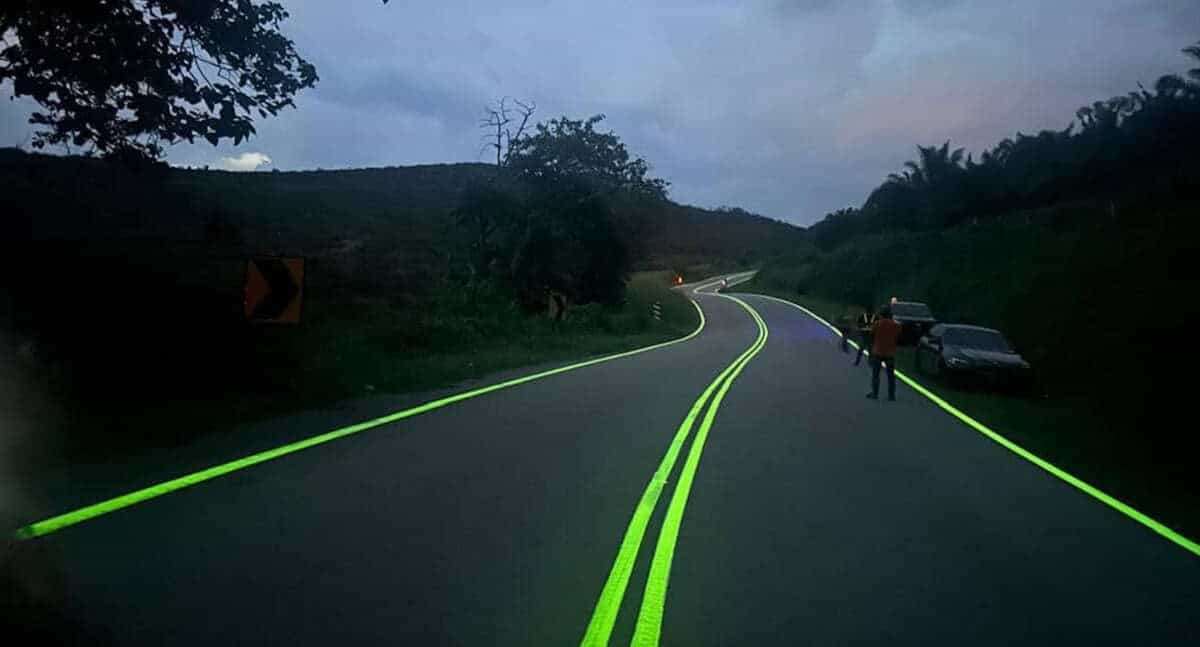
Malaysia’s project was notably more ambitious, testing whether such glowing lines could supplant conventional street lighting in remote or economically disadvantaged regions. During a site inspection, Works Minister Alexander Nanta Linggi noted that the paint provided clear visibility even during rain and fog, persisting well into the night — features that could enhance traffic safety where street lighting is scarce or unreliable.
The concept gained traction on social media. One Instagram user joked, “Malaysian roads will truly be lit — no pun intended,” as reported by The Straits Times. Many also called for the glow-in-the-dark technology to be deployed broadly on rural highways and village roads, where poor visibility is a longstanding challenge.
Financial and Practical Challenges Halt Expansion
Despite the initial promise, the financial realities soon overshadowed enthusiasm. Ahmad Maslan revealed that trials conducted in Selangor and Johor did not fully meet performance and cost-effectiveness expectations. Consequently, plans to extend the markings to 15 more locations in Selangor and 31 additional roads in Johor were abandoned after government review.
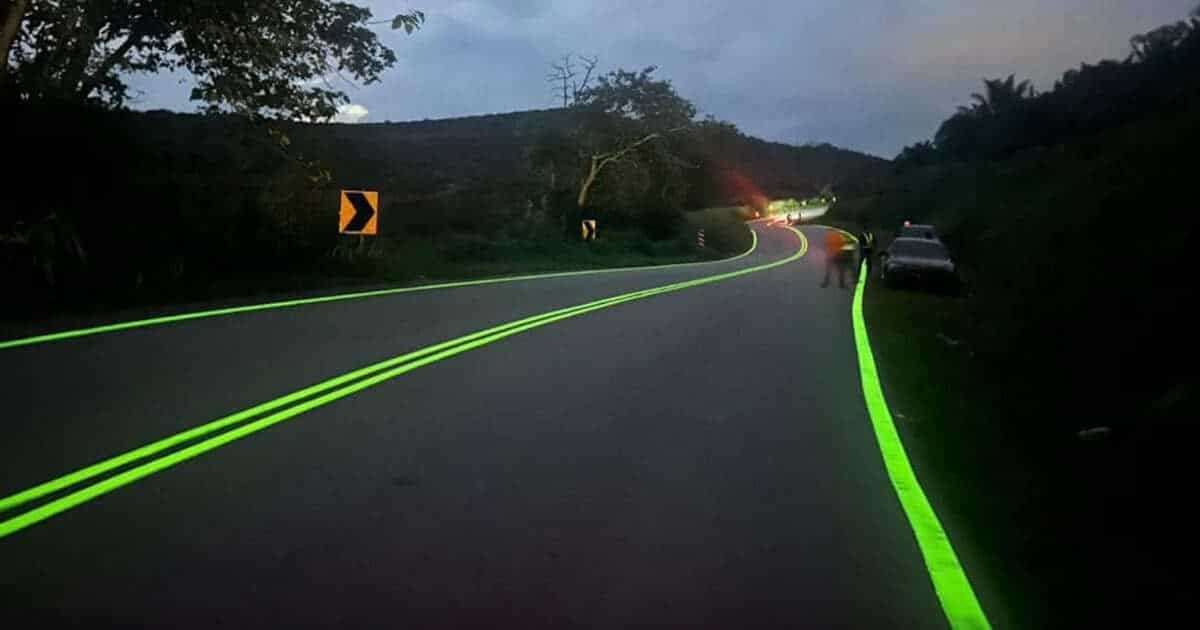
Cost wasn’t the only issue. Researchers from the Malaysian Institute of Road Safety Research (MIROS) raised concerns about the durability of photoluminescent paint in Malaysia’s humid tropical climate. A 2021 paper in the International Journal of Pavement Research and Technology similarly noted that such coatings deteriorate more rapidly in tropical regions, often requiring reapplication within 18 months.
Officials pointed out that diverting resources to this project could pull funding away from more critical infrastructure upgrades. “We conducted tests, but the results did not satisfy the ministry’s experts,” Maslan told Paul Tan.
Public Opinion and Political Focus Shift
The government’s retreat from the glowing road concept reflects changing public priorities. While initial reactions celebrated the novelty, later voices highlighted urgent problems such as potholes, fading paint, and inadequate signage. Comments on Facebook and X (formerly Twitter) encouraged the Public Works Department to direct efforts towards addressing these more basic issues rather than investing in experimental technologies.
One social media user, cited by The Straits Times, captured this sentiment: “Have your officers drive at night or in rain — you'll see the poor visibility, potholes, and uneven pavement. These are the real causes of accidents.”
Malaysia may be pausing its glow-in-the-dark ambitions, but research on photoluminescent infrastructure continues globally. Institutions like Delft University of Technology and Japan’s National Institute for Land and Infrastructure Management are working to enhance this technology, aiming to lower costs and increase durability. However, widespread adoption remains limited for now.
- Categories:
- News









0 comments
Sign in to Comment