
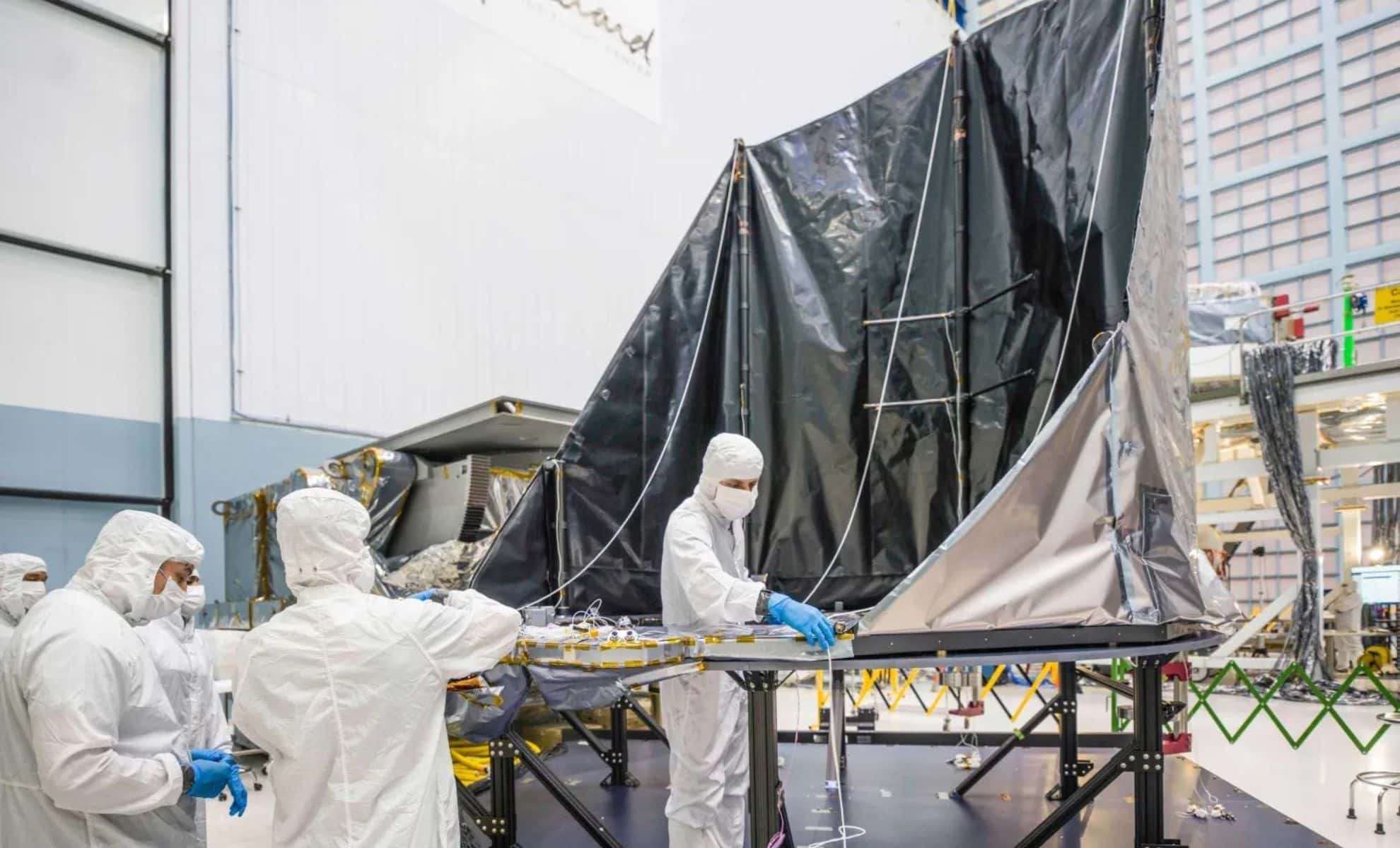
NASA has achieved a major breakthrough by completing essential trials on the Nancy Grace Roman Space Telescope’s visor component, the Deployable Aperture Cover (DAC).
This expansive sunshade-like structure is engineered to block stray light, preserving the telescope’s precision and clarity when observations are made in orbit.
The successful completion of these tests represents a pivotal stage in the development timeline, edging the telescope closer to its projected launch date.

Deployable Aperture Cover’s Critical Function
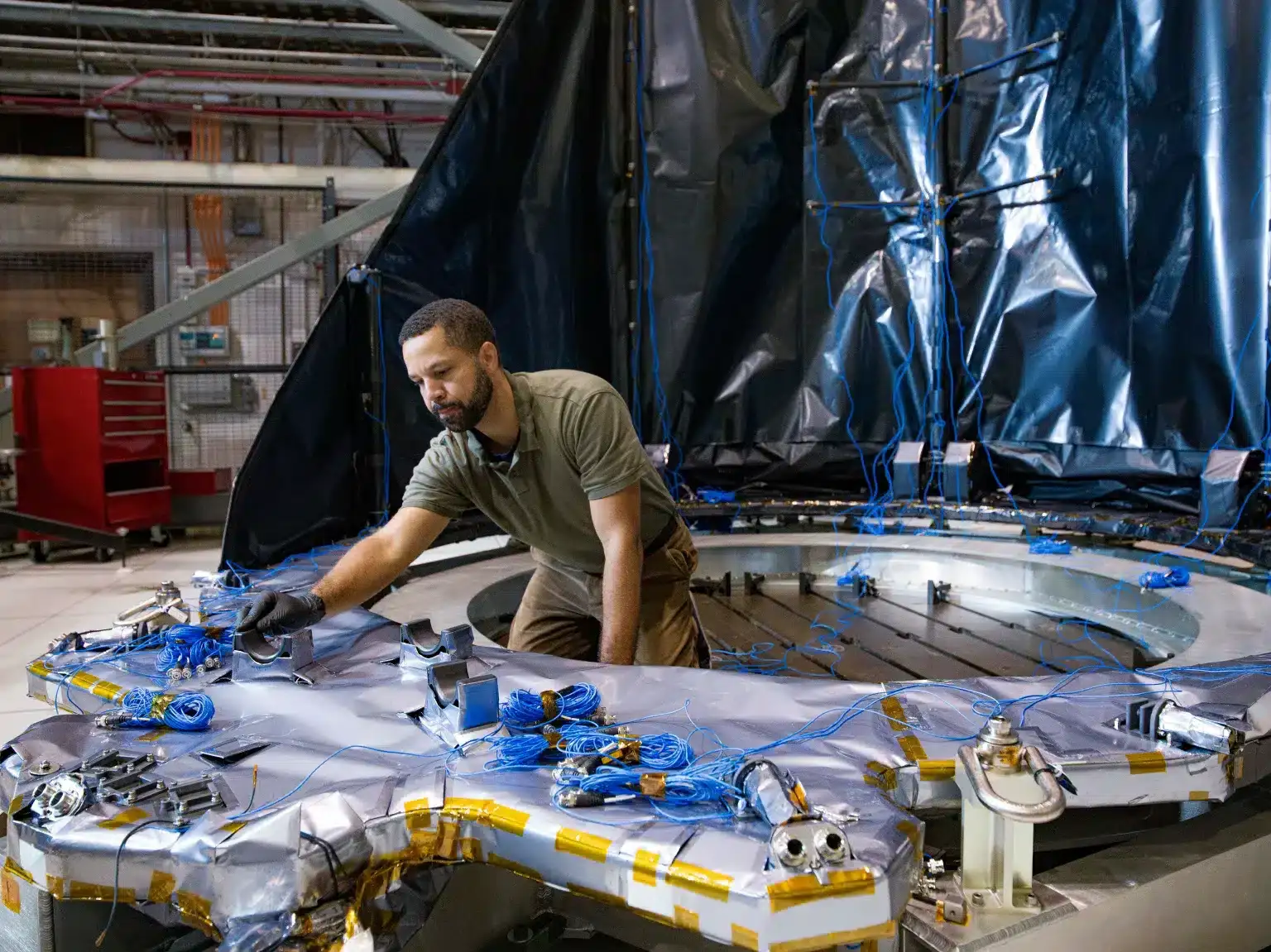
The Deployable Aperture Cover serves a vital purpose within the Roman Space Telescope’s overall mission. In contrast to rigid aperture covers used by previous observatories such as the Hubble, the DAC is constructed from reinforced thermal blankets and remains folded during launch. After the telescope reaches its orbital position, the cover will extend upward via three booms, shielding the optics and maintaining sensitivity to faint light emitted by faraway cosmic bodies.
Matthew Neuman, a mechanical engineer at NASA’s Goddard Space Flight Center working on the DAC, explained, “A soft deployable cover like the DAC is challenging to model and predict precisely, so physical testing is critical.” This highlights the significance of the environmental simulations conducted, which replicate the harsh conditions the DAC will endure in space.
Simulated Space Conditions: Thermal and Acoustic Trials
The DAC recently faced a battery of environmental examinations inside NASA Goddard’s Space Environment Simulator, a vast chamber designed to emulate the vacuum and temperature extremes found in space. The DAC was tested at temperatures dropping to minus 94 degrees Fahrenheit (minus 70 degrees Celsius), significantly colder than its expected operational environment of minus 67 degrees Fahrenheit (minus 55 degrees Celsius). These harsh conditions ensure the DAC’s reliability under unexpected temperature fluctuations.
In addition to thermal stress tests, the DAC underwent acoustic trials replicating the intense noise and vibrations encountered during rocket launch. Exposed to sounds reaching 138 decibels—louder than a jet engine at takeoff—the DAC’s durability and deployment performance were thoroughly validated.
Brian Simpson, lead designer of the DAC, remarked, “This was likely the most concerning environmental test. The main risk was that the material might freeze or stick, causing deployment failure.” The tests’ success reinforces confidence that the DAC will deploy correctly and support the Roman Space Telescope’s scientific objectives without hindrance.
Looking Ahead: Final Preparations for Launch
Following these environmental and acoustic challenges, the DAC will proceed to final evaluations, including assessments of its natural frequency and vibrational response during launch conditions. Subsequent integration with other key Roman Space Telescope subsystems, such as the Outer Barrel Assembly and Solar Array Sun Shield, will ready the observatory for its upcoming mission.
Managed by NASA’s Goddard Space Flight Center, the Roman Space Telescope aims to investigate a diverse range of cosmic phenomena, spanning dark energy, dark matter, exoplanets, and remote galaxies. Achieving dependable performance from the DAC is essential to enable the telescope to produce high-fidelity images of the universe.
As the mission nears its final stages, demonstrated successes like the DAC’s testing reflect the extensive engineering efforts and rigorous validations required to prepare this advanced instrument for space observation. These milestones bring scientists closer to the groundbreaking discoveries anticipated from the Roman Space Telescope.
- Categories:
- Astronomy ,
- News ,
- Nasa ,
- Aircraft





0 comments
Sign in to Comment