

Recent findings from Mars have unlocked new understanding about how life’s essential components may have originated on Earth. Scientists discovered organic molecules embedded in ancient lakebed sediments on Mars, highlighting extensive carbon-based chemistry on the planet’s surface.
This discovery enriches our knowledge of how vital life-building ingredients might have arrived on Earth billions of years ago.
Unveiling Organic Molecules on the Red Planet
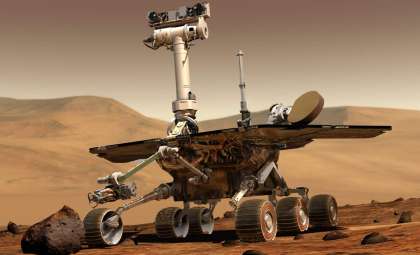
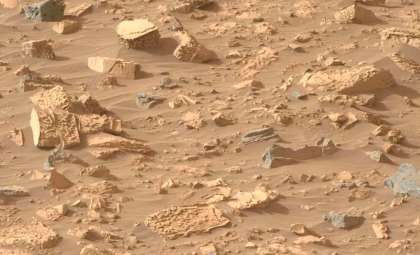
About ten years ago, a Mars rover uncovered a vital clue by detecting organic compounds nestled within sediments of prehistoric Martian lakes. This indicated a robust presence of carbon chemistry on Mars, prompting intriguing questions about the origin of these molecules. Although these organics don’t confirm extraterrestrial life, they open fascinating avenues related to their non-biological formation.

Leading this research was planetary scientist Yuichiro Ueno from the Tokyo Institute of Technology. Their team revealed that carbon dioxide in Mars’ thin atmosphere interacts with ultraviolet sunlight, creating a cascade of carbon molecules that eventually settle on the planet’s surface. Chemist Matthew Johnson of the University of Copenhagen described these carbon-rich molecules as fundamental “building blocks of life,” formed purely through atmospheric photochemical reactions without biological input.
Photolysis Driving Carbon Chemistry
The photolysis process, where light breaks down molecules, is crucial for generating organic substances on Mars. It splits carbon dioxide into carbon monoxide and oxygen atoms, favoring the breakdown of lighter isotopes like carbon-12 over carbon-13. This creates a distinctive carbon-13 enrichment in remaining carbon dioxide. Computer simulations and subsequent research have confirmed photolysis as a key contributor to Martian organic chemistry.
In 2013, Johnson and collaborators proposed photolysis as the source of Mars’ organic materials. Current evidence robustly supports their theory. The first detection of carbon-13 enrichment came from analyzing a Martian meteorite found in Antarctica. Johnson noted, “The carbon isotope ratios perfectly align with our quantum chemical model predictions.”

Validating Findings via Martian Samples
Data from the Curiosity rover collected in Gale crater provided crucial corroboration. Analyses of carbonate minerals revealed a deficit of carbon-13 that complements the isotopic enrichment seen in Martian meteorites.
This confirmed that the organics on Mars stem from carbon monoxide generated through photolysis. Johnson explained, “No other process accounts for both the carbon-13 depletion in organics and the enrichment in meteorites relative to volcanic CO2 emissions on Mars.”
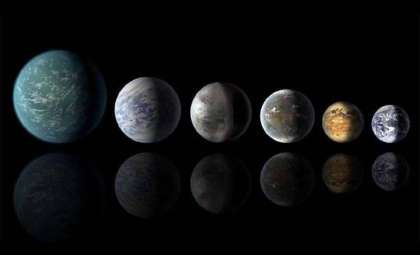
Curiosity’s findings lend strong support to the role of photolysis in synthesizing organic material on Mars and suggest that analogous processes likely occurred on early Earth. Billions of years ago, Mars, Venus, and Earth shared similar atmospheres, hinting at parallel chemical pathways.
Broader Significance for Life’s Origin on Earth
The implications extend well beyond Mars. This research proposes that organic material on Mars could provide clues about how life began on Earth. During the early solar system era, Earth, Venus, and Mars had comparable atmospheric environments. Processes generating organic molecules on Mars might have also taken place on Earth, setting the stage for life’s emergence.
Johnson remarked, “We haven’t yet discovered this definitive organic signature on Earth, possibly because our planet’s surface has been continuously reshaped by biological and geological activity. Finding it on Mars, from a time when our worlds were so alike, represents a significant breakthrough.”
- Categories:
- Astronomy ,
- News ,
- Space ,
- Nasa






0 comments
Sign in to Comment