
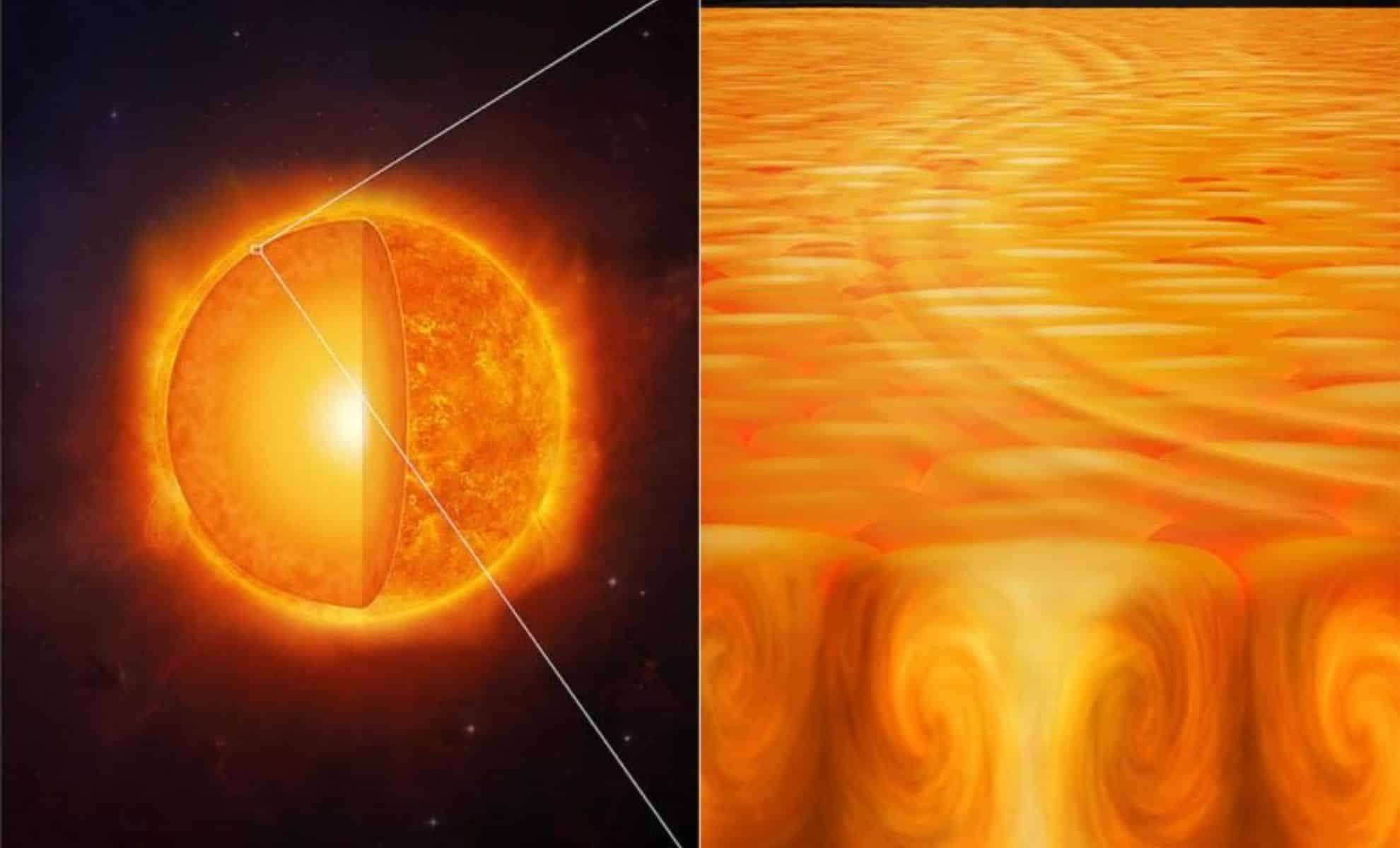
Scientists at NYU Abu Dhabi’s Center for Astrophysics and Space Science (CASS) have advanced our understanding of the Sun’s supergranules by analyzing data from NASA’s Solar Dynamics Observatory.
Led by Research Scientist Chris S. Hanson, Ph.D., this study challenges long-standing ideas about solar convection and offers fresh perspectives on how solar heat moves from the Sun’s core to its outer layers.
Progress in Deciphering Solar Convection Processes
The Sun produces energy through nuclear fusion at its core, which then moves outward to be released as sunlight. The team's paper, “Supergranular-scale solar convection not explained by mixing-length theory,” was published in the journal Nature Astronomy.

The researchers examined Doppler velocity maps, intensity data, and magnetic field measurements taken by the helioseismic and magnetic imager (HMI) aboard NASA’s Solar Dynamics Observatory (SDO) to identify and study around 23,000 supergranules.
Because the Sun’s surface blocks visible light from revealing its interior, the NYUAD team employed helioseismology, which uses acoustic waves generated by smaller granules that ripple through the Sun and are detectable on its surface, to probe beneath the photosphere.
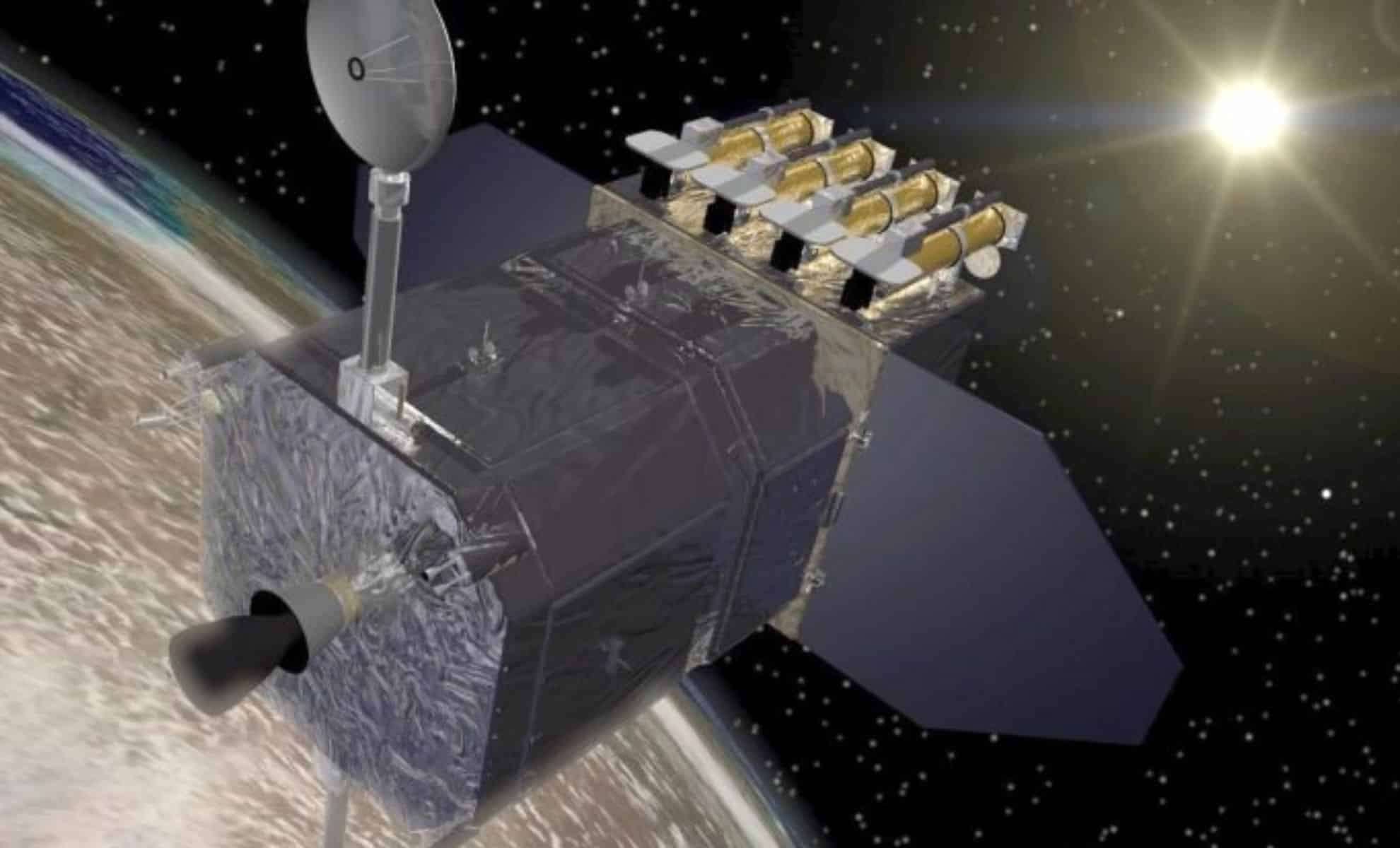
By analyzing this extensive dataset, covering depths of roughly 20,000 kilometers beneath the solar surface, the researchers measured upward and downward flows within supergranules responsible for transporting heat with exceptional precision.
Key Findings on Supergranule Behavior
The study revealed that descending flows within supergranules are about 40% weaker than ascending flows, implying an invisible element in the downward movement. The authors propose, based on thorough testing and theoretical insights, that these "missing" downflows may be composed of tiny plumes on the order of 100 kilometers wide, carrying cooler plasma deeper into the Sun. These small-scale features are undetectable by helioseismic waves, which results in the observed decrease in downflow strength.
Shravan Hanasoge, Ph.D., research professor and co-author, emphasized, “Supergranules play a crucial role in solar heat transport but remain difficult to fully comprehend. Our findings contradict foundational assumptions within the current solar convection models, encouraging renewed exploration of these structures.”
Repercussions for Solar Physics Models
The revelation that supergranular convection cannot be fully explained by the prevalent mixing-length theory has major implications for solar physics. This work reshapes our understanding of heat movement inside the Sun and challenges conventional frameworks for describing solar convection. It underlines the intricate nature of the Sun’s internal mechanisms and the need to refine existing theories.
This research was carried out in partnership with the Tata Institute of Fundamental Research, Princeton University, and New York University, leveraging high-performance computing facilities at NYUAD. The comprehensive investigation of supergranules alongside sophisticated imaging methods has enriched knowledge of the Sun’s internal dynamics and energy transport processes.
Looking Ahead: Future Solar Research
This pioneering study paves the way for deeper investigations into the Sun’s internal flow dynamics and aims to enhance models of solar convection. The insights point toward the necessity for advanced simulations that incorporate the newly identified small-scale features influencing heat transport.
Continued research into these subtle plumes and other undetected phenomena could provide a clearer picture of solar behavior and its wider effects throughout the solar system.
By delving further into these hidden solar layers, researchers expect to improve forecasting of solar activity and space weather impacts, which are critical for safeguarding satellite operations, power infrastructure, and other Earth-based technologies.
- Categories:
- Astronomy ,
- News ,
- Nasa ,
- Physics








0 comments
Sign in to Comment