

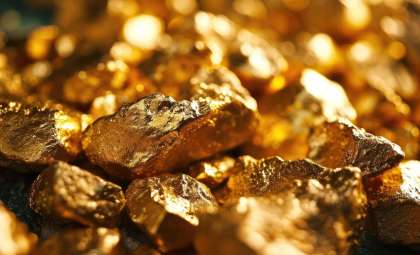
Researchers working in Hunan Province, China, have uncovered what might be the largest gold deposit ever identified, with an estimated reserve of 1,000 metric tons of premium gold ore (about 1,100 US tons). Situated in the Wangu gold field in Pingjiang County, this massive find is valued near $83 billion, offering significant promise to ease concerns over the shrinking availability of gold worldwide. This groundbreaking discovery not only carries major economic implications but also enhances scientific understanding of gold’s formation deep beneath the Earth’s surface, potentially unlocking new technological applications.
Why This Find Is Unprecedented
The Wangu site stands out for both its size and richness. With an average concentration of 138 grams of gold per ton of ore, it far surpasses the industry’s high-grade standard of roughly 8 grams per ton. The deposit comprises over 40 gold veins, extending deeper than two kilometers, with possibilities of even more extensive untapped reserves below.
Experts compare this discovery to legendary sites like South Africa’s South Deep mine; however, Wangu may exceed these in both volume and quality. If validated further, it would qualify as a “supergiant” gold deposit, a rare classification reserved for extraordinary reserves that redefine global mining benchmarks.

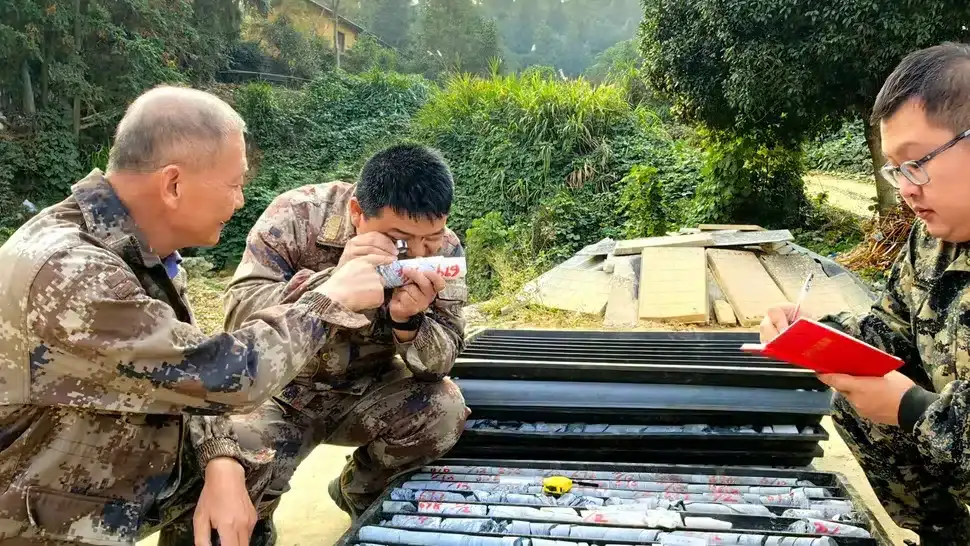
Essential Facts About the Wangu Deposit
- Reserve Estimate: 1,000 metric tons (equivalent to 1,100 US tons)
- Approximate Market Value: $83 billion
- Gold Grade: 138 grams per ton of ore (industry high-grade threshold: 8 grams/ton)
- Count of Gold Veins: 40+
- Depth Range: Around 2 kilometers, with potential for deeper reserves
Insights Into Gold Formation Processes
The mechanisms behind the formation of such a significant gold deposit are as fascinating as the find itself. Gold commonly accumulates within quartz veins precipitating from hydrothermal fluids under particular pressure and temperature conditions. These veins develop over millions of years and are often influenced by tectonic shifts and seismic activity. Current research indicates that earthquakes might play a vital role by creating fractures that allow gold-rich fluids to circulate and solidify.
Scientists at Monash University in Australia suggest seismic events are key contributors to the creation of supergiant deposits like Wangu, a notion supported by tectonic activity and mineral abundance in Hunan.
Further advances reveal intriguing properties of gold at the atomic scale. According to Shun Kashiwaya, a materials scientist at Linköping University in Sweden, gold exhibits surprising behavior when thinned down to a single atom layer. “Reducing a material to an atomic thickness triggers extraordinary changes – much like graphene,” Kashiwaya explains. “Gold, typically metallic, can behave as a semiconductor when in a single-atom layer form.”
This could open doors to novel uses in nanotechnology, electronics, and green energy innovations, highlighting gold’s expanding role beyond traditional applications.
Addressing the Global Gold Supply Challenge
This discovery comes amid rising concerns in the global gold sector. To date, humanity has mined about 53,000 metric tons of gold, with estimates suggesting only around 50,000 metric tons remain. However, these remaining deposits are harder to find and more costly to extract. Many accessible mines are depleted, pushing mining deeper and further afield, triggering worries about “peak gold”—a decline in major new finds that could fuel shortages and soaring prices.
The demand for gold is also rising. While jewelry and investment remain top consumers, gold’s significance in technology—such as in smartphones, medical devices, and renewable energy—is growing. Its excellent conductivity and corrosion resistance make it vital for modern manufacturing. This growing demand combined with shrinking supplies intensifies supply risks.
Within this context, the Wangu deposit stands out as a promising resource. With its high concentration of gold—averaging 138 grams per ton compared to typical low-grade ores below 8 grams—it presents more efficient, environmentally friendlier extraction prospects.
This new supply could stabilize gold markets, reducing price swings driven by geopolitical and technological factors, providing more certainty for investors and industries.
Beyond economics, Wangu challenges assumptions about gold scarcity. While major finds have become rare, improved methods like 3D geological mapping, precise drilling, and remote sensing enable new explorations, suggesting abundant untapped resources may still exist.
Moreover, gold’s evolving role in tech fields—such as nanotech and advanced electronics—is underscored by innovations using materials like goldene, a single-atom-thick gold layer. The Wangu find could thus catalyze new technological progress alongside mining advances.
The Wangu gold field exemplifies both the planet’s hidden wealth and the breakthroughs in scientific exploration. Managed sustainably, it could herald a new era for gold, ensuring sufficient supply for future generations and redefining gold’s place in human advancement.
- Categories:
- News










0 comments
Sign in to Comment