

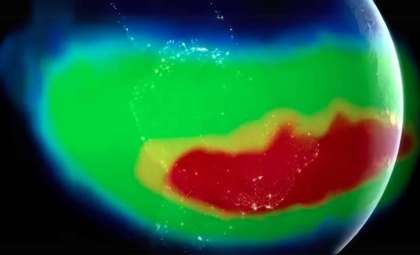
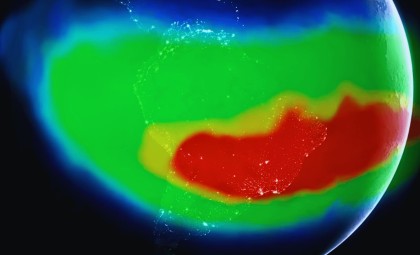
Scientists, satellite engineers, and geomagnetic experts worldwide are focusing on a swiftly enlarging fragile region within Earth’s magnetic shield. Termed the South Atlantic Anomaly (SAA), this zone now spans over 5 million square kilometers and permits elevated space radiation to penetrate closer to Earth’s surface, impacting satellite performance, orbital safety, and expanding our insights into the planet’s inner mechanisms.
Recently acquired observations from the European Space Agency’s Swarm satellites—a trio of orbiters tasked with tracking magnetic signals originating from Earth’s core, crust, and ionosphere—show that the anomaly isn’t just enlarging but developing irregularly, especially a rapidly intensifying segment southwest of the African continent.

Though the SAA has long been identified, its expansion speed, geophysical intricacies, and technological consequences are raising fresh concerns among researchers. Should this trend continue, satellite systems in low Earth orbit could suffer more frequent disturbances, at a time when satellite reliance for communication, navigation, and environmental monitoring is surging.

A Moving Breach in Earth’s Magnetic Shield
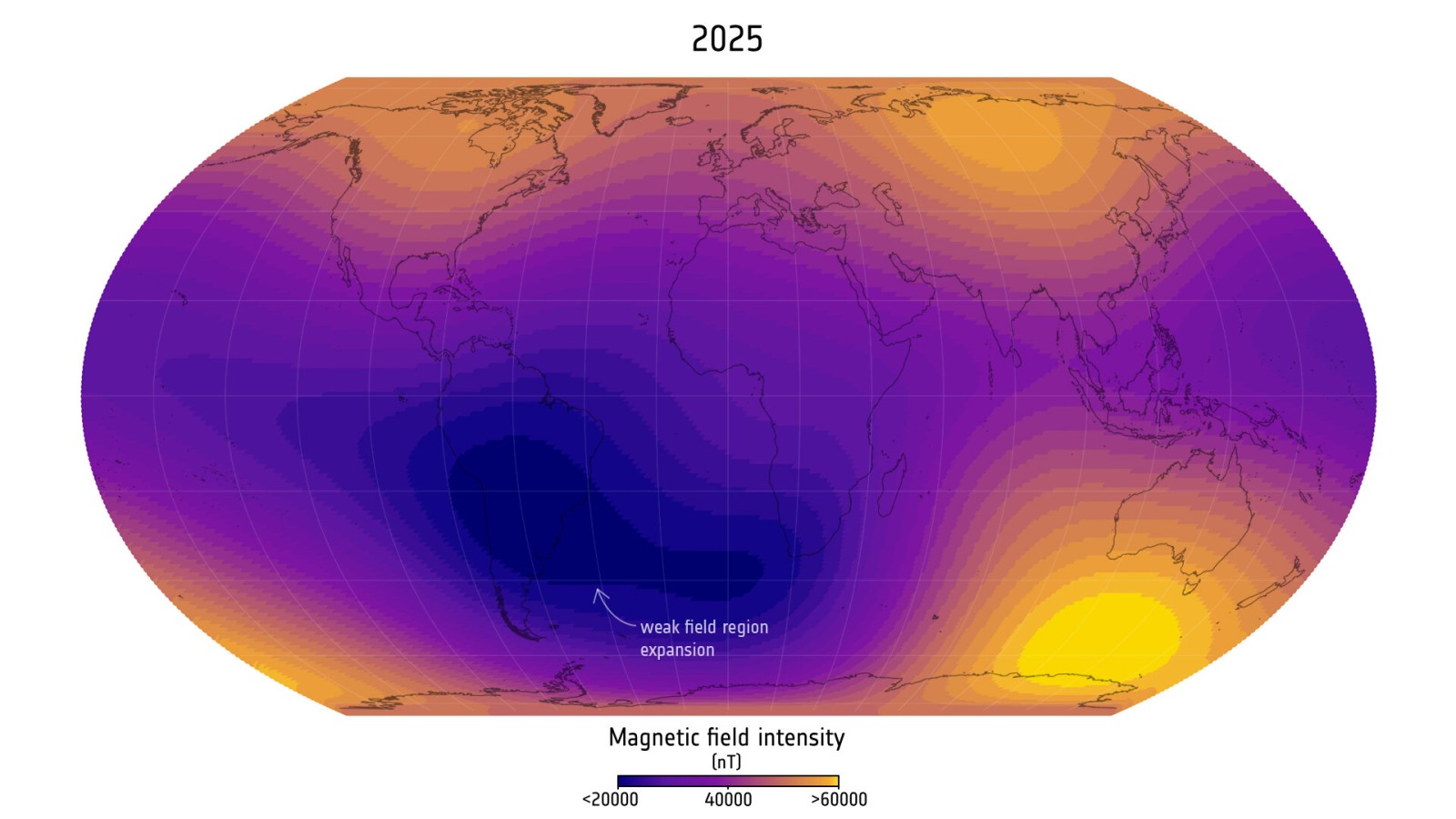
Launched in 2013 as part of ESA’s FutureEO initiative, the Swarm mission offers the clearest view yet of the SAA’s spread. ESA’s recent analyses show the anomaly expanded between 2014 and 2025 by an area almost half the size of continental Europe.
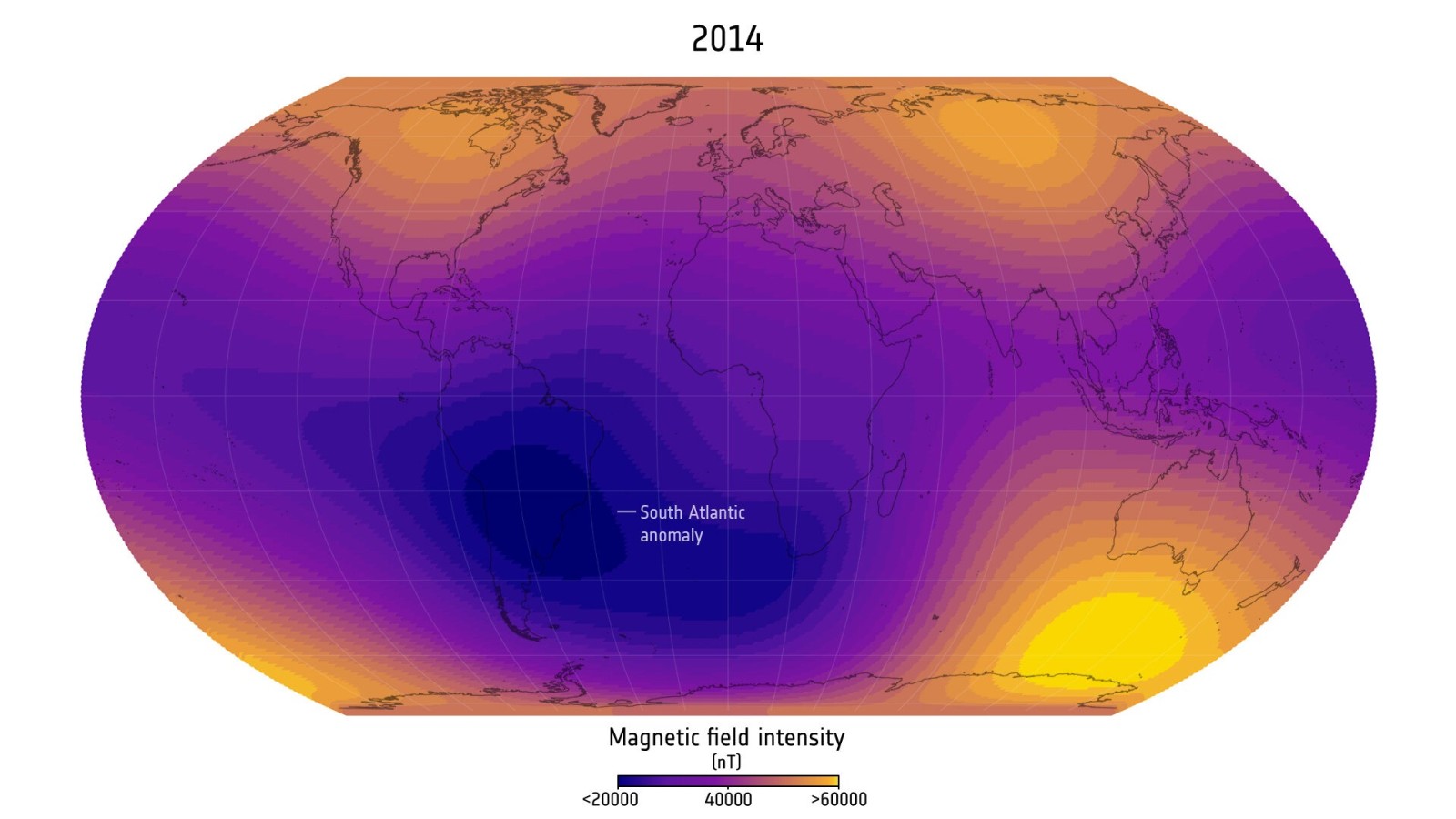
Once centered southeast of South America, the SAA is now significantly intensifying over the southwestern Atlantic Ocean, particularly near the African coastline. This movement is linked to reverse flux patches, areas where magnetic field lines bend inward rather than outward, formed at the interface between the liquid outer core and the solid mantle.
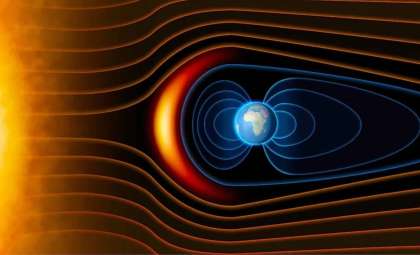
ESA geomagnetic specialist Chris Finlay explained in an ESA statement, “Typically, magnetic field lines emerge from the core in the southern hemisphere. However, beneath the South Atlantic Anomaly, there are unexpected zones where the field is directed back into the core.” One such reverse flux region has been observed drifting westward below Africa, further weakening the area.
These deep Earth processes imply that the SAA represents more than just a surface anomaly; it is a surface manifestation of turbulences occurring within Earth’s core, unfolding over vast geological times.
Orbiting Satellites Face Growing Challenges
While the anomaly does not pose direct hazards to humans on the ground, satellites orbiting through the affected area experience disruptions. Passing through the SAA subjects spacecraft to a weakened magnetic barrier, increasing exposure to cosmic and solar radiation. This exposure raises risks such as data corruption, disruptions to sensor functions, and gradual damage to delicate onboard equipment.
Satellite designers have long accounted for the SAA’s presence. For instance, NASA routinely powers down certain instruments on the Hubble Space Telescope when it traverses this area to prevent single-event upsets. Similarly, the International Space Station adopts protective strategies as it crosses the anomaly multiple times daily.
As the SAA enlarges, satellites remain longer within the radiation zone, increasing their vulnerability and potentially reducing their operational lifespan. This threat extends beyond legacy spacecraft to every satellite in low Earth orbit, including vital systems for navigation, communication, and Earth monitoring.
Insights into Earth’s Geodynamo
Scientists also gain a rare observational window into Earth’s deep interior from the anomaly’s expansion. Our planet’s magnetic field originates from the geodynamo effect, driven by convection and rotational movements in the molten outer core, which generates electrical currents and consequently Earth’s magnetism.
A peer-reviewed article in Physics of the Earth and Planetary Interiors links the SAA to reverse magnetic flux patches at the core-mantle boundary (CMB). These patches appear connected to stable lower mantle formations, hinting that thermal irregularities deep inside Earth influence the outer core's convection and the magnetic field’s structure.
The research indicates that the SAA is not an isolated event. Past geological and geomagnetic findings imply anomalous magnetic regions have appeared repeatedly in similar locations, suggesting the South Atlantic area has a heightened sensitivity to magnetic field disturbances.
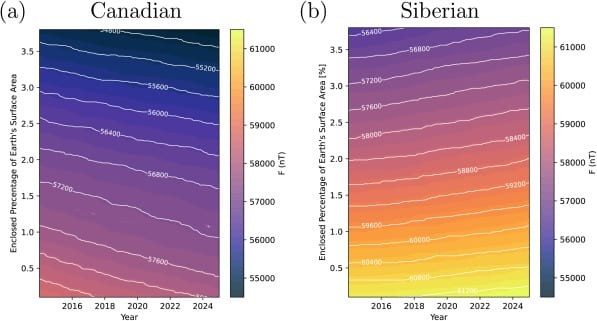
Moreover, continuous measurements from Swarm display uneven alterations in the magnetic field elsewhere. While the magnetic field diminishes over Canada, it strengthens over Siberia, consistent with the north magnetic pole’s recent shift toward Russia. This demonstrates the field’s intricate, multifaceted behavior, governed by deep Earth processes rather than a simple dipolar model.
Unresolved Mysteries Remain
The South Atlantic Anomaly’s growth, migration, and unpredictable behavior challenge existing magnetic field models. Presently, the situation remains manageable through satellite rerouting, fortification measures, and temporary shutdowns of vulnerable instruments. However, should the anomaly’s growth speed up or new reverse flux zones develop, these tactics might prove inadequate.
A key unresolved issue is whether the SAA signals a significant long-term transformation in the geodynamo. Some hypothesize these trends could precede a magnetic pole reversal—an event last recorded approximately 780,000 years ago. While no current data imply an immediate flip, ESA experts emphasize the necessity for persistent monitoring to better understand future changes.
- Categories:
- Science









0 comments
Sign in to Comment