
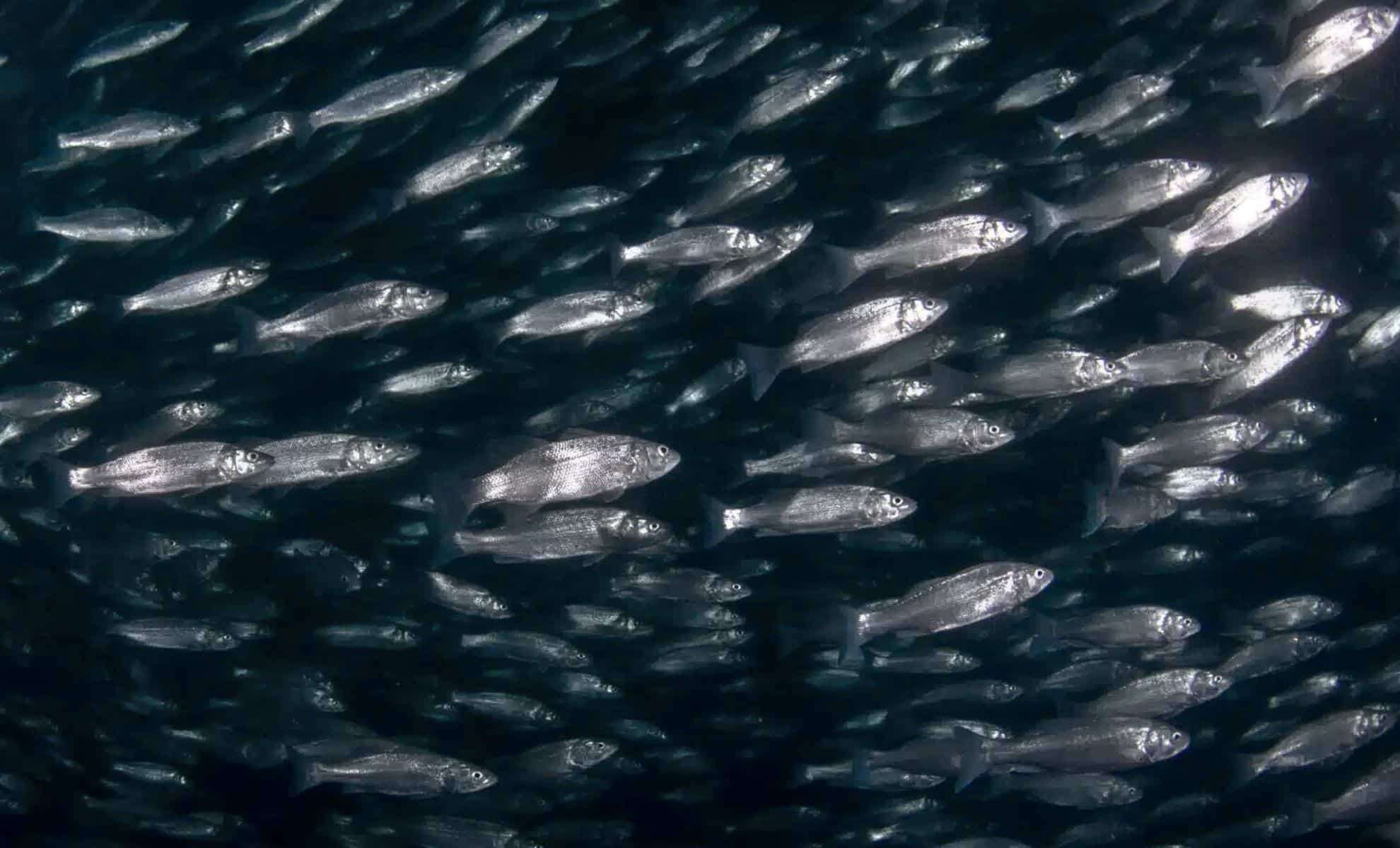
In the frigid Barents Sea near Finnmark, Norway, researchers captured an extraordinary marine episode previously undocumented in such depth. Utilizing state-of-the-art acoustic sensing technology, scientists tracked millions of capelin fish congregating in a massive spawning shoal extending over ten kilometers.
This immense aggregation immediately attracted a vast number of Atlantic cod, which converged in great quantities to hunt the capelin shoal. This exceptional predator-prey event sheds light on the fragile dynamics that maintain Arctic marine habitats.
Monitoring the Movements of Massive Fish Populations Underwater
The phenomenon took place as capelin migrated annually from their offshore Arctic feeding zones to spawning areas along the Norwegian coast. Dr. Nicholas C. Makris from MIT and his team at the Norwegian Institute of Marine Research deployed Ocean Acoustic Waveguide Remote Sensing (OAWRS), a technology that detects fish by their unique swim bladder acoustic patterns.

“This method functions like an underwater radar, covering hundreds of square kilometers with exceptional accuracy,” explained the scientists. Their multispectral enhancements enabled them to distinguish capelin and Atlantic cod based on species-specific frequency signals.
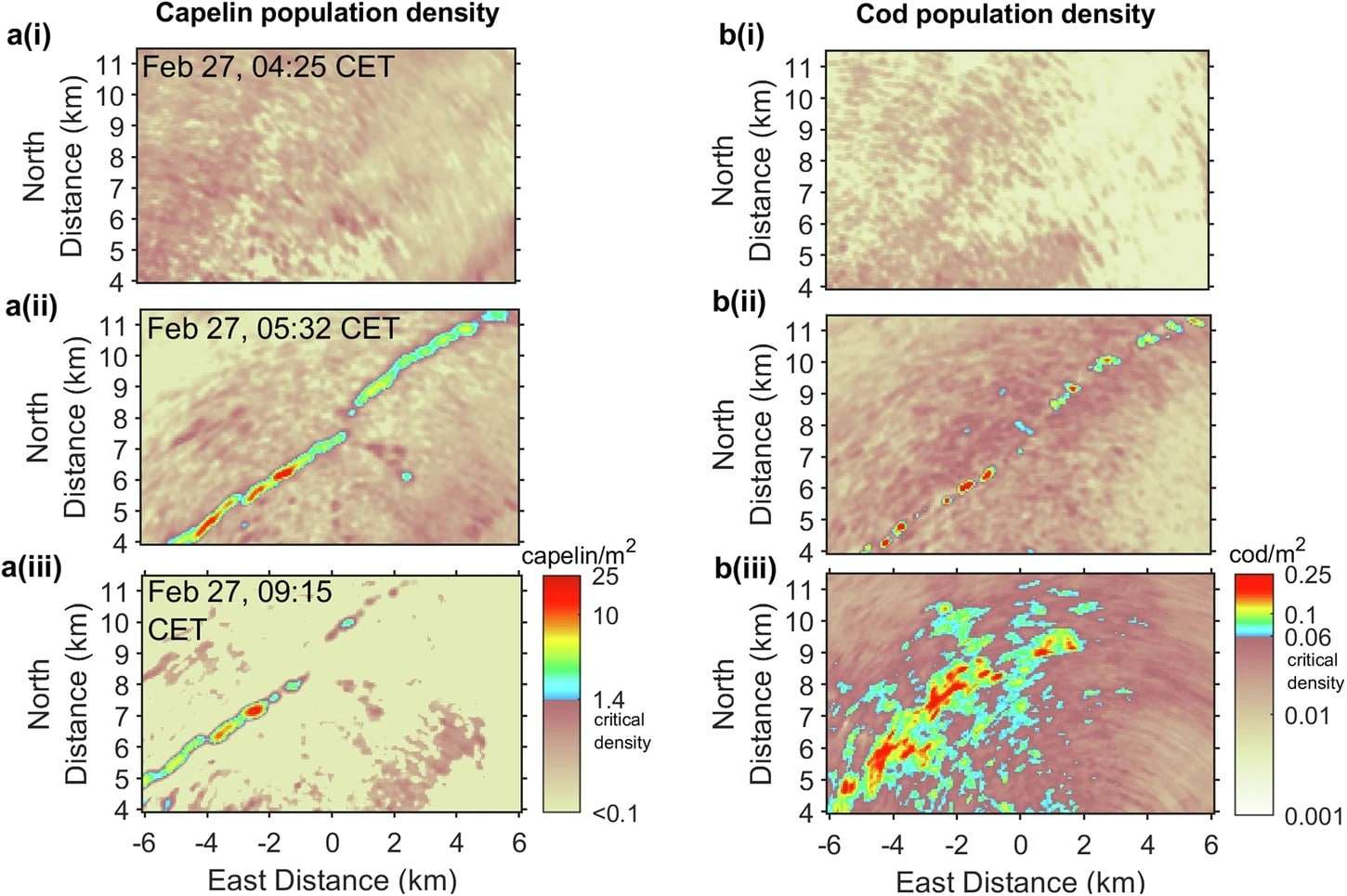
This approach generated a detailed, minute-by-minute map of fish distribution and movement, showing capelin initially dispersed but rapidly forming a cohesive shoal with approximately 23 million individuals weighing nearly 414 tons.
A Massive Shoal of Predators Assembles
At daybreak on February 27, 2014, the dense capelin shoal moved fluidly, its coordinated swimming conserving energy for its upcoming spawning migration. Yet this spectacle spurred an incredible response: about 2.5 million Atlantic cod synced into a predatory shoal that engulfed the capelin.
“The cod shoal expanded faster than the swimming speed of individual fish, indicating a sophisticated group hunting tactic,” the team reported. Within just four hours, cod consumed over 10 million capelin, dramatically altering predator-prey dynamics and revealing the intensity of this natural confrontation.
Visual predators, cod primarily targeted capelin on the shoal’s outskirts or those unable to shelter inside, consistent with the “selfish herd” hypothesis, which suggests individuals seek safety by positioning within group centers to lower predation risk.
Understanding Ecosystem Resilience as Climate Changes
Capelin play a crucial role as a keystone species in Arctic food chains, forming a cornerstone diet for cod, seals, and various seabirds. The researchers warn that such large-scale predation events could increase with ongoing climate change, as warming Arctic waters force capelin to travel further to locate suitable spawning habitats, heightening their exposure to predators.
“Shifts in predator-prey dynamics are key for grasping how marine ecosystems operate under growing environmental pressures,” noted Dr. Makris. The team underscores how innovations like OAWRS offer essential monitoring capabilities, enabling better ecosystem management and conservation. Plans are underway to apply these techniques to other species and ocean regions, aiming to predict changes influenced by natural behaviors and human activity.
- Categories:
- Science











0 comments
Sign in to Comment