

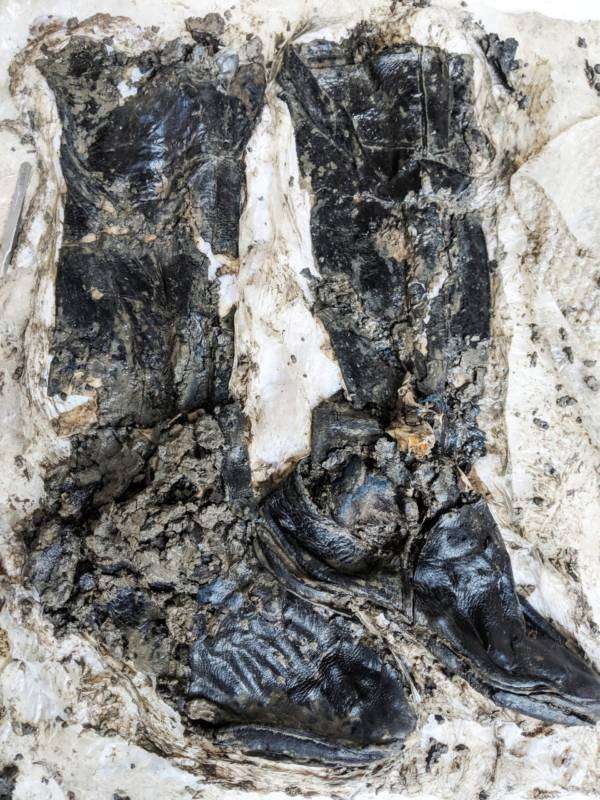
Archaeologists uncovered a face-down skeleton along the River Thames’ muddy shoreline, remarkably still clad in near-pristine leather boots after half a millennium underground. This find was revealed by MOLA Headland Infrastructure amid excavations for London’s Thames Tideway Tunnel initiative.
As part of the construction on London’s extensive $5.4 billion “super sewer” system designed to prevent sewage overflow into the Thames, experts working in Bermondsey stumbled upon this unexpected 500-year-old burial, complete with its footwear surprisingly intact.
Practical Boots for a Hard Life
The boots found weren’t made for fashion. These thigh-high leather boots stuffed with moss were crafted for resilience against mud and water, suitable for strenuous labor. Such boots were rare in that era, with most people favoring shorter footwear like shoes or ankle boots.

Who would wear such durable boots? Likely someone engaged in river-related work — possibly a fisherman, a mudlark, or a sailor. Beth Richardson of the MOLA archaeology team notes these boots were “quite simple,” resembling today's waterproof rain boots more than ornate historical footwear.
Physical Evidence Reveals a Story
The remains provide insight into the man’s life. Joint deterioration in his spine and left hip indicates years of strenuous work. Experts estimate he was over 35 years old at the time of death.
His teeth exhibit pronounced grooves, likely from the habit of biting rope, often associated with fishermen or sailors. There are no signs of trauma or foul play, and archaeologists doubt his burial was deliberate. Considering how valuable leather was then, knowingly burying someone in such boots would have been unusual, suggesting an accidental death.
Richardson commented, “He might have been working near the river when a rising tide caught him. He could have slipped, been exhausted, or possibly intoxicated. The exact cause remains unclear.”

Thames’ Environment Aids Preservation
The preservation of both the boots and bones is largely credited to the unique oxygen-poor conditions of the Thames foreshore. This anaerobic environment slows decay, allowing organic materials like leather to endure for centuries.
“Leather can remain exceptionally well-preserved in London,” Richardson explained, “especially when found in waterlogged ditches or near the riverbank.” The wet, oxygen-deprived soil functions as a natural preservation chamber. With ongoing digs, archaeologists anticipate uncovering even more historic treasures hidden beneath the Thames’ edge.
- Categories:
- News










0 comments
Sign in to Comment