
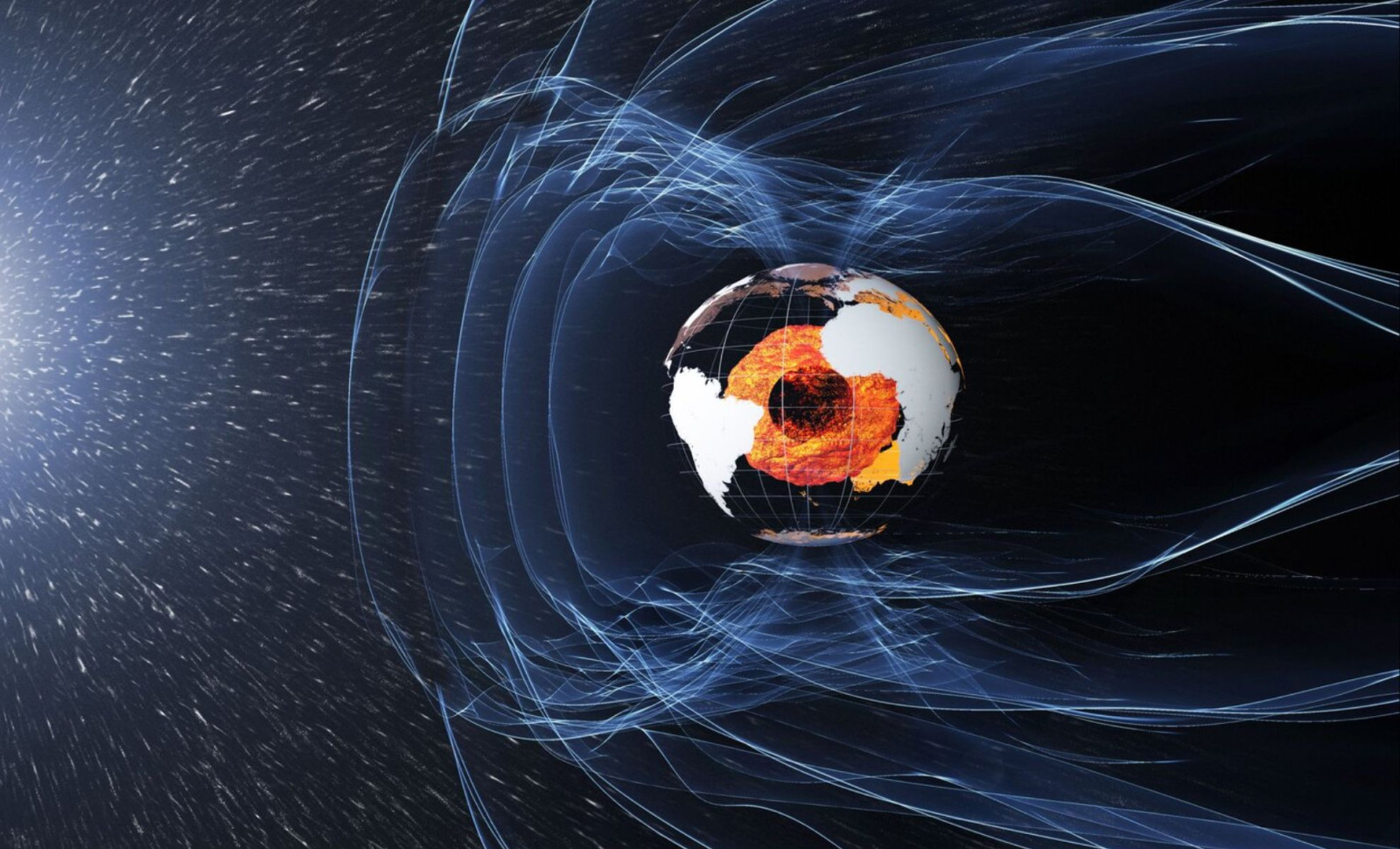
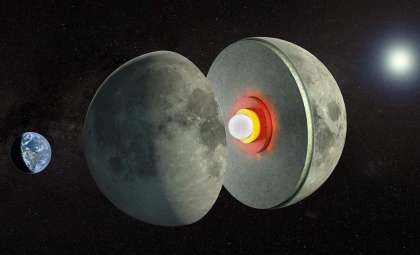
An extensive expanse of molten iron far below the Pacific Ocean abruptly shifted its movement around 2010. This finding reveals that Earth's innermost layers may undergo unexpected transformations. Deep beneath our planet’s surface, the outer core contains flowing liquid iron. This dynamic metal acts as a planetary dynamo, generating the magnetic field that protects Earth from solar radiation and charged particles.
Direct observation of the core is impossible, but scientists can infer its dynamics by monitoring variations in Earth's magnetic field. By analyzing decades of data from terrestrial observatories and satellite missions, researchers have pieced together an unexpected directional flip in the flow of molten iron beneath the Pacific Ocean.
Published in the Journal of Studies of Earth’s Deep Interior, this research utilized data spanning from 1997 to 2025, providing one of the most detailed snapshots yet of how rapidly Earth's deep interior can change.

Sudden Shift in Deep Earth Current
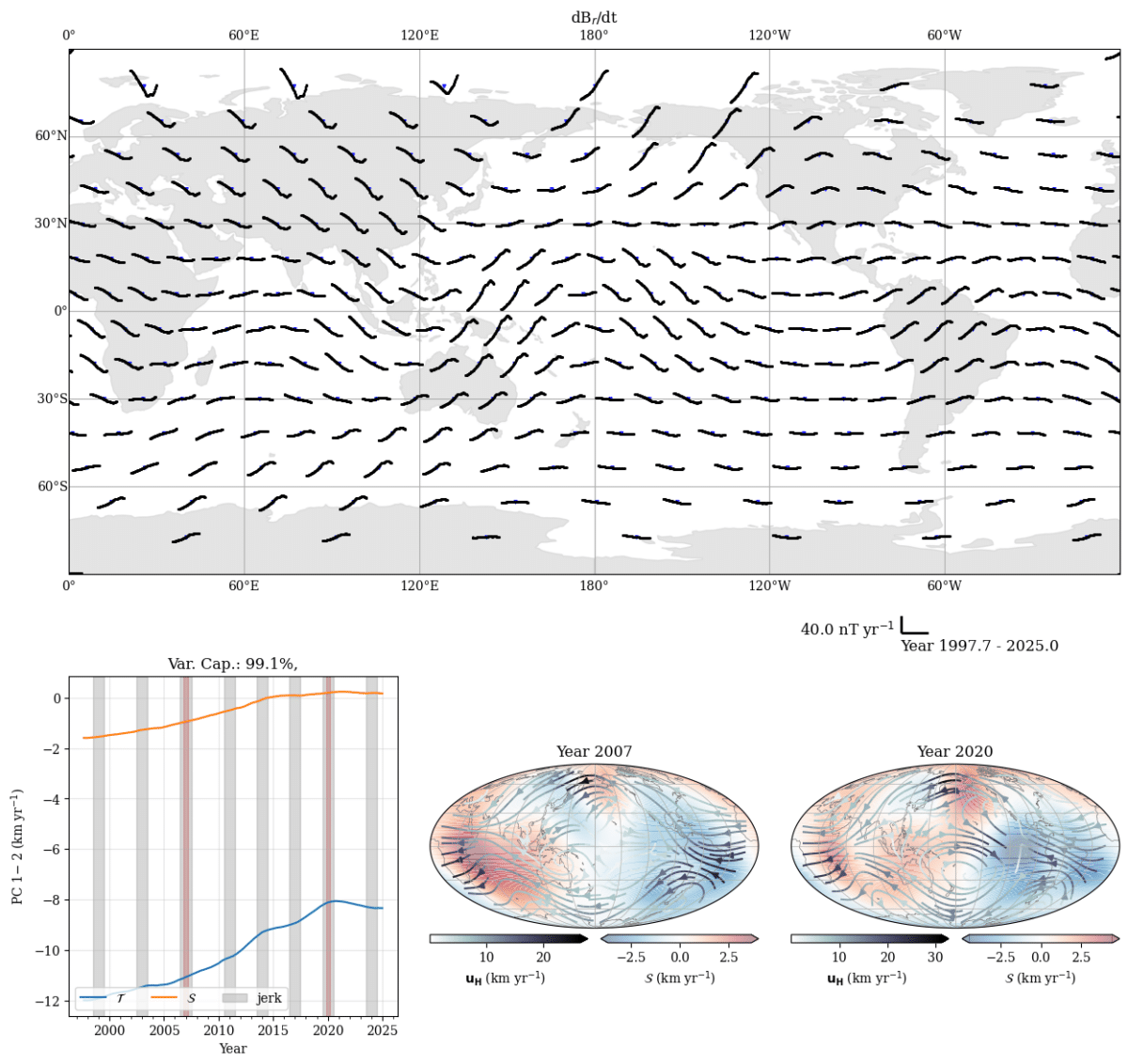
The team identified a vast zone of iron-rich fluid under the equatorial Pacific reversing course from a mild westward drift to a pronounced eastward current around 2010. This transition occurred roughly 2,200 kilometers beneath Earth’s surface, near the core-mantle interface. Previously, geoscientists assumed that large-scale core flows evolved slowly over centuries. This discovery demonstrates that substantial flow patterns can reorganize on much shorter timescales.
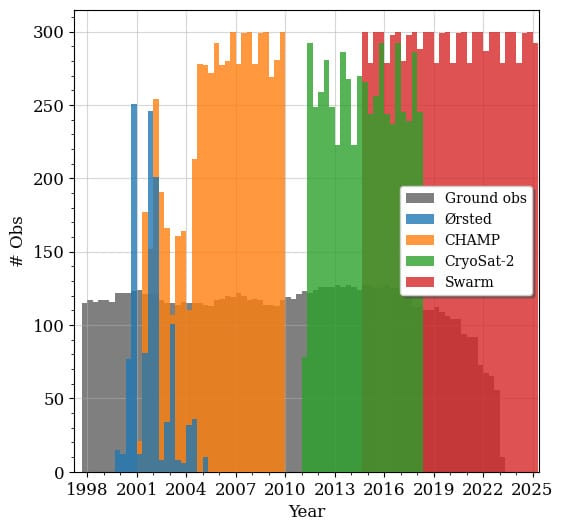
The investigation combined magnetic data from ESA’s Swarm and CryoSat missions, alongside measurements from CHAMP and Ørsted satellites as well as global magnetic observatories. This integrated dataset enabled the researchers to track changes in the deep flow with unprecedented precision.
Frederik Dahl Madsen of the University of Edinburgh's School of Geosciences, lead author of the study, explained that this flip prompts new inquiries into the forces controlling Earth's interior. Researchers aim to determine if this event was transient, cyclical, or indicative of a lasting alteration in core convection.
The publication also showed a reduction in the eastward flow beneath the Pacific since 2020. Madsen remarked:
“The rise of the strong eastward flow in the Pacific is contemporary with a change in behaviour in the inner core, as inferred from geodesy and seismology, and we hypothesize that these changes in the deep interior are associated with the changes in flow beneath the Pacific.”
Satellites Unveil Dynamic Magnetic Processes
The flow of molten iron in the outer core drives the geodynamo, the engine behind Earth's magnetic shield. Since direct exploration of this region is impossible, satellites are indispensable for studying these subterranean currents.
ESA’s Swarm trio of satellites, launched in 2013, carry ultra-sensitive magnetometers that detect minute fluctuations in Earth's magnetic environment. These measurements enable differentiation between magnetic disturbances generated deep within Earth and those arising from the crust, oceans, and atmosphere.
Anja Stromme, ESA’s Swarm Mission Manager, highlighted that the mission’s continuous data gathering has allowed scientists to monitor geodynamo variations over extended intervals. Such insights assist in investigating phenomena like the 2017 geomagnetic jerk, an abrupt shift in Earth's magnetic field direction.
“Long-duration satellite magnetic measurements allow researchers to follow changes in the geodynamo in near-real time and improve models of Earth’s magnetic field evolution. Future observations from missions such as Swarm will play a crucial role.”
Satellite data also revealed wave-like motions and rapidly shifting structures in the core, which might have been missed using only terrestrial instruments.
Unveiling Earth’s Deep Interior Mysteries
This fluid reversal beneath the Pacific doesn't pose a direct threat to human life, but it enhances our grasp of Earth's internal dynamics. Shifts in the magnetic field affect navigation tech, satellite function, and space weather forecasting. Understanding these processes allows for more accurate models of planetary behavior.
Elisabetta Iorfida, ESA’s Swarm Mission Scientist, stated that the findings overturn the notion that the outer core’s motions are predominantly a steady westward drift. She emphasized that regional variations can occur within a decade and may highlight relationships between the outer core, inner core, and lower mantle.
As researchers gather more satellite data, they continue to monitor this atypical flow under the Pacific, uncovering clues about the complexities of our planet’s deepest layers.
- Categories:
- News










0 comments
Sign in to Comment