

Mars’ intriguing volcanic terrain has fascinated researchers for decades, and recent findings are reshaping our comprehension of the planet’s volcanic past. Previously, scientists assumed that Mars volcanoes resulted from brief, straightforward eruptions. New investigations, however, expose a far more sophisticated scenario involving intricate and changing magma chambers beneath the surface. By studying volcanic minerals and surface formations from orbit, researchers are uncovering the active geological mechanisms behind Mars’ latest volcanic features.
Decoding the Intricate Magma Networks Hidden Beneath Mars
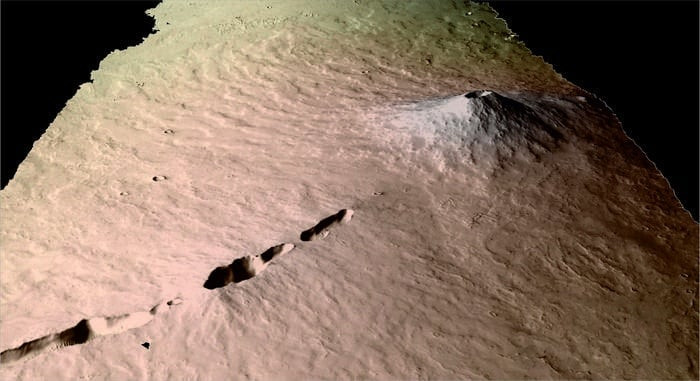
A recent article in Geology details an international research team's focus on volcanic structures near the southern flank of Pavonis Mons, one of the Red Planet's largest volcanoes. The study integrates precise surface mapping with orbital mineral data to reveal a volcanic history far more layered than was once believed.
“Our results show that even during Mars’ most recent volcanic period, magma systems beneath the surface remained active and complex,” says Bartosz Pieterek of Adam Mickiewicz University.
Add Cosmo Herald as a Preferred Source

Findings suggest that the volcanic activity was composed of multiple eruptions unfolding over an extended timeframe. Instead of a single, isolated outburst, these volcanoes developed progressively as subsurface conditions evolved. This challenges previous assumptions that Mars volcanic events were simple and short-lived.
Tracing the Evolution of Volcanic Eruptions Over Time
An important outcome from this study is the recognition that Mars’ newest volcanoes were formed through several eruptive stages, each indicating different phases of magma development. Researchers noted that these volcanic formations evolved from fissure-fed lava flows to more localized vent eruptions, resulting in cone-shaped structures.
“The volcano did not erupt just once—it evolved over time as conditions in the subsurface changed,” explains Pieterek.
This discovery highlights that the magma chambers beneath Mars are dynamic systems, continually shifting as magma migrates, interacts, and transforms. Each eruptive stage left distinct mineral markers that document the magma’s progression, adding greater depth to our knowledge of the planet’s volcanic behaviors and internal geology.
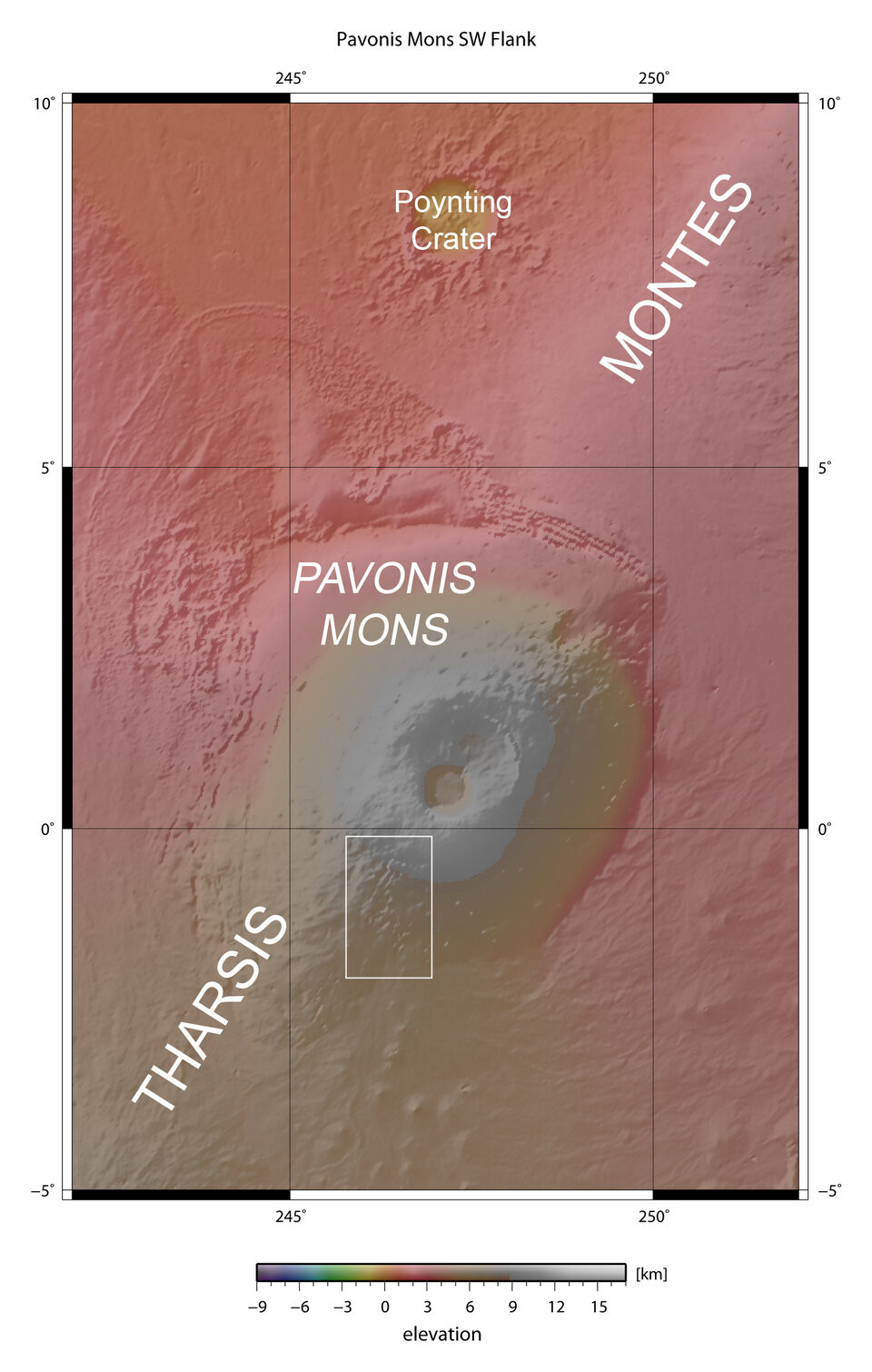
Pavonis Mons towers approximately 12 kilometers above the neighboring plains and serves as the central peak among the trio of ‘shield’ volcanoes making up Tharsis Montes. These gently sloping structures resemble flattened domes and consist predominantly of extensive lava flows. The location shown in the context map highlights Pavonis Mons, positioned alongside Arsia and Ascreus Montes, forming a nearly 1500-kilometer volcanic chain.
Mineral Signatures Illuminate the Magma’s Transformations
A standout element of this research is the use of mineralogy to track the shifting nature of Martian magma. By studying volcanic eruption deposits, scientists identified unique mineral compositions that mirror underlying subsurface changes.
“These mineral differences tell us that the magma itself was evolving,” Pieterek explains. “This likely reflects changes in how deep the magma originated and how long it was stored beneath the surface before erupting.”
These mineral patterns provide pivotal evidence that Mars’ magmatic systems were not uniform. Magma evolution over time is key to understanding volcanic mechanics on Mars. The variations in magma source and conditions before eruption have major implications for Mars’ geological narrative and its potential to support life.
- Categories:
- News


0 comments
Sign in to Comment