
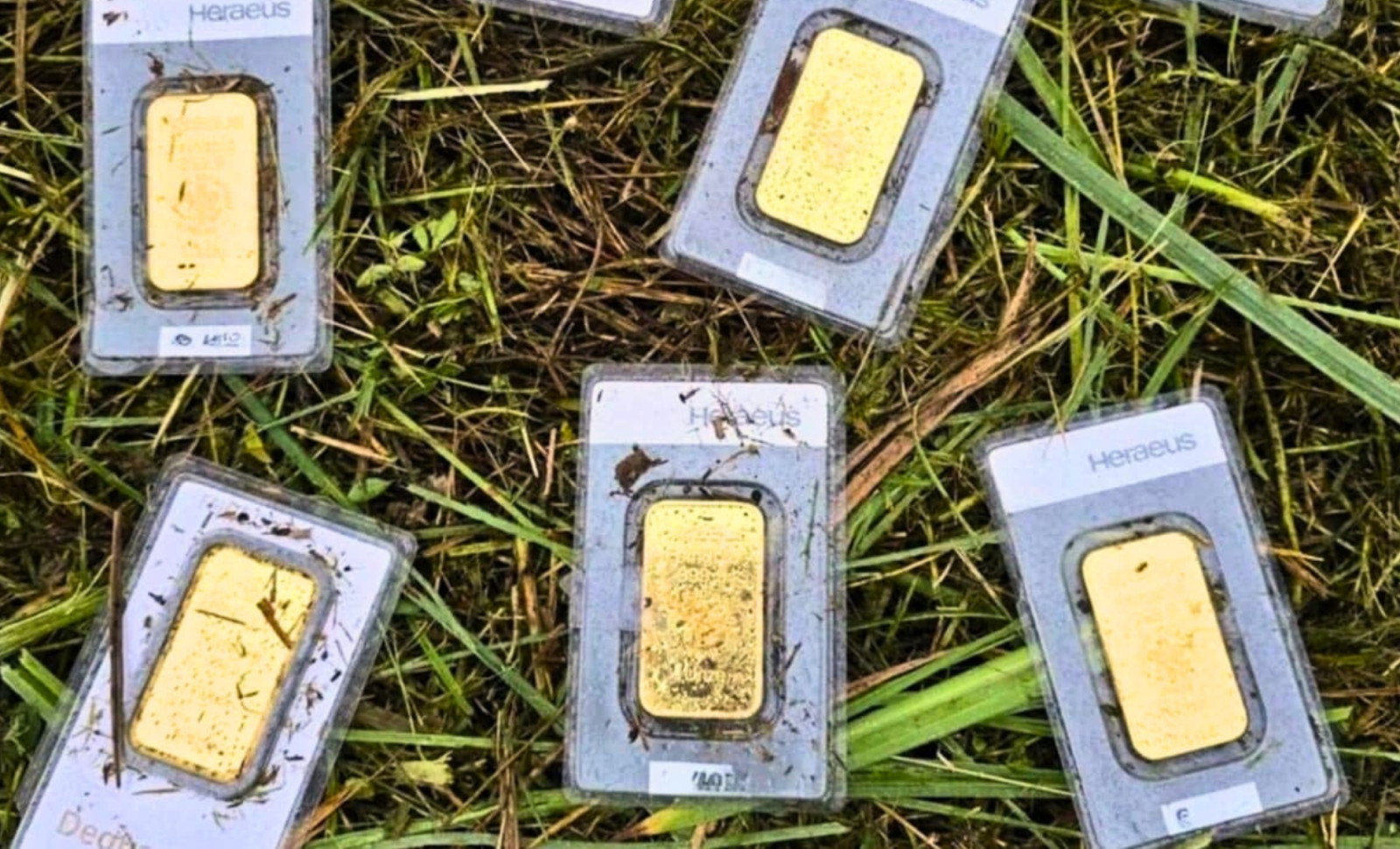
Last October, while trimming grass near a stormwater retention basin in Bannewitz, a town just south of Dresden in Saxony, a local employee spotted a shine in the freshly cut turf. Initially, he picked up eight small, sealed parcels. When town officials joined the search, they found an additional two bars. Altogether, the ten gold bars—each approximately 28 grams—were arranged in a fan-shaped spread, as described by municipal authorities.
The estimated total worth of these bars was about 40,000 euros. Remarkably, they were still encased in their original packaging, preserving the manufacturer's details and serial numbers. However, no individual claiming ownership could produce conclusive proof over the subsequent months.
Dozens Claim Ownership Without Proof
Under German law, the Fundrecht statute grants rightful owners of valuable lost property a six-month timeframe to file a claim. For the Bannewitz gold, this window ended on April 17, 2026. Mayor Heiko Wersig revealed to the Süddeutsche Zeitung that during this period, the municipality received between twelve and fifteen claims.

The stories behind the claims were diverse. One person said the bars might have slipped from his pocket during a walk. Another alleged the gold was part of cargo carried by a drone that crashed nearby. Additionally, a local resident approached the mayor at a bakery, suspecting a connection to a previous scam involving stolen gold coins from a relative—but the bars did not match that case.
Authorities attempted to trace the bars using the serial numbers printed on the packaging, but these led to no identifiable purchasers. Each claimant was required to present a purchase receipt corresponding to the manufacturer’s registration codes, but none succeeded in doing so.
Unusual Distribution Sparks Police Attention
The layout of the gold bars on the grass immediately raised suspicions. Their scattered, fan-like pattern suggested they might have been discarded from a moving vehicle. This possibility prompted a police investigation to determine if the gold was linked to a chase or other illegal activity.
Mayor Wersig confirmed that the inquiry uncovered no connection between the gold and any criminal offenses. The bars were secured in Dresden’s police evidence storage pending a rightful claimant. Authorities were notified promptly following the municipal worker’s discovery.
As the Brussels Times noted, the gold was found when an employee from a sewage treatment company came across the bars during routine work. Wersig explained to the Süddeutsche Zeitung: "I sent staff from our public order office, and they uncovered two additional bars.” The source of the gold remains unknown.
Bannewitz Council to Determine Use of Funds
Now that the claim deadline has passed, the gold bars legally belong to the town of Bannewitz. The mayor has suggested the money will support local community groups, including the volunteer fire brigade, various sports clubs, music institutions, and an association for seniors.
One idea gaining traction involves distributing one gold bar to each of ten community organizations, allowing them to decide whether to sell or retain it. Nevertheless, Wersig expressed a preference against keeping property that rightfully belongs to others, stating to the Süddeutsche Zeitung, "I want to keep nothing that does not belong to me.”
He also noted that extensive media attention served as widespread public notice for potential claimants across Germany. Despite this exposure, no legitimate owners came forward before the April 17 cutoff. The town council is set to finalize how the €40,000 will be allocated among local organizations in the near future.
- Categories:
- News












0 comments
Sign in to Comment