

NASA has pioneered a revolutionary step in interplanetary data transmission by successfully sending a laser-based communication from the Psyche spacecraft back to Earth over an incredible distance of 16 million kilometers. This groundbreaking event, part of the Deep Space Optical Communications Experiment (DSOC), opens the door to dramatically faster data exchange across vast space distances.
Breaking New Ground in Space Communication
Launched in October 2023 atop a SpaceX Falcon Heavy, the Psyche mission targets a unique metal-rich asteroid situated between Mars and Jupiter. However, even before reaching its destination, the spacecraft has showcased a game-changing technology: ultra-fast optical data transmission.
Where traditional space communication depends on radio waves with bandwidth constraints, DSOC leverages near-infrared laser technology to transmit information at rates up to 100 times faster than existing methods.

This emerging capability has the potential to transform how we receive data from deep-space missions, enabling near real-time data flow, crystal-clear images, and video streams from distant celestial bodies.
Precision Targeting in the Vastness of Space
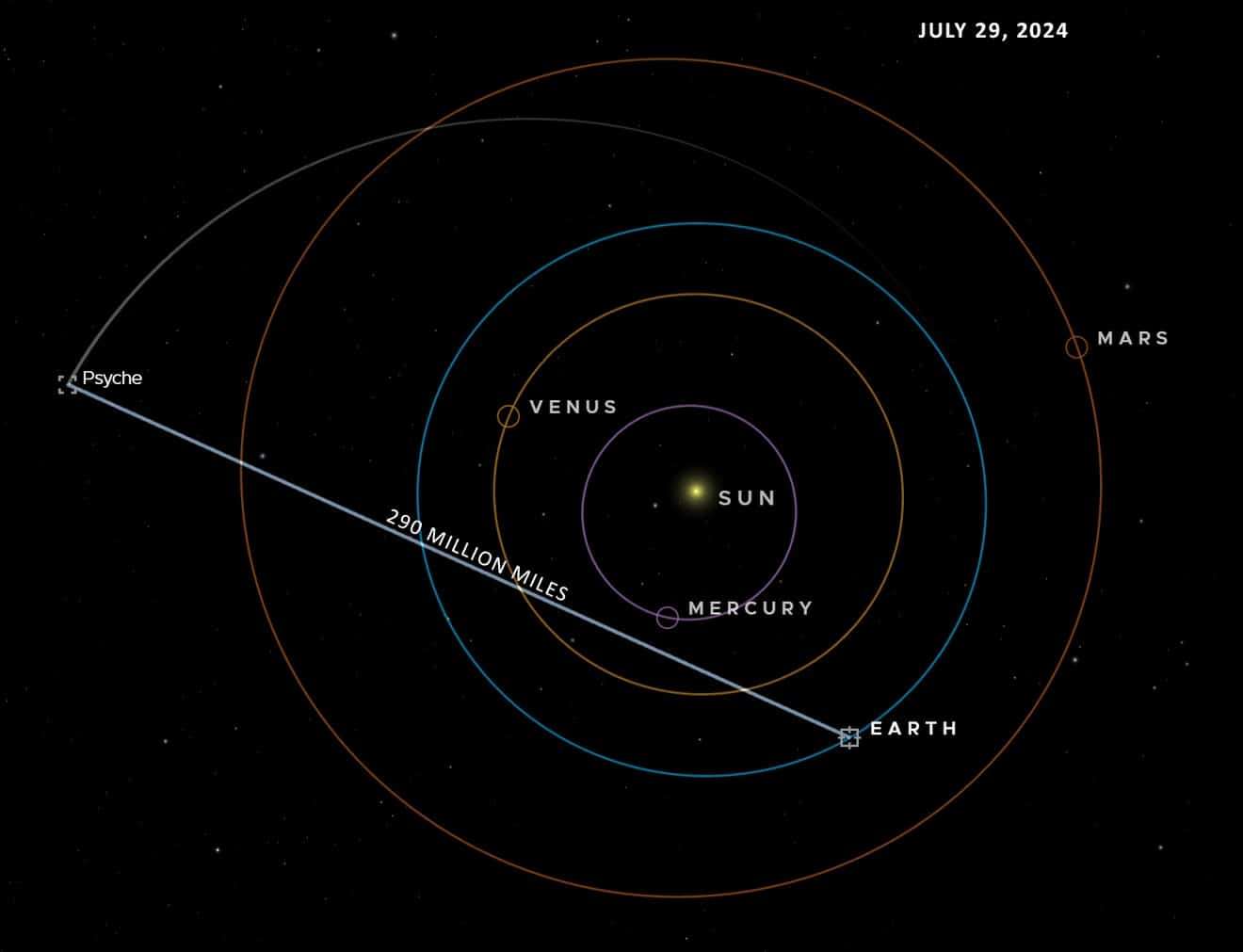
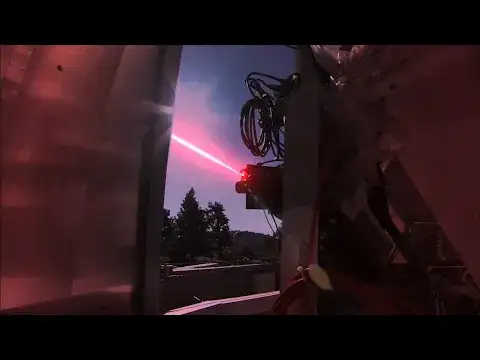
On November 14, 2023, Psyche transmitted a coded laser beam to the Hale Telescope at Palomar Observatory in California.
Although it might seem straightforward, this feat is as challenging as aiming a laser pointer at a nickel from a kilometer away while both are moving. Given light takes 50 seconds to cover the distance one way, the real challenge lies not only in sending the beam but also in maintaining accurate alignment with a moving target.
NASA overcame this by employing sophisticated automated tracking and stabilization systems that counteract movement from Psyche, Earth's rotation, and the vast intervening space.
Alongside precision, laser communication uses tightly packed, efficient waveforms, making it far superior to radio waves for handling the huge volumes of data generated by modern space probes.
A Critical Advancement for Upcoming Space Exploration
The success of this demonstration is not only a triumph for Psyche but also sets the stage for future space expeditions. As missions gear up for Mars, deeper exploration, and interstellar journeys, the demand for rapid, high-volume data exchange grows increasingly vital.
For crewed spaceflights, optical laser links might enable immediate video communication between astronauts and mission control, revolutionizing space travel from isolated expeditions to connected experiences. Uncrewed probes will benefit equally by sending back valuable scientific data with much shorter delays.
Exploring a Metallic Relic from Planetary Formation
Beyond showcasing this technology, Psyche’s mission is poised to investigate a fascinating solar system object: a metallic asteroid that likely represents the exposed core of an early planetesimal. This offers a rare chance to uncover clues about how rocky planets, including Earth, formed their metallic centers.
Expected to arrive at the asteroid in 2028, Psyche will perform a 26-month survey beginning in 2029, examining the body’s composition, surface characteristics, and magnetic properties. If confirmed as a planetary core remnant, it will shed light on the processes shaping terrestrial worlds billions of years ago.
Lasers Lighting the Way to the Future of Space Communication
This unprecedented laser data transmission symbolizes NASA’s commitment to advancing the frontiers of space messaging. DSOC’s success hints at a future where astronauts on Mars can stream live video, probes at the outer solar system can return ultra-HD imagery instantly, and interstellar missions maintain strong data connectivity with Earth.
NASA’s innovative spirit continues to illuminate the path forward, demonstrating that even in the vast cosmic darkness, human creativity shines brightest.
This article was originally published on December 6, 2024.
- Categories:
- Space









0 comments
Sign in to Comment