
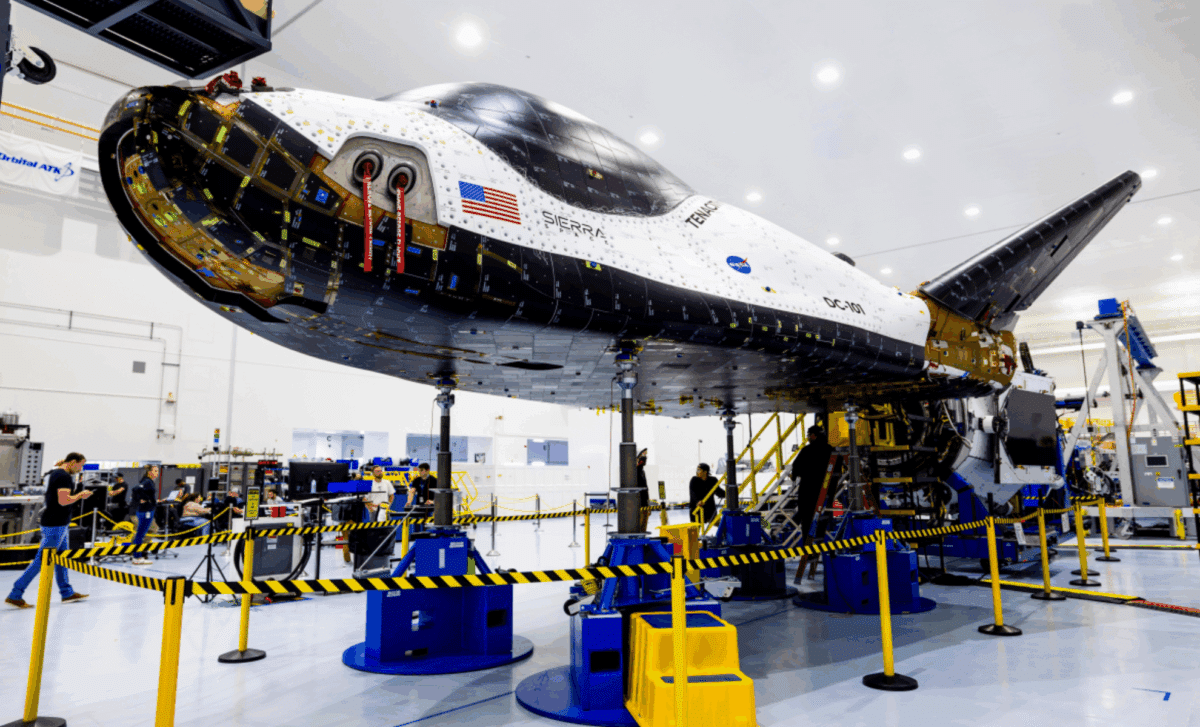
The Dream Chaser Tenacity, a reusable spaceplane designed by Sierra Space, is rapidly approaching its inaugural flight. Inspired by the design of NASA’s retired shuttle fleet, this next-generation spacecraft is engineered for runway landings and orbital missions. Despite encountering program delays and shifting NASA directives, Sierra Space remains steadfast in advancing the project. The upcoming year will be crucial for preparing the vehicle for operational deployment and exploring its potential roles beyond servicing the International Space Station.
Forging Ahead with Sierra Space’s Innovative Spaceplane
A recent report from NASA Space Flight highlights Sierra Space’s accelerating progress on Dream Chaser Tenacity, despite uncertainties about its long-term trajectory. The spacecraft has cleared vital engineering and safety benchmarks, demonstrating readiness for space missions.
“We have successfully completed key technical milestones in its development, including the finalization of the electrical system build, and Electromagnetic Interference (EMI) and Electromagnetic Compatibility (EMC) testing at Kennedy Space Center,” Sierra Space reported. Testing at NASA’s Space Systems Processing Facility confirmed the vehicle’s resilience to the challenging electromagnetic conditions it will encounter in orbit.
Initially planned to deliver cargo under NASA’s CRS-2 contract to the International Space Station (ISS), Sierra Space has shifted its vision as the ISS approaches decommissioning. The new mission focus involves conducting a free-flying orbital demonstration, marking a transition towards independent commercial operations in low Earth orbit.

The Evolving Mission Profile Beyond ISS Support
With modifications to the CRS-2 agreement, Sierra Space can now explore broader applications for the Dream Chaser. Company representatives explained:
“We are in active discussions with many stakeholders about the potential usage of the vehicle as a national asset and beyond,” the company stated. “The contract modification allows us to explore the spaceplane’s unique capabilities to meet the needs of diverse mission profiles, including emerging and existential threats and national security priorities that align with our acceleration into the Defense Tech market.”
This development underscores Sierra Space’s intent to expand into defense, surveillance, and rapid-response sectors — fields that are gaining heightened significance for both government and commercial users. The Dream Chaser’s ability to perform runway landings and its quick refurbishment timeline position it as an ideal platform for missions demanding adaptability and reusability, such as defense logistics, on-orbit servicing, and satellite deployment.
Focus Sharpens on Tenacity as Reverence Is Paused
While Tenacity moves closer to flight, the status of its sibling vehicle, Dream Chaser Reverence, is currently on hold. Sierra Space has prioritized resources toward finalizing Tenacity’s first mission.
“Dream Chaser Reverence production is on hold as our team focuses on Dream Chaser Tenacity’s first mission and test flow would depend on any future customer requirements,” the company communicated.
This decision reflects a strategic focus on refining the flagship vehicle’s capabilities before committing to broader production. Concentrating efforts on a proven model may enhance investor confidence and help secure future contracts after showcasing Dream Chaser’s orbital and runway performance.
Countdown to Free-Flying Orbital Demonstration
As Tenacity prepares for its scheduled 2026 launch aboard a United Launch Alliance Vulcan rocket, Sierra Space is fine-tuning mission parameters. The test flight will culminate with an autonomous touchdown at Vandenberg Space Force Base in California, demonstrating the vehicle’s controlled descent and reusability.
“Our test flight control team has been exercising all phases of the Dream Chaser mission for a few years, including the free-flight portions,” Sierra Space indicated. “With the change in mission profile, we are refining our flight plan and updating our simulation plans to be consistent. With our extensive simulation exercises there are very few changes necessary. We can simulate without the rendezvous and proximity operations (RPO) phase.”
This mission will validate the Dream Chaser’s navigation, propulsion, and reentry capabilities—essential steps to certify it for expanded operational uses. Success here could pave the way for innovative multi-role orbital vehicles that bridge cargo transport with agile defense and commercial functions.
- Categories:
- News







0 comments
Sign in to Comment