
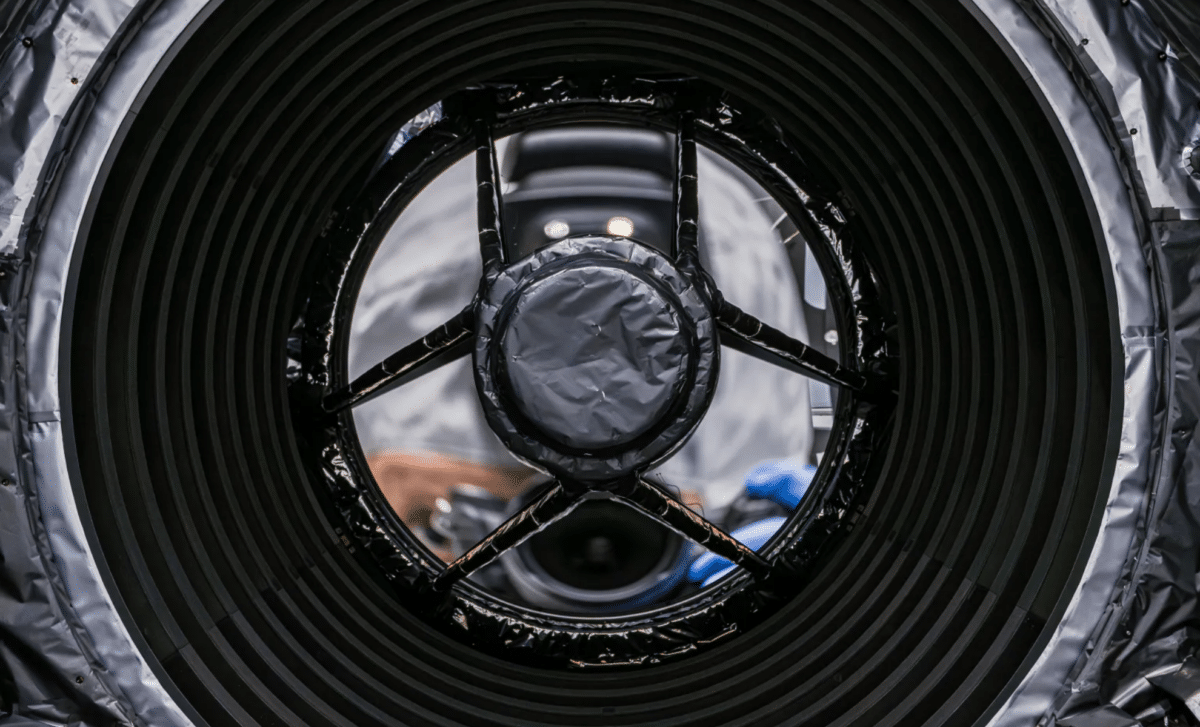
The Nancy Grace Roman Space Telescope, NASA’s next-generation observatory, has successfully passed a crucial milestone ahead of its scheduled launch. Engineers recently finalized the inspection of the telescope’s enormous primary mirror, confirming it is perfectly aligned and free from any flaws. This key accomplishment keeps the project on track for a September deployment and highlights a significant step forward for a mission set to expand our cosmic view like never before.
A Crucial Checkpoint for NASA’s Upcoming Observatory
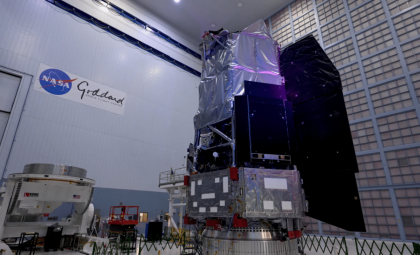
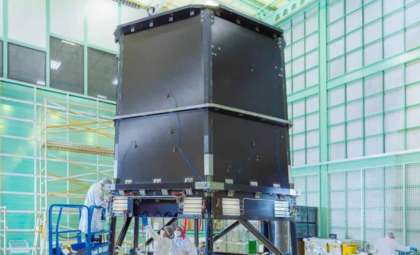
At the NASA Goddard Space Flight Center in Greenbelt, Maryland, a comprehensive final visual evaluation of Roman’s 7.9-foot (2.4-meter) primary mirror was conducted. This central component is responsible for collecting and focusing faint light emitted by distant galaxies, stars, and other astronomical objects. During the inspection, the telescope was carefully repositioned on its side and its protective launch shield opened, allowing specialists to scrutinize the mirror and optical assembly with exceptional detail.
The thorough examination ensured that no dust or foreign particles gathered on the mirror during tests, and that the mirror’s coatings, alignment, and surfaces fully met rigorous specifications. For the teams involved, this inspection was much more than standard protocol; it signified the transition from assembly to launch preparation, bringing the mission closer to unveiling cosmic mysteries.

“The Roman engineering team laid eyes on the telescope for the final time before it, in turn, becomes the eyes of humanity, revealing the wonders of the cosmos,” said J. Scott Smith, the Roman telescope manager at NASA Goddard. “It is a profoundly humbling moment to witness the culmination of hard work from so many dedicated individuals, teams, and partner organizations, including L3Harris.”
Remarkable Accuracy of Roman’s Primary Mirror
The performance of the Roman telescope relies heavily on an optical configuration designed to achieve extraordinary precision. Engineers applied specialized inspection methods to verify that all optical elements stayed perfectly aligned after undergoing intense environmental tests simulating space launch conditions, including vibration and shaking. One critical aspect was affirming that incoming light is precisely directed to the Wide Field Instrument sensors. Even the slightest misalignment could deteriorate the quality of data captured once in orbit. The team utilized advanced imaging tools capable of high-resolution views to inspect the mirror and its surrounding optics thoroughly.
“We developed a method of using a high-resolution camera equipped with a very powerful zoom lens to do a multi-purpose inspection,” said Bente Eegholm, optics lead for Roman’s Optical Telescope Assembly at NASA Goddard. “The mirror passed with flying colors, keeping the mission on track for an early September launch.”
The examinations confirmed that the optical system remained intact and well-aligned after testing, reinforcing assurance that the telescope is ready for launch procedures. Achieving this level of optical fidelity is critical for detecting minute cosmic signals over vast expanses of space and fulfilling the mission's ambitious science objectives.
Unique Features of Roman’s Mirror Design
Roman’s primary mirror is a product of innovative materials engineering and exacting craftsmanship. Its reflective coating consists of a layer of silver less than 400 nanometers thick, approximately 200 times thinner than a strand of human hair. This choice maximizes reflectivity in the near-infrared spectrum, ideal for Roman’s astronomical observations. This coating approach contrasts with other renowned space telescopes: the Hubble Space Telescope uses aluminum with magnesium fluoride coatings for visible to ultraviolet light, while the James Webb Space Telescope features gold-coated mirrors optimized for longer infrared wavelengths.
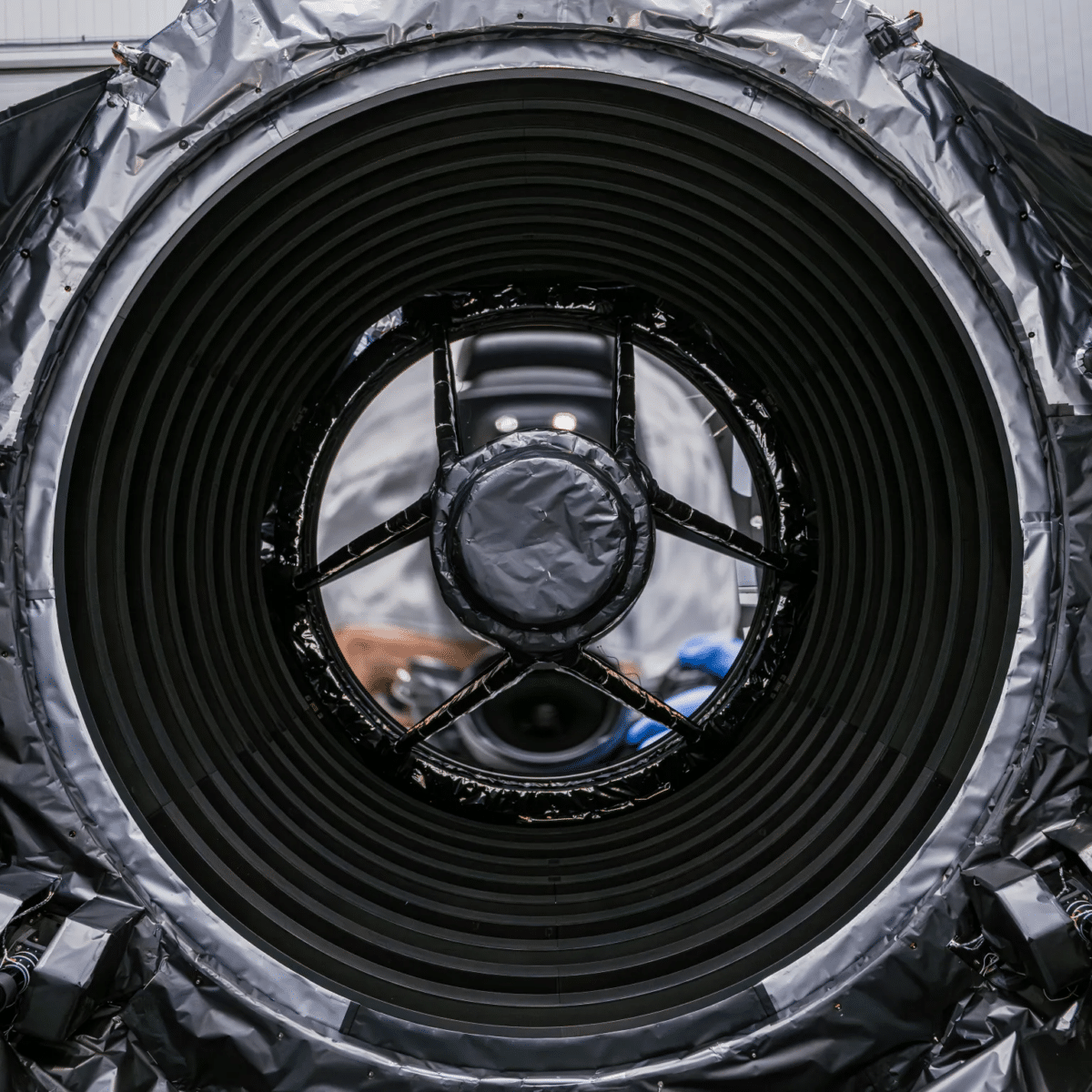
The mirror’s surface smoothness is equally impressive. The average peak-to-valley height of micro-imperfections measures only about 1.2 nanometers, more than twice as smooth as the mission’s stringent optics standards require. To visualize this, if the mirror were scaled up to Earth’s size, bumps would rise less than a quarter inch. Made from ultralow-expansion glass, the mirror maintains its shape despite dramatic temperature changes between Earth and space, essential to avoiding distortions that could blur images and limit measurement sensitivity.
“In order to gather very sensitive measurements of objects strewn throughout space, all of Roman’s components have to be ultraprecise,” Eegholm said. “The primary mirror certainly delivers on that precision.”
Advancing Toward Launch and New Discoveries
Following the successful mirror inspection, preparations are now shifting to mission finalization. NASA has announced that the telescope will be transported to the Kennedy Space Center in Florida for launch processing ahead of its early September liftoff. Once in orbit, Roman is expected to offer vast panoramic views of the cosmos, complementing and extending the findings from both Hubble and Webb. Its powerful wide-field optics will enable astronomers to survey enormous celestial regions with unique speed and clarity, advancing research into dark energy, exoplanets, and the universe’s large-scale structure.
Completing the optical system inspection marks one of the mission's most crucial milestones. Years of design, engineering, and rigorous testing have produced a telescope ready to address some of astronomy’s most profound questions. For the team behind Roman, this final validation is a moment of pride and readiness.
“We’re really proud of the amazing optical system we’ve delivered for the Roman mission alongside our partners at L3Harris,” stated Josh Abel, lead Optical Telescope Assembly systems engineer at NASA Goddard. “Now that it’s assembled, aligned, and all shined up, we’re ready to go.”
- Categories:
- Nasa






0 comments
Sign in to Comment