
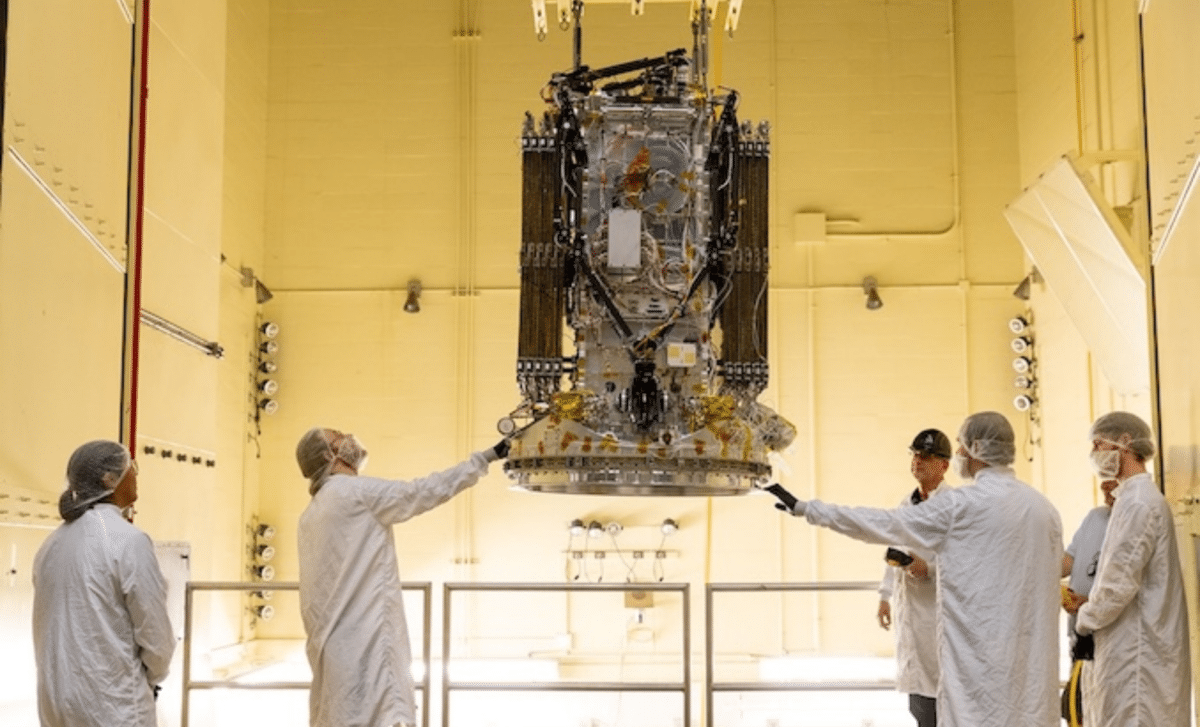
NASA’s urgent effort to safeguard the Neil Gehrels Swift Observatory has taken a significant leap forward as the rescue spacecraft designed to elevate the aging telescope’s orbit has successfully finished crucial environmental tests.
Swift Observatory Faces Declining Orbit
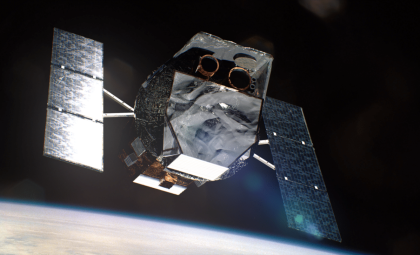
Since its launch in 2004, the Neil Gehrels Swift Observatory has been instrumental in observing high-energy cosmic phenomena like gamma-ray bursts, black holes, and neutron stars.
Built for rapid response, the spacecraft quickly pivots to capture transient explosions in deep space and transmit real-time data to researchers.
This capability has made Swift one of NASA’s most valuable astrophysics missions. However, an emerging challenge threatens its continuation.
Unusually, Swift lacks an onboard propulsion system to counteract decreasing altitude caused by atmospheric drag.
Its orbit has gradually declined from around 600 kilometers altitude to nearly 400 kilometers, a drop exacerbated by increased solar activity that causes Earth's upper atmosphere to expand, intensifying drag on satellites in low Earth orbit.
If uncorrected, the observatory is expected to reenter Earth’s atmosphere later this year, ending its mission abruptly.
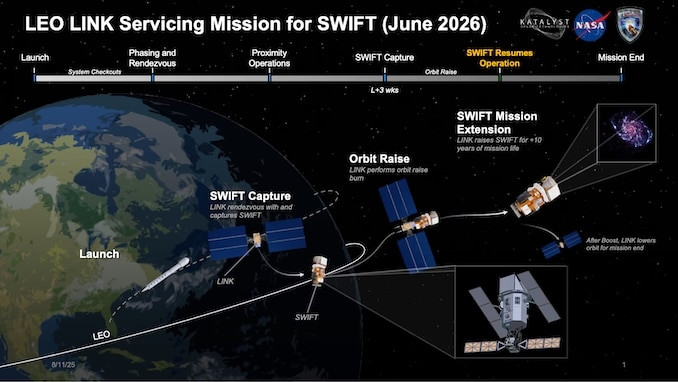
In response, an accelerated satellite servicing campaign led by Katalyst Space Technologies is underway. They are developing a spacecraft named Link, designed to dock with Swift and boost it to a safer orbit.
This endeavor is not a routine extension of ongoing operations; instead, it involves a swift and complex operation requiring a spacecraft to rendezvous with and maneuver a legacy telescope never built for such rescue missions.
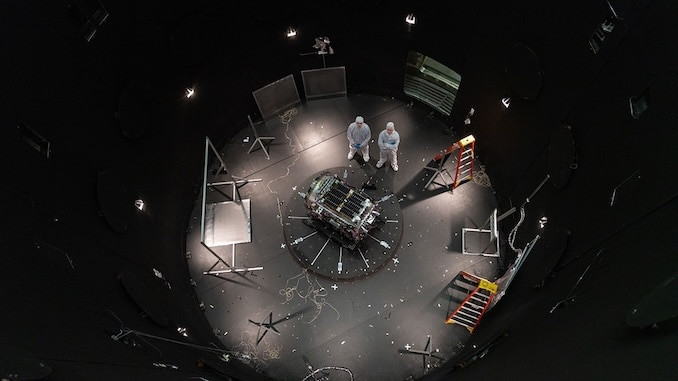
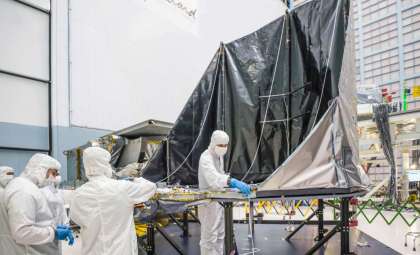
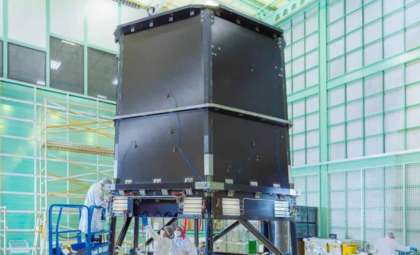
Space Flight Now reports that NASA confirmed Link completed its environmental testing at the agency’s Goddard Space Flight Center in Maryland, clearing one of the final major milestones before launch.
The trials were conducted inside the Space Environment Simulator, where the spacecraft was subjected to vacuum and temperature extremes to certify its readiness for space operation.
Link Successfully Completes Environmental Trials at NASA Goddard
Finishing the environmental test phase marks a critical achievement, especially as Link faces a mission with extremely tight timing.
NASA Goddard’s testing confirmed the spacecraft’s durability under the harsh conditions of space while verifying its ability to perform the complex maneuvers needed to rendezvous with Swift and raise its orbit.
After completing these tests on May 4, Link returned to Katalyst Space Technologies in Broomfield, Colorado, for final prelaunch preparations.
The window is tight since the target satellite continues to lose altitude rapidly due to drag.
This urgency sets the operation apart from conventional satellite servicing missions, where timelines are more flexible.
Every week counts, as the closer Swift gets to Earth, the more difficult and risky a rescue becomes.
"Boosting Swift is a swift, high-stakes mission," noted John Van Eepoel, Swift’s mission director at NASA Goddard. "If we don’t act, Swift will likely reenter the atmosphere later this year. We’re grateful Katalyst was able to use NASA’s facilities and expertise to confront challenges quickly."
This comment underscores NASA’s challenge: acting fast enough to save Swift while ensuring the spacecraft can execute the delicate procedures involved.
Reaching this milestone just eight months into development highlights NASA’s embrace of commercial spacecraft innovation to tackle a time-sensitive problem that traditional mission plans might not solve promptly.
For a telescope with nearly two decades of groundbreaking science, this progress raises hope the mission’s lifespan could be prolonged rather than cut short by uncontrolled reentry.

NASA Embraces Bold, Risk-Accepting Rescue Approach
In September 2025, NASA awarded Katalyst Space Technologies a contract valued at $30 million to build the rescue spacecraft — a comparatively modest investment given the $500 million value of the Swift telescope.
The mission’s rationale is straightforward: if Swift can be shifted to a higher orbit, NASA retains a proven scientific platform instead of launching a costly new replacement, which could take years.
This effort also has wider implications for satellite servicing, since many aging spacecraft were not designed for docking, refueling, or orbital assistance.
A successful orbit raise would demonstrate the feasibility of using commercial service vehicles to extend the life of a broader range of satellites, even those launched before servicing became commercially viable.
NASA describes the operation as a risk-tolerant strategy trading tight scheduling risks for the potential benefit of preserving a critical national science asset.
"This is an innovative, risk-accepting approach for NASA. An orbit boost is cheaper than building a replacement mission and benefits the nation by broadening satellite servicing applications," NASA officials said.
The challenge lies in the fact that Swift wasn’t built with rescue in mind, so Link must execute a demanding rendezvous and attachment maneuver quickly.
Time pressure shifts how engineering decisions are made, forcing teams to find the right balance between thorough testing and timely action as Swift continues its steady decline.
"We face an unusual scenario where the schedule drives acceptable risk levels," explained Kieran Wilson, Link’s principal investigator at Katalyst. "With Swift’s altitude dropping, we must balance testing and problem-solving to maximize mission success."
Failing or delaying the rescue could mean the loss of a key astrophysics observatory after over twenty years of service.
For NASA, this mission could set a precedent where rapid response and risk management are as important as technical certainty, especially as natural variations in Earth’s atmosphere threaten more satellites.
For the commercial servicing field, Link represents a crucial test: can private spacecraft save valuable assets before it’s too late?
Pegasus XL Chosen for Unique Orbital Insertion
The proposed launch also presents unique challenges. Since Swift orbits with just a 20.6-degree inclination relative to the equator, the launch vehicle must achieve a low-inclination orbit quickly.
To meet these demands, Katalyst selected Northrop Grumman’s Pegasus XL, a rocket air-launched from beneath an L-1011 aircraft.
Unlike fixed-site ground launches, Pegasus XL’s airborne deployment offers flexibility to target specific orbits.
For this mission, that flexibility means Link will integrate with Pegasus XL at NASA’s Wallops Flight Facility in Virginia, then be flown to the Marshall Islands for launch.
This southern launch site simplifies reaching Swift’s orbit without wasting rocket performance on complex trajectories.
"Pegasus provides a flexible, rapid launch solution that can access any orbit from various locations," said Kurt Eberly, Northrop Grumman’s Director of Space Launch. "The specialized requirements to rescue Swift, including its low inclination and urgent timeline, make Pegasus an ideal choice."
This decision highlights how every aspect of the mission is driven by timing and orbital mechanics.
The spacecraft must be operational, launch from the proper location, in the proper orbit, and on time to intercept a rapidly descending target.
If successful, Link will dock with Swift, elevate its orbit, and extend the telescope’s scientific life, showcasing a rare example of accelerated orbital servicing.
Failure or tardiness could mean losing one of NASA’s longest-serving astrophysics observatories to atmospheric reentry after over two decades in space.
- Categories:
- Nasa




0 comments
Sign in to Comment