
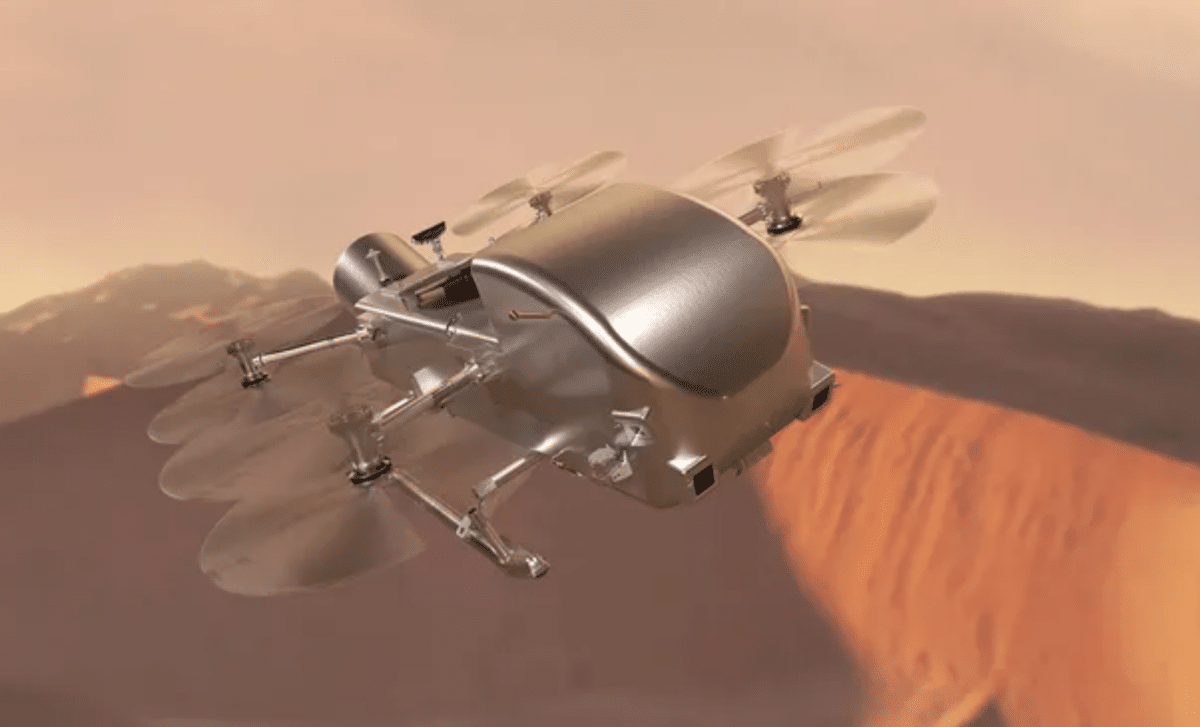
NASA has commenced testing on the Dragonfly drone, a nuclear-powered aircraft engineered to navigate the skies of Titan, Saturn’s largest moon. Planned for launch in 2028, this mission represents a pioneering effort to explore one of the solar system’s most fascinating celestial bodies. This major step brings scientists closer to unraveling the secrets of Titan and advancing extraterrestrial exploration.
A New Frontier in Spaceflight
The Dragonfly initiative has reached a critical phase with the integration and testing of its essential components. Designed as the first rotorcraft to traverse Titan’s thick atmosphere, Dragonfly is not only an impressive technological feat but also a bold advance into uncharted territory.
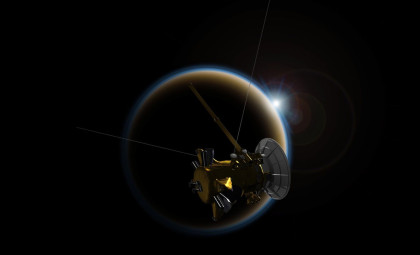
With a dense nitrogen atmosphere and lakes of liquid methane, Titan provides a unique environment where researchers can investigate potential chemical foundations of life. Dragonfly will collect vital information to help answer fundamental questions about the origins of life and the feasibility of habitability under extreme conditions.

“This milestone essentially marks the birth of our flight system,” said Elizabeth Turtle, Dragonfly’s principal investigator from the Johns Hopkins Applied Physics Laboratory (APL). “Building a first-of-its-kind vehicle to fly across another ocean world in our solar system pushes us to the edge of what’s possible, but that’s exactly why this stage is so exciting.”
The project team is working diligently, knowing every successful test and installation advances them toward the 2028 launch.
Dragonfly’s Advanced Power and Design
In contrast to Mars helicopter Ingenuity’s solar-based power, Dragonfly will rely on a nuclear energy source. This capability is crucial for operation in Titan’s dimly lit and extremely cold environment. Its atmosphere, dominated by nitrogen and filled with opaque haze, creates unique challenges that Dragonfly’s engineers have specifically addressed.
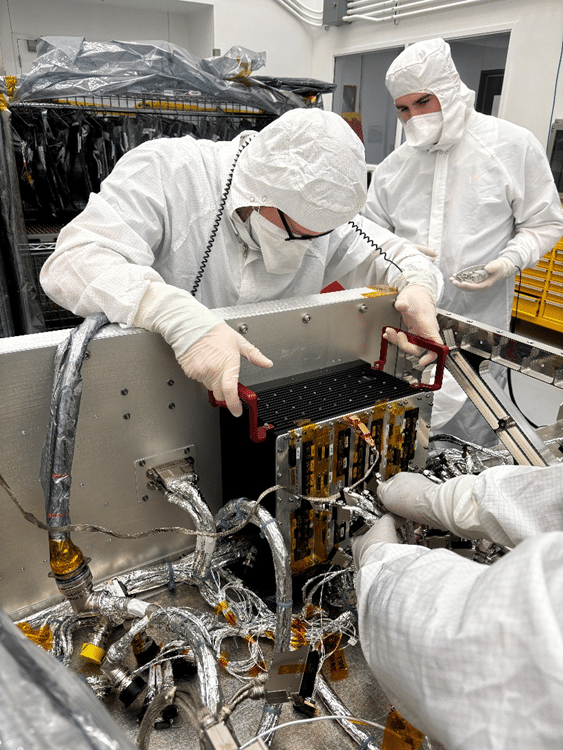
NASA is prioritizing robust systems capable of enduring Titan’s cold temperatures and atmospheric conditions. The drone’s integrated electronics module acts as its control center, managing navigation, guidance, and data processing to keep the craft stable and operational as it surveys Titan’s strange landscape.
“This isn’t just a mission—it’s an opportunity to expand our reach and explore the skies of another world,” said Annette Dolbow, the integration and test lead at APL. “We’ve spent years designing and refining this amazing rotorcraft on computer screens and in laboratories, and now we get to bring all those elements together and transform Dragonfly into an actual flight system.”
The Chemical Mysteries of Titan
Titan fascinates researchers with its thick atmosphere, lakes of methane and ethane, and complex organics—offering a natural laboratory for studying life’s chemical precursors.
Dragonfly will traverse several locations across Titan’s surface to analyze its varied geology, atmospheric dynamics, and chemical interactions, aiming to shed light on the potential habitability of such alien environments.
Testing Milestones and Challenges
As Dragonfly advances through its testing phases, the team faces both technical hurdles and triumphs. Currently, the Applied Physics Laboratory in Maryland is evaluating the spacecraft’s integrated subsystems, including power control units and its electronics module, to confirm their reliability and compatibility in space-like conditions.
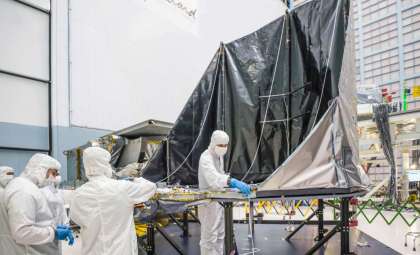
Dragonfly’s protective outer shell is also undergoing airflow tests inside NASA’s wind tunnels. Continued assessments over the next years will ensure its resilience during transit to Titan and its operations on the moon’s surface.
- Categories:
- Nasa







0 comments
Sign in to Comment