
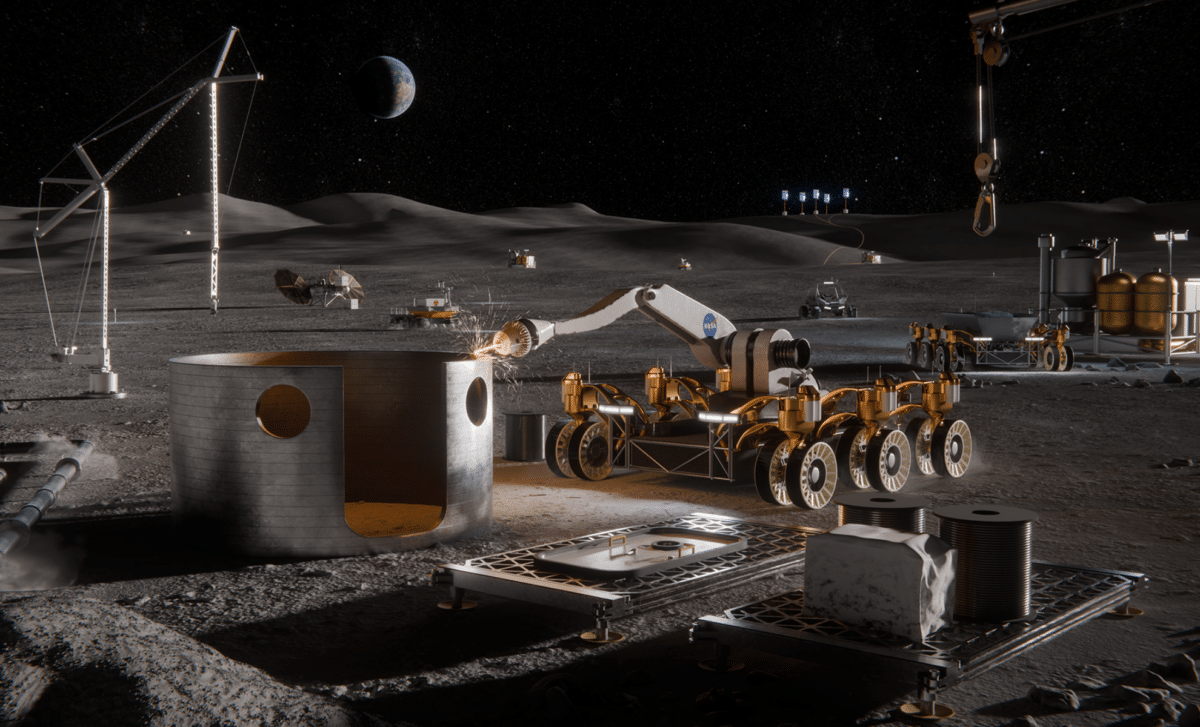
NASA has issued a new draft solicitation under the Nextstep-3 Appendix A initiative, focusing on advancing essential lunar surface technologies to bridge critical engineering gaps for upcoming Moon missions.
Nextstep-3’s Role in Expanding Lunar Infrastructure
The Nextstep-3 program is designed to expedite the development of technologies needed to sustain operations on the Moon and in nearby space. The recently released draft Broad Agency Announcement aims to propel technologies from their early experimental stages toward real-world demonstrations that replicate lunar conditions.
The initiative centers on achieving Technology Readiness Levels 5 to 6, where systems are validated in environments that closely mirror actual use cases. This phase serves as a crucial link between laboratory experiments and mission-ready hardware.

Rather than targeting singular breakthroughs, NASA’s approach integrates multiple interconnected capabilities that collectively support a sustainable lunar presence. Key areas include energy generation, lunar resource processing, and manufacturing techniques in space to lessen reliance on Earth-based supplies.
Nextstep-3 also embodies a competitive strategy encouraging diverse solution development. Through financial support for prototype testing and validation on Earth, NASA fosters a variety of technical pathways, ensuring optimal solutions emerge for incorporation in future missions.
Key Technology Focus Areas for Lunar Advancement
The solicitation identifies several essential technology categories for lunar exploration. This includes vertical solar arrays optimized for the Moon’s extreme lighting, adapting to prolonged shadows and intense sun exposure that challenge traditional solar setups.
Another priority is in-situ resource utilization (ISRU), especially methods for extracting oxygen from lunar materials. Such capabilities are vital for diminishing Earth resupply dependency and enabling greater operational autonomy on the lunar surface.
Also emphasized are Stirling radioisotope generators, which could provide long-term, reliable power in areas where solar energy is inconsistent. These devices are tailored to function efficiently amid the Moon’s harsh temperature extremes.
In-space manufacturing technologies are another important focus, offering the potential to fabricate tools, equipment, and structural elements directly on or near the Moon. This innovation could reduce launch payloads and enhance mission adaptability.
Lastly, NASA is investigating the development of advanced nanomaterials to produce lightweight, robust components capable of withstanding the Moon’s challenging environment.
Context Within NASA’s Broader Lunar Strategy
This draft solicitation falls under NASA’s Space Technology Mission Directorate and aligns with the overarching Lunar Enabling Infrastructure Accelerator (LEIA) initiative. Released on June 29, 2026, following a preliminary announcement in May, this effort invites collaboration from industry, academia, and research organizations to devise competitive yet compatible systems for lunar missions.
The goal is to nurture mature, interoperable technologies ready for integration into future lunar bases, reinforcing a holistic, modular framework for sustained exploration.
Focusing on ground-based tests and iterative development, NASA emphasizes reducing technical uncertainties before deploying equipment on the Moon, aligning early innovation with concrete mission needs.
Impacts on Upcoming Moon Exploration Efforts
The technologies in Nextstep-3 lay groundwork for lunar missions that increasingly depend on self-sufficient systems rather than continuous Earth supply. A combined network of energy, resource processing, and manufacturing is envisioned to support extended human and robotic activities.
This marks a paradigm shift toward modular space systems that can be flexibly applied across missions, an approach expected to be critical as lunar endeavors grow more complex.
By concentrating on advancing technologies that have already reached a moderate level of maturity, NASA aims to accelerate their transition to operational status without sacrificing reliability.
Programs like Nextstep-3 are not only defining what technologies will equip future lunar infrastructure but also establishing new models for how space hardware is developed and validated ahead of deployment.
- Categories:
- Nasa







0 comments
Sign in to Comment