
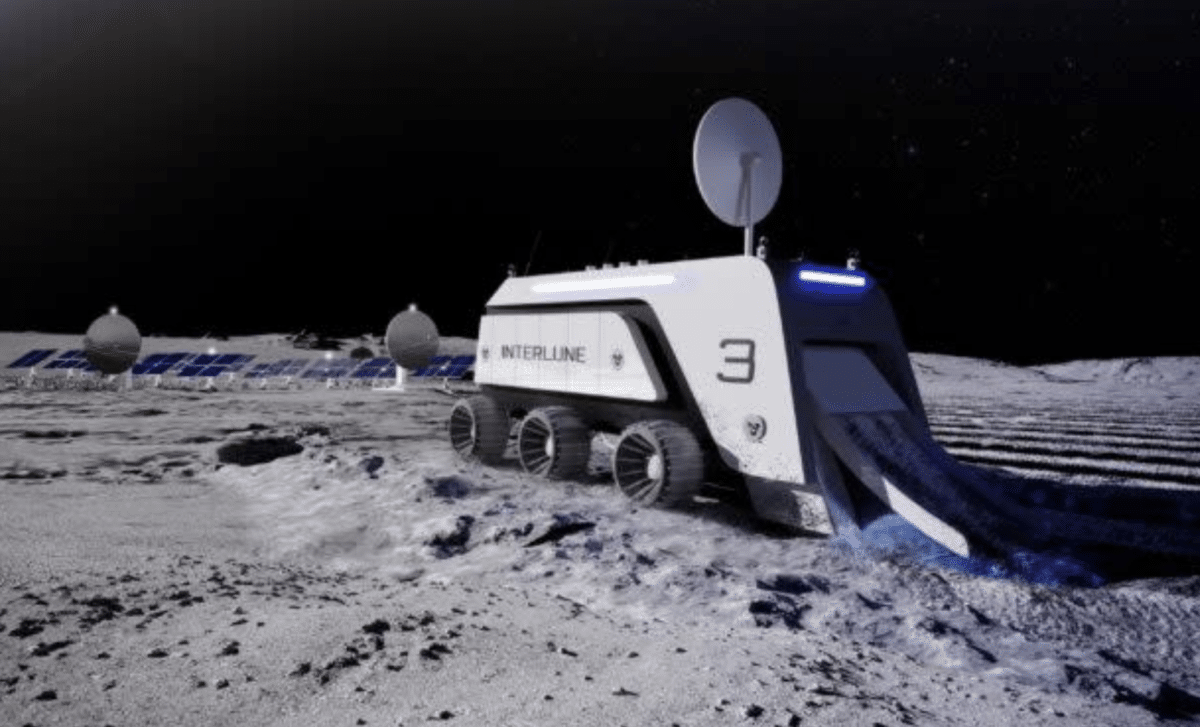
NASA has granted Interlune a $6.9 million contract to create a payload capable of extracting helium-3 directly from the Moon's regolith. This milestone accelerates the agency’s mission to utilize lunar resources in practical applications, reinforcing its broader exploration goals.
NASA Pushes Forward With Lunar Resource Development
Under NASA’s Space Technology Mission Directorate and its Game Changing Development Program, this contract supports the development of a payload that will demonstrate the extraction of solar wind volatiles directly on the lunar surface. The project represents a critical effort to transform innovative concepts into deployable technologies for commercial use.
“A major goal of NASA is to mature transformative technologies so they can be confidently adopted by industry,” said Michael Johansen, Deputy Program Manager for NASA’s Game Changing Development Program. “The evolution of MSOLO into a robust, flight-ready instrument is a perfect example of that success. We are thrilled to see this proven technology leveraged by an industry effort, marking a significant step forward in commercial resource prospecting.”
Add Cosmo Herald as a Preferred Source

The project, named Prospect Moon, combines cutting-edge instrumentation with robotic excavation technologies. Its primary objective is to verify the ability to extract valuable gases implanted in lunar soil by the solar wind, moving beyond laboratory experiments to real operational testing on the Moon itself— an essential step for future extraterrestrial mining ventures.
The Mechanism Behind Prospect Moon’s Lunar Extraction
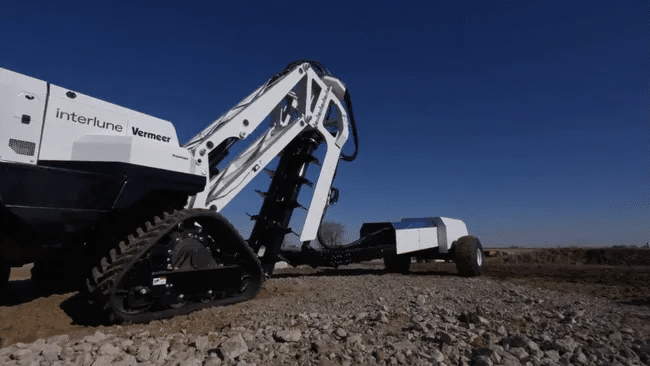
The heart of the Prospect Moon system is a robotic arm that collects lunar regolith to deliver it into the processing unit. The system heats the samples to release embedded gases such as helium-3 and hydrogen. Additional steps like particle sorting, agitation, and crushing will be used to assess how mechanical treatment improves extraction yields.
“This will be the first mission to directly extract solar wind volatiles from lunar soil in its native environment,” said Rob Meyerson, CEO of Interlune.
Besides confirming the presence of these resources, the mission aims to measure how effectively they can be harvested. Data collected will help refine designs for future large-scale extraction systems intended to operate continuously on the Moon.
“We will precisely evaluate the efficiency of our process to guide the development of larger and more capable extraction hardware,” Meyerson explained.
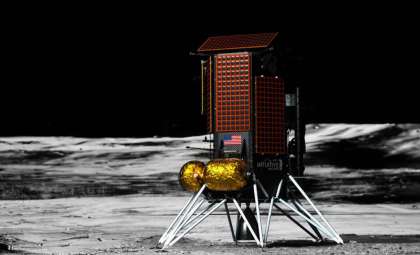
The payload is expected to be integrated by fall 2027 and is targeting a 2028 launch aboard a commercial lunar lander. Interlune is currently assessing various mission opportunities, favoring equatorial landing sites with regolith more favorable for resource collection.
Growing Interest in Helium-3 Spurs Commercial Efforts
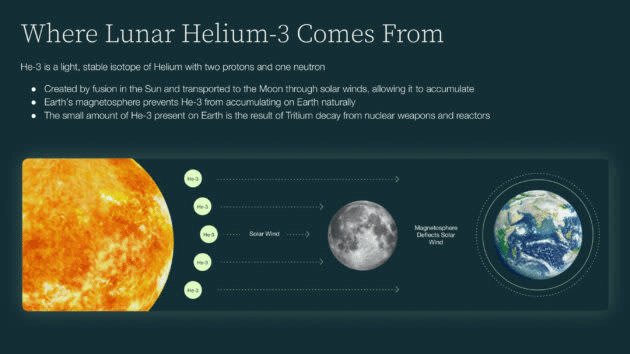
Helium-3 is highly sought after for its potential use in next-generation energy solutions and quantum computing technologies. While scarce on Earth, the isotope is more plentiful on the Moon’s surface due to long-term exposure to solar wind.
Interlune has secured contracts valued near $500 million from entities such as the U.S. Department of Energy, Maybell Quantum, and Bluefors, signaling an emerging market even as lunar extraction remains technically challenging.
To meet demand before lunar extraction is viable, the company is also investigating terrestrial methods to isolate helium-3 from helium supplies. This parallel strategy underscores the urgent demand and a long-term vision for lunar resource utilization.
Lunar Infrastructure’s Role in Supporting Future Mining
While NASA’s Artemis program concentrates on establishing a human outpost near the Moon’s south pole, Interlune focuses on equatorial regions for its resource extraction, reflecting different operational priorities but complementary goals.
The infrastructure being developed for sustained lunar habitation—including power systems, transportation, and surface operations—could aid commercial ventures like helium-3 mining. Meanwhile, private initiatives provide practical use cases that justify investments in lunar infrastructure development.
Interlune is advancing lunar deployment plans beyond Prospect Moon; its Crescent Moon camera system, designed to detect ilmenite deposits linked to helium-3, will be part of Astrolab’s FLIP rover on Astrobotic’s Griffin-1 mission.
- Categories:
- Nasa








0 comments
Sign in to Comment