

NASA is targeting the early 2030s for sending astronauts to Mars, embarking on a pioneering mission aimed at unraveling key scientific mysteries about the red planet’s geology, climate, and history.
This expedition would be a landmark achievement in space exploration, following years of robotic missions that have paved the way for human exploration on Mars. The Artemis program, which intends to land humans on the Moon by the mid-2020s, is a vital precursor, allowing astronauts to develop skills needed for extended missions to Mars. NASA is driven by the potential for significant discoveries, including verifying whether life ever existed or still persists on Mars.
Deciphering Mars’ Geological Past
Mars’ terrain offers valuable evidence of its ancient environment, hinting that it once contained substantial amounts of liquid water. Roughly 3.8 billion years ago, Mars is believed to have sustained a climate hospitable to lakes, rivers, and perhaps oceans. Presently, the planet is frigid and dry, with water mainly locked in polar ice caps or beneath the surface. Understanding how Mars lost its water and thick atmosphere is essential to unraveling its geological history. Sending humans to Mars will enable more comprehensive geological investigations that surpass the capabilities of robotic explorers.

Mars boasts a varied and enigmatic landscape, including the colossal volcano Olympus Mons and the enormous canyons of Valles Marineris. These formations reveal a history of volcanic activity and tectonic motions that have shaped the planet’s surface. However, many aspects of these geological features remain unknown. Atmospheric scientist and former NASA expert Joel S. Levine notes, “robotic missions collect vital data, but some questions can only be resolved by humans.” Up-close examinations could unlock new understanding of Mars’ volcanic and tectonic evolution, providing valuable comparisons with Earth’s geological processes.
Hunting for Signs of Life on Mars
A primary objective of the future mission is to detect evidence of ancient or existing life on Mars. Billions of years ago, Earth and Mars shared striking similarities, such as liquid water and dense atmospheres. Earth’s conditions led to life as we know it, and researchers speculate that Mars might have supported microbial life, past or present. Identifying such life forms remains one of planetary science’s greatest challenges.
Robots like the Perseverance rover are exploring promising sites with potential biosignatures, including ancient lake deposits and former waterways. However, human explorers will be better equipped to conduct detailed fieldwork and make immediate decisions on where to search for life. Astronauts could retrieve subsurface samples that are more protected from the Sun’s radiation and more likely to reveal living organisms or their remnants. Experience gained through NASA’s Artemis program—especially in resource utilization and habitat construction on the Moon—will be crucial to sustaining biology and geology research on Mars.
Getting Ready for the Mars Voyage
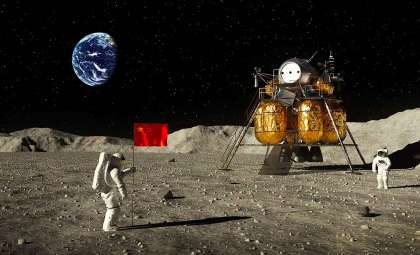
Achieving human missions to Mars demands solving significant technical and logistical hurdles. NASA is advancing the Space Launch System (SLS), a heavy-lift rocket capable of transporting large payloads, alongside the Orion spacecraft to carry astronauts through deep space. The Artemis program, focused on lunar exploration, is a proving ground for these technologies and for preparing crews for the duration and isolation of a Mars mission. The Artemis III mission, set for 2026, will mark humanity’s return to the Moon and offer vital experience for surviving and working in challenging extraterrestrial environments similar to Mars.
The trip to Mars is anticipated to last about six to seven months, spanning around 250 million miles depending on orbital positions. After arrival, astronauts may spend as much as 500 days conducting research on the surface. Success will rely on technologies that extract resources such as water, oxygen, and fuel from subsurface ice, enabling crews to sustain themselves in Mars’ hostile environment. Mastering these in-situ resource utilization strategies will be essential not only for this mission but for the future of space colonization.
Looking Ahead: Humanity’s Next Steps in Space
NASA’s upcoming mission to Mars will represent a monumental advance in humanity’s exploration of our solar system. Through studying Mars’ ancient environment, geological features, and potential habitability, scientists aim to determine if life ever existed there and what that might imply for life beyond Earth.
The scientific findings from astronauts on Mars could pave the way for further expeditions and eventually permanent human settlements on the planet. This mission will not only deepen our knowledge of Mars but also mark a significant milestone towards sustained interplanetary exploration.
- Categories:
- Astronomy ,
- News ,
- Science ,
- Nasa







0 comments
Sign in to Comment