

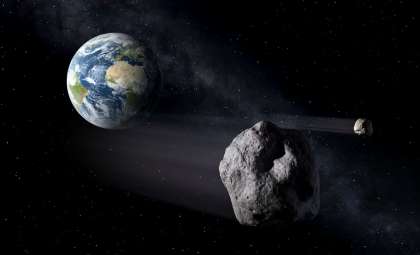
After an impressive 14 years of observations, NASA’s NEOWISE mission is coming to a close, having played a vital role in planetary defense.
Slated for deactivation on July 31, 2024, the spacecraft has greatly enhanced our knowledge of near-Earth objects (NEOs). Meanwhile, NASA is preparing for its follow-up mission, the NEO Surveyor, expected to launch in late 2027.
From WISE to NEOWISE: A Journey of Cosmic Discovery
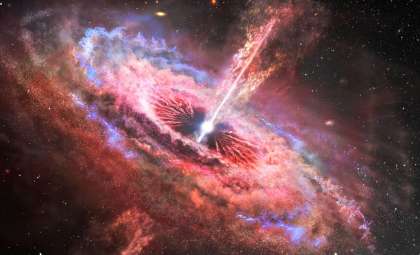
Originally launched in December 2009 as the Wide-field Infrared Survey Explorer (WISE), this telescope scanned the sky in infrared wavelengths, revolutionizing our understanding of the universe. The spacecraft mapped the entire sky twice by mid-2010, surpassing its goals by cataloging millions of distant phenomena such as galaxies, comets, and massive black holes. Following this initial success, the mission was extended into 2011, enabling WISE to observe previously unseen objects across the cosmos.

During this mission phase, WISE uncovered the first known Earth Trojan asteroid and compiled valuable data on elusive faint NEOs often missed by Earth-based optics. Joseph Hunt, NEOWISE project manager at NASA’s Jet Propulsion Laboratory (JPL), stated, “The spacecraft has exceeded every expectation, providing a trove of scientific information that will fuel research for years.” This expansive dataset remains a cornerstone for astronomers investigating the nature and dynamics of many celestial bodies.
The Transition to a New Focus: NEOWISE
In 2013, the mission was revived as NEOWISE, shifting its emphasis to detecting and analyzing NEOs. Though it lost its cryogenic coolant, NEOWISE adapted by orienting itself to deep space to dissipate heat, allowing continued infrared observations. Over its lifetime, it captured 1.45 million infrared readings of more than 44,000 solar system objects, discovering over 3,000 NEOs, including 215 new finds.
Amy Mainzer, principal investigator of NEOWISE and the upcoming NEO Surveyor at UCLA, emphasized the mission’s significance: “Our team developed novel methods to identify and characterize near-Earth objects hidden within extensive infrared data, laying the groundwork for NASA’s next-generation infrared telescope.”
Solar Activity’s Role in Mission Conclusion
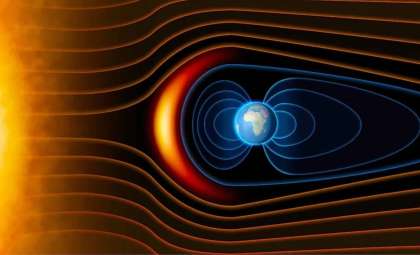
The mission’s conclusion is influenced by the solar cycle, which peaks roughly every 11 years in an active phase known as solar maximum. Increased solar flares and coronal mass ejections during this time cause Earth’s atmosphere to expand, raising drag on satellites orbiting the planet. Without a propulsion system to counteract this effect, NEOWISE’s orbit is gradually decaying, and it is expected to disintegrate upon reentry between late 2024 and early 2025.
Joseph Masiero, NEOWISE’s deputy principal investigator, noted, “The sun ultimately dictates NEOWISE’s fate. Without engines to maintain altitude, the spacecraft will descend beyond operational limits.”
Preparing for the Future: NEO Surveyor
NASA is building on NEOWISE’s legacy with the NEO Surveyor, a specialized space telescope designed to identify hazardous asteroids and comets. Set for launch in late 2027, it will enhance planetary defense by detecting elusive celestial objects that pose risks to Earth. By leveraging the expertise and technology refined during NEOWISE’s tenure, NEO Surveyor aims to strengthen efforts to protect our planet.
“NEO Surveyor will target the hardest-to-spot space objects that could threaten Earth if unnoticed,” explained Mainzer. The mission signifies an important advancement in NASA’s strategy for early detection and mitigation of extraterrestrial hazards.
- Categories:
- Astronomy ,
- News ,
- Space ,
- Nasa






0 comments
Sign in to Comment