
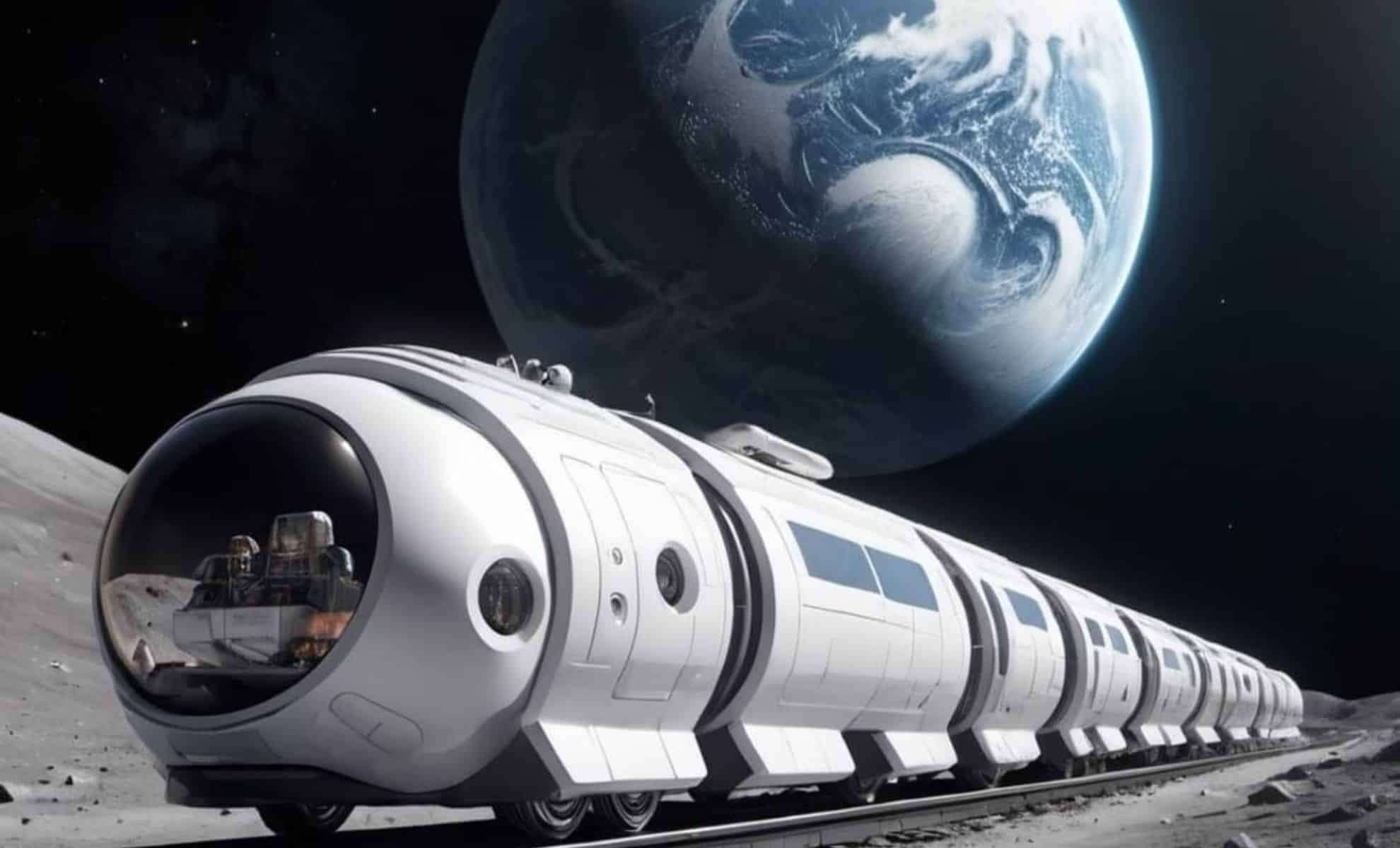
NASA has increased its investment in a futuristic magnetically levitated lunar train designed to transport resources across the Moon’s surface, as part of its effort to explore imaginative science fiction concepts.
NASA Expands Support for Lunar Maglev Train Under Innovative Concepts Initiative
The Float project (Flexible Levitation on a Track), developed by the Jet Propulsion Laboratory, has progressed into phase two of NASA’s Innovative Advanced Concepts (NIAC) program.
Other pioneering ideas in the works include a pulsed plasma propulsion system to drastically reduce travel time within the solar system and the creation of a massive space-based optical observatory.

This lunar maglev transport system, potentially operational within the next ten years, aims to enable “consistent, autonomous, and energy-efficient payload delivery on the Moon.” It could move large quantities of lunar soil, which could then be processed for materials useful to human explorers or lunar settlements.
Revolutionizing Lunar Surface Transport with NASA’s Float Project
The Float design features unpowered magnetic carriers that levitate over a tri-layer flexible track, propelling payloads at about 1 mile per hour (1.61 km/h).
NASA robotics specialist Ethan Schaler leads the initiative and anticipates it will transport up to 100 tonnes daily.
“Float is designed to autonomously function in the Moon’s dusty and harsh environment, requiring minimal groundwork, and its modular track system can be rolled out and reconfigured to support changing missions,” Schaler explained.
Unlike traditional lunar rovers with wheels or legs, these maglev units have no mechanical parts making contact with the surface, reducing wear from abrasive lunar dust.
According to the Jet Propulsion Laboratory in Southern California, this rail-based system could support daily activities at a functional lunar base as early as 2030.
John Nelson, NIAC program executive at NASA's Washington headquarters, commented: “These varied, science fiction-like concepts showcase an exciting range of phase two projects.
“Our NIAC fellows continue to impress and inspire, offering NASA fascinating opportunities to rethink what might be feasible in the future.”








0 comments
Sign in to Comment