
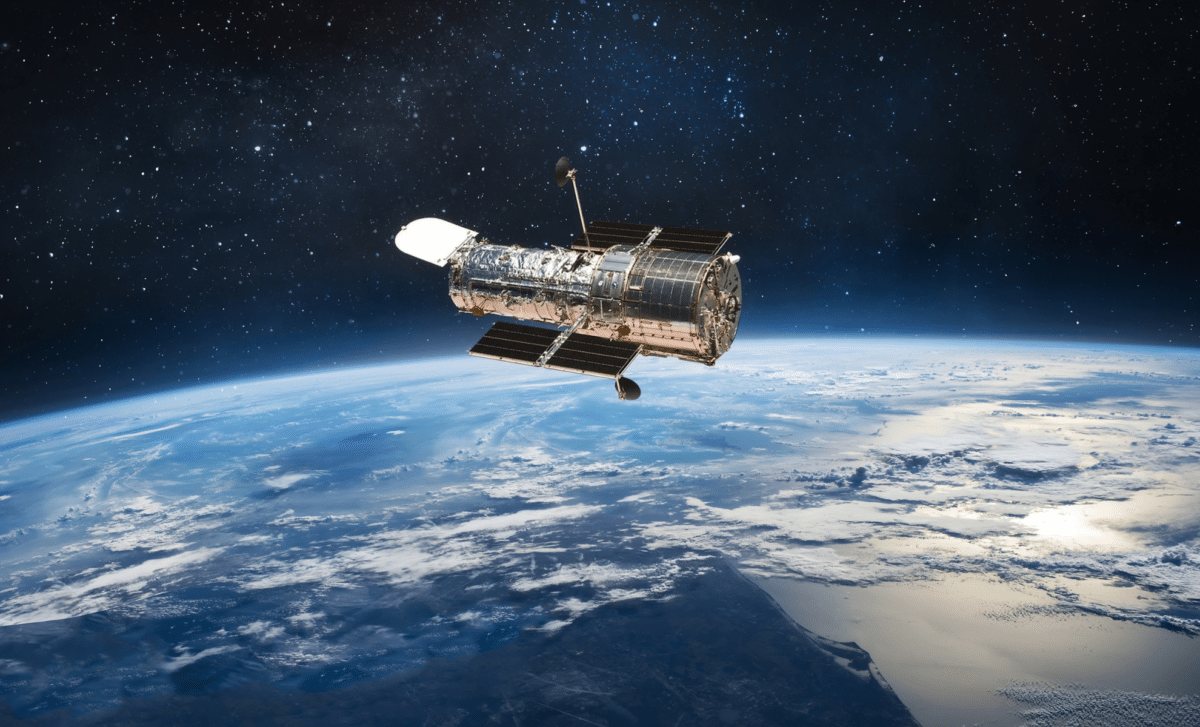
NASA is gearing up for a bold initiative aimed at prolonging the operational lifespan of the Hubble Space Telescope, a cornerstone observatory that has reshaped our cosmic perspective over the past 30-plus years. This venture involves testing cutting-edge technologies that could allow aging telescopes in low Earth orbit to be serviced and repositioned, reducing the risk of their uncontrolled reentry into Earth’s atmosphere.
Link Spacecraft to Demonstrate Orbital Telescope Maintenance
The agency recently revealed that the Link servicing satellite, developed by Katalyst Space, has arrived at Wallops Flight Facility in Virginia. Slated to launch aboard Northrop Grumman’s Pegasus XL rocket later this month, though the exact launch date remains undisclosed, this $30 million mission will approach the Swift gamma-ray observatory. Like Hubble, Swift is gradually losing altitude due to drag from the upper atmosphere.
Link's chief objective is to raise Swift to a higher orbit, thereby extending the telescope's functional life more affordably than launching a new spacecraft. Although this marks Katalyst Space’s inaugural orbital mission and Swift was never built for in-orbit servicing, NASA anticipates that the insights gained could revolutionize how older satellites are maintained economically.

Challenging Mission with Significant Scientific Benefits
Described by NASA as highly risky, the mission demands precise proximity operations to dock with Swift, a spacecraft not originally designed for repair or refueling in space. On successfully boosting Swift, NASA would keep observing gamma-ray bursts and other celestial events without interruption, sidestepping the expenses of replacing aging instruments.
Success here could validate NASA’s approach to reviving other satellites in similarly deteriorating orbits, including the Hubble Space Telescope. SpaceNews notes that Hubble, launched in 1990, risks atmospheric reentry as soon as 2033 without intervention, threatening decades of invaluable astronomical data.
Preserving Hubble: Technical and Budgetary Considerations
Operating Hubble is expensive; in the fiscal year 2025 NASA allocated $98.8 million to its upkeep, ranking it as the second costliest observatory after the James Webb Space Telescope. The agency is seeking cost-cutting methods for aging projects to better allocate funds for next-gen initiatives like the Habitable Worlds Observatory, planned for launch in 2040.
Despite financial hurdles, elevating Hubble’s orbit is increasingly viewed as both technically achievable and cost-effective. Drawing on expertise from the Link mission, NASA aims to keep Hubble operational for an extended period, ensuring continuous astronomical observation. Researchers underline that sustaining Hubble would seamlessly connect current findings with those anticipated from future flagship missions.
Balancing Investment with Scientific Advancement
NASA faces a critical decision weighing financial expenditure against scientific return. Although servicing Hubble demands considerable investment, it promises to uphold its extraordinary contributions to astrophysics. The agency is studying ways to streamline operational expenses and implement lasting maintenance strategies.
Success could shift how aging orbiters are managed, promoting cost-efficient, long-term care of valuable telescopes. Beyond Hubble, this mission could establish a template for future orbital servicing operations that extend the life of satellites essential to communication, meteorology, and research.
- Categories:
- News










0 comments
Sign in to Comment