
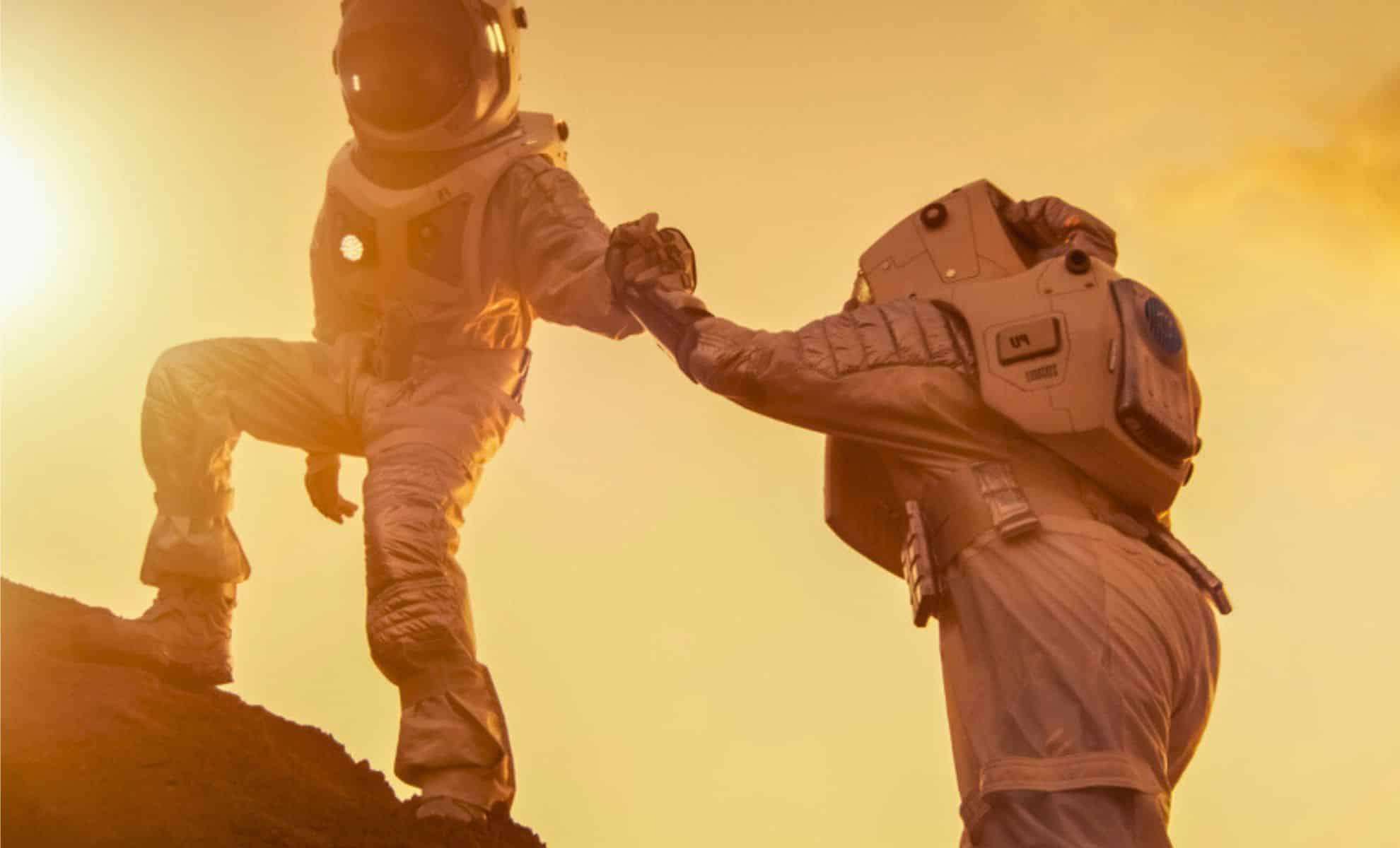
NASA in collaboration with Google is advancing the “Crew Medical Officer Digital Assistant” (CMO-DA), an AI-powered clinical support tool crafted to help astronauts handle medical situations when doctors are unreachable. This initiative marks a significant innovation in space mission healthcare.
The Importance of AI Medical Help on Mars
Envision being millions of kilometers away from Earth and dealing with an urgent health problem, where contacting a physician is impossible due to communications delay — with signals taking about 22 minutes one-way to reach Mars, response times stretch to almost 45 minutes. Traditional telehealth isn’t a feasible option under these conditions. The CMO-DA tackles this challenge by acting as an onboard assistant capable of symptom analysis, diagnostic suggestions, and treatment guidance inside spacecraft limits.
The Technology Behind the Assistant and Its Effectiveness
Far from science fiction, this system runs on Google’s Vertex AI platform and processes multiple input types such as voice commands, textual data, and images to provide support. Its machine learning was developed using space medicine literature alongside clinical decision-support frameworks already implemented in hospitals.

Initial testing involved doctors, including a physician-astronaut, who assessed the CMO-DA in simulated medical situations. The assistant achieved an impressive diagnostic accuracy: 88% for ankle injuries, 74% for flank pain, and 80% for ear pain. These results were validated through the Objective Structured Clinical Examination (OSCE) methodology.
Nonetheless, it’s crucial to emphasize that the AI is not meant to replace human doctors but to serve as an accurate aid for medical decisions, especially when remote expert support is inaccessible.
Potential Impact Beyond Space Exploration
As NASA plans Artemis missions and crewed Mars voyages, an AI medical aide like CMO-DA could prove vital for astronaut safety. Moreover, its applications extend to Earth-based scenarios such as healthcare in isolated regions, disaster response sites, and under-resourced clinics. Google’s team, including David Cruley, acknowledges promising prospects for these terrestrial uses.
Upcoming developments include connecting the system with wearable health monitors, advanced imaging devices, and sensors that can adjust recommendations considering space-specific challenges like microgravity and radiation.
Navigating Innovation with Responsibility
The integration of AI in critical health cases requires careful oversight. In spaceflight, where help from mission control is not immediate, errors could have serious consequences. Experts stress the necessity for rigorous validation and transparency to build trust. Despite the AI’s accuracy, human supervision remains indispensable.
In essence, astronauts venturing into deep space won’t face medical emergencies alone—they will have a reliable, calm digital companion ready to assist when immediate medical consultation isn’t an option. This breakthrough holds both practical and transformative promise, with meaningful impacts for healthcare accessibility here on Earth as well.







0 comments
Sign in to Comment