
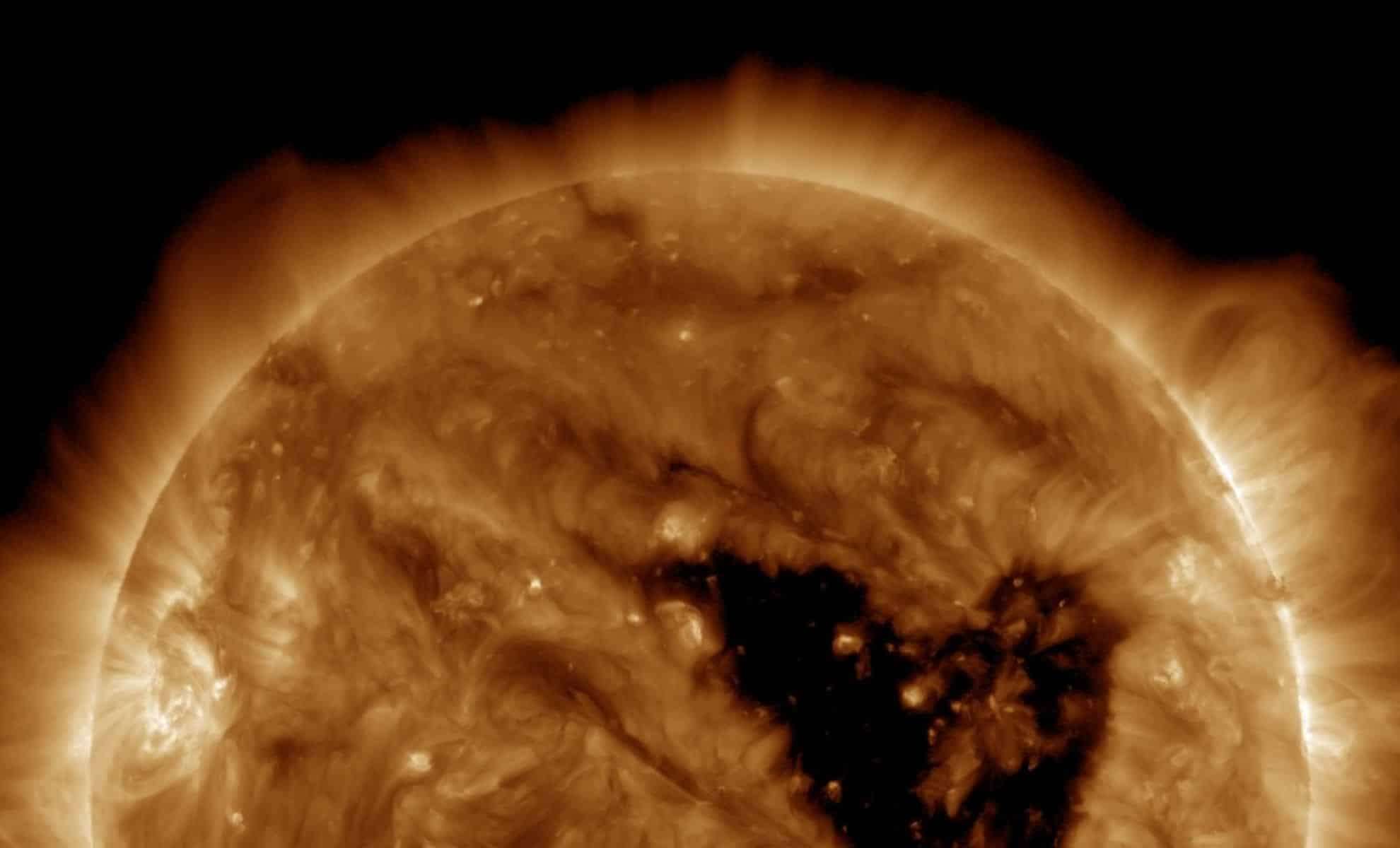
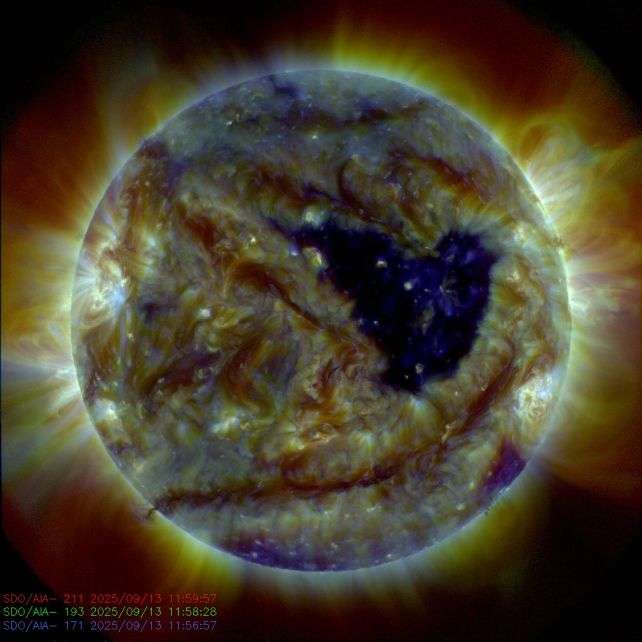
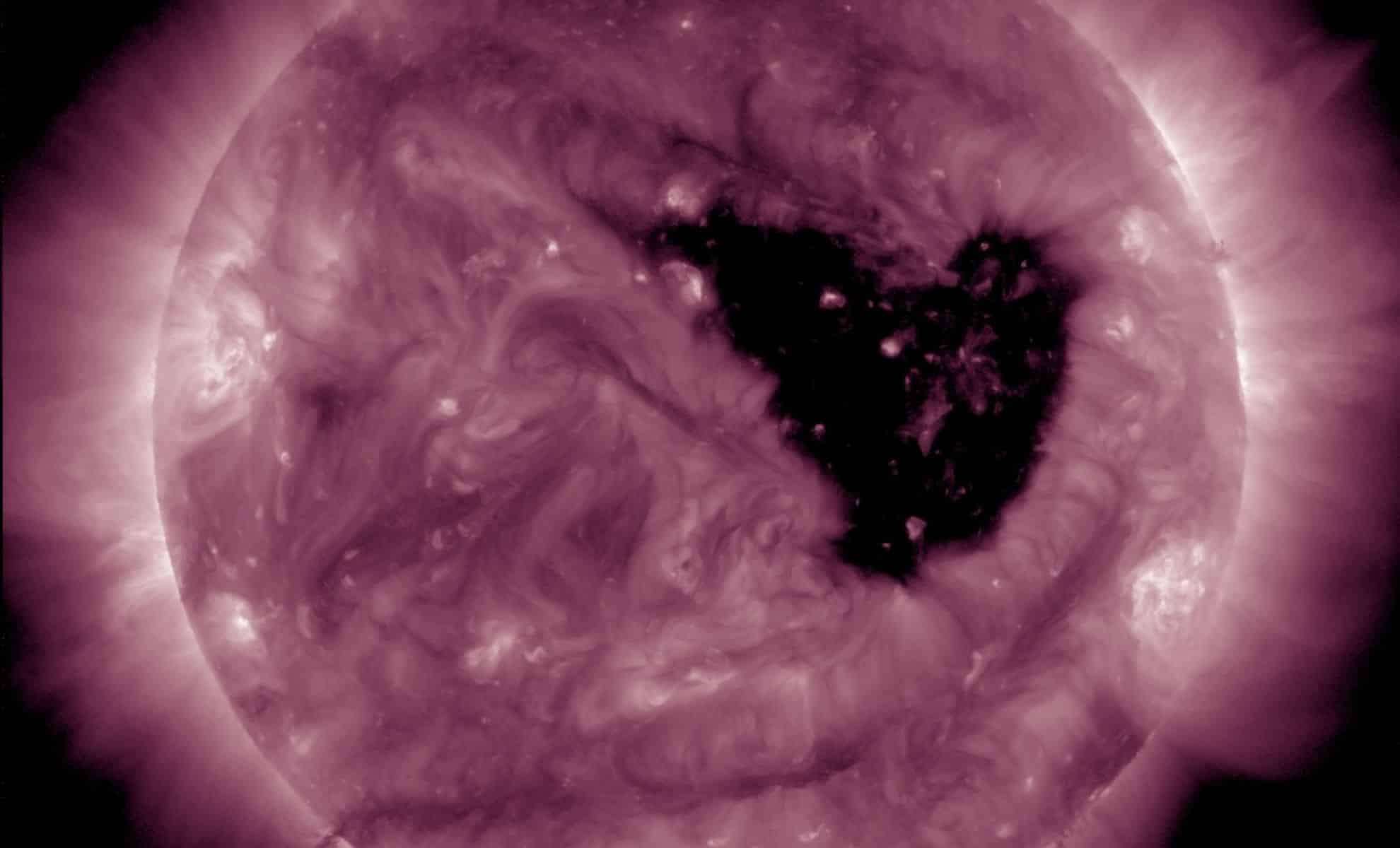
On September 13, our star displayed an extraordinary feature that resembled a cosmic love symbol rather than a typical solar phenomenon. A vast heart-shaped coronal hole, significantly larger than Earth itself, emerged on the sun's side visible from our planet. This captivating pattern was documented by NASA’s Solar Dynamics Observatory (SDO), revealing not only an eye-catching formation but also a powerful source of intense solar wind directed right at Earth.
Understanding the Significance of a Coronal Hole
The term “coronal hole” may sound alarming, yet it doesn't indicate any physical rupture in the sun's surface. Rather, these holes mark areas where the sun’s magnetic field diminishes, enabling charged particles from the solar atmosphere to stream outward with less resistance. These darkened zones are invisible in regular light but appear prominently as shadowy patches in extreme ultraviolet or X-ray observations due to their cooler, less dense plasma compared to surrounding regions. While these shapes usually vary unpredictably, a heart-shaped pattern aimed at Earth is an uncommon and visually poetic occurrence.
The Journey of Solar Wind to Earth
As the sun’s heart-shaped feature aligned directly with Earth, our planet encountered a blast of high-velocity solar wind. These charged particles interact with Earth's magnetosphere, our protective magnetic shield, and are guided toward the polar regions along magnetic field lines. When these particles collide with gases in the upper atmosphere, they create the dazzling light displays known as the aurora borealis and aurora australis. Mid-September's coronal hole triggered a geomagnetic storm intense enough to brighten skies near the poles, offering observers a stunning union of natural beauty and scientific wonder.

Context Within the Solar Cycle
This event is particularly noteworthy as it coincides with the sun's approach to its solar maximum, the peak phase of its 11-year activity cycle. While solar activity is anticipated to decline in upcoming years, coronal holes will persist as a normal part of solar dynamics. Moreover, research from NASA’s Jet Propulsion Laboratory indicates an ongoing increase in solar wind strength since 2008. Should this trend endure, the forthcoming solar cycle 26 could bring even more vigorous solar phenomena.
A Celestial Message Across Space
While the scientific explanations thoroughly describe this event, there's a certain charm in imagining the sun sending a heartfelt gesture from almost 150 million kilometers away.
As noted by ScienceAlert, “the Sun put its heart prominently on its sleeve atmosphere.” This rare natural display bridges the gap between cold astrophysical processes and human sentiment, reminding us that our star is more than just a distant source of energy—it can inspire and connect us all.
- Categories:
- News









0 comments
Sign in to Comment